
 العربية
 Español
 中文
中文 Deutsch
 Français
 Português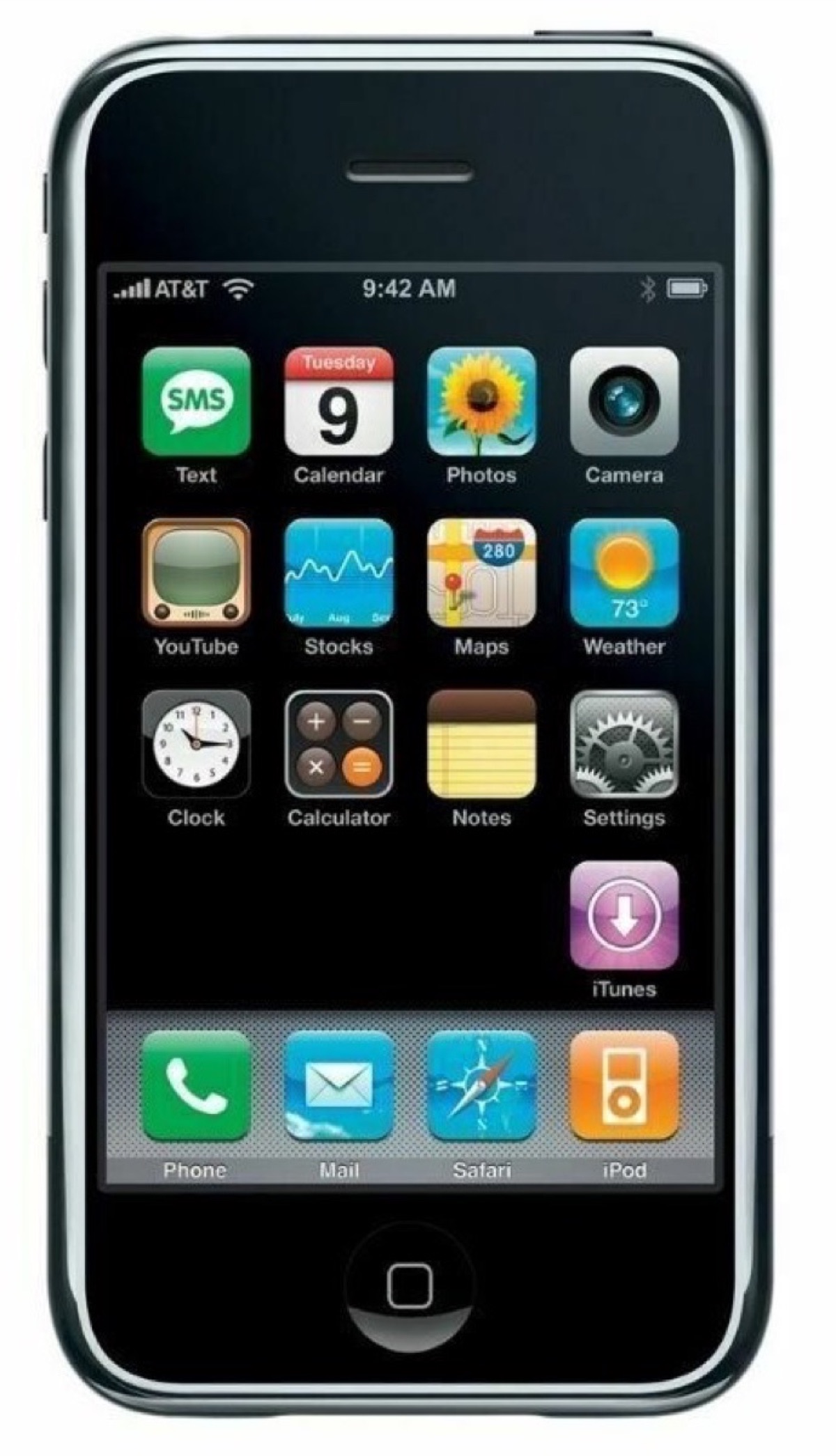
This is Part 6 of a 7-part series: "Apple at 50." Part 5 ended with the iPod launching in October 2001 - a 399-dollar Mac-only music player that the press called overpriced. Six years later, on January 9, 2007, Steve Jobs walked on stage at Macworld and unveiled the iPhone. This is how Apple got from one to the other.
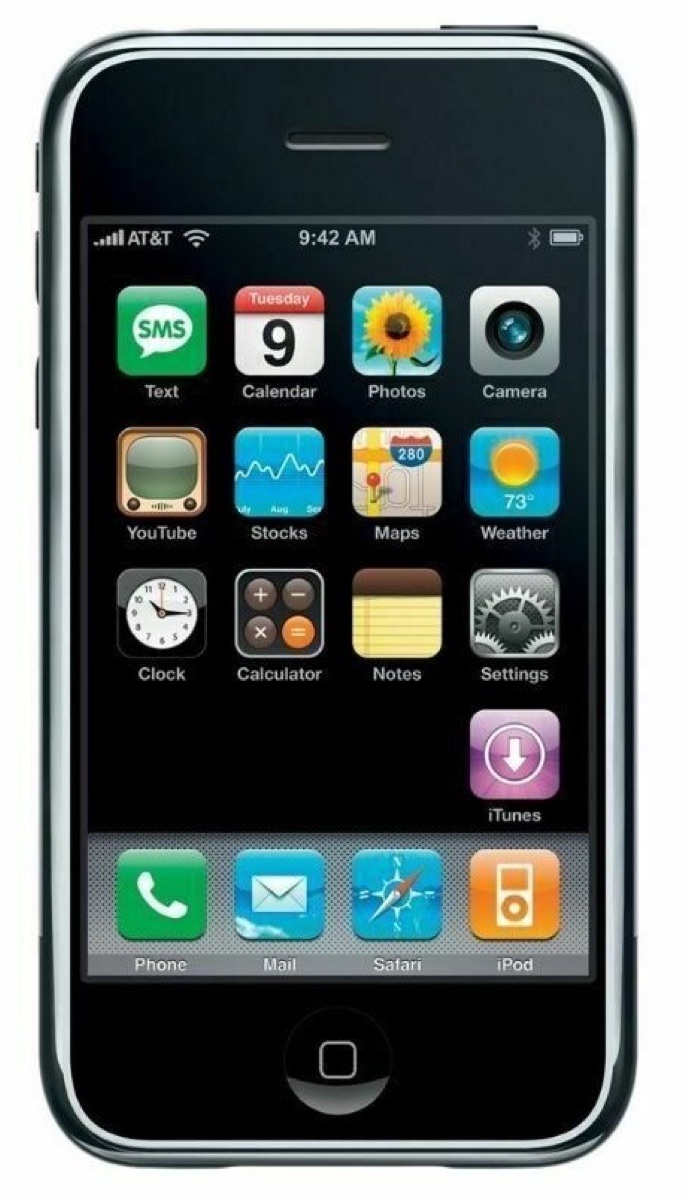
The original iPhone, January 2007. "A phone. An iPod. An internet communications device. These are not three separate devices. This is one device." Photo: Wikimedia Commons.
1. The iPod Goes Mainstream (2002)
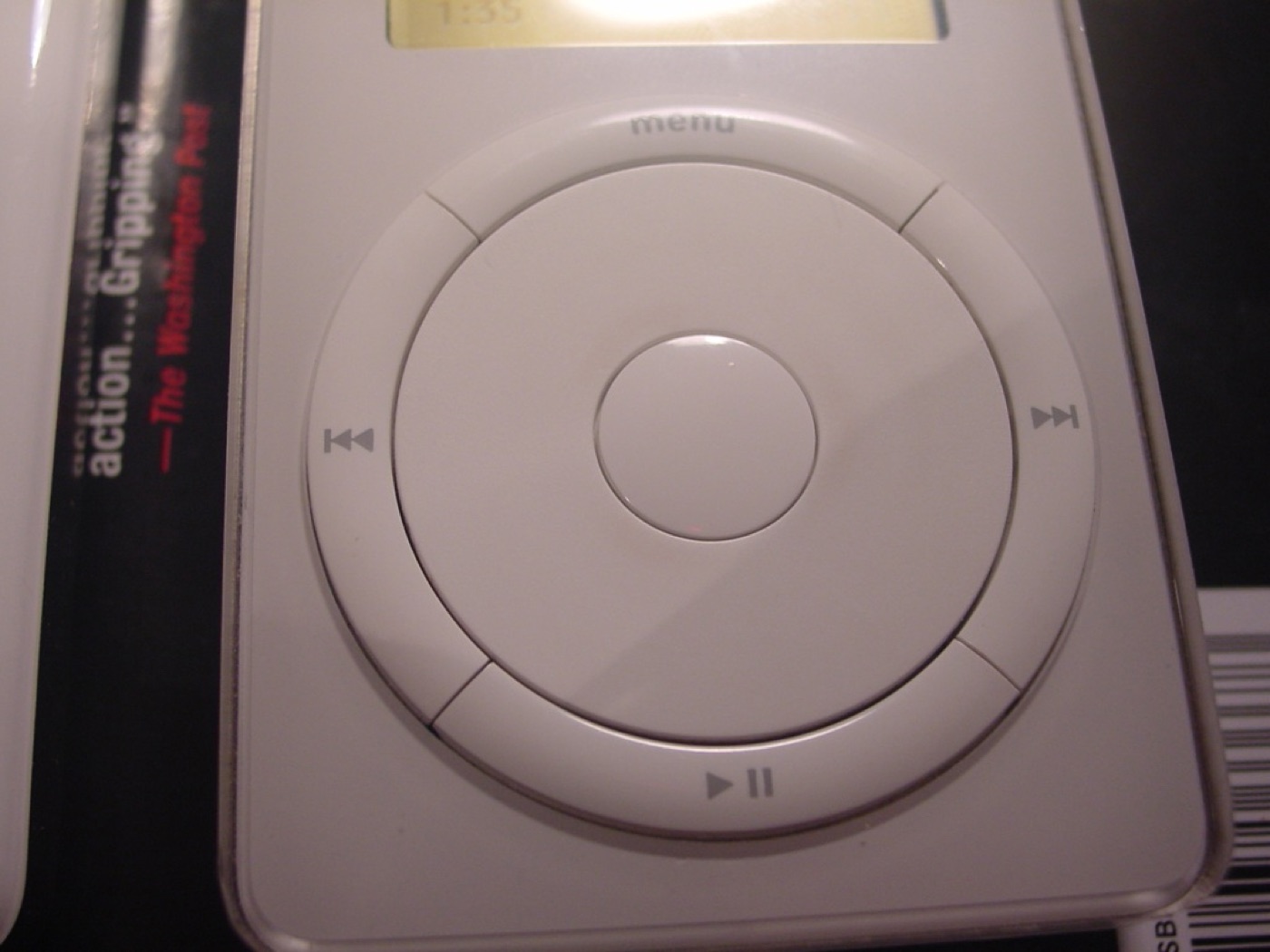
The original iPod (October 2001). Mac-only. Mechanical scroll wheel. The starting point of an empire. Photo: Wikimedia Commons, CC BY-SA.
For the first 9 months of its existence, the iPod was Mac-only. The Mac was about 5 percent of the global PC market. The iPod's addressable market was therefore tiny. Industry analysts pointed this out repeatedly.
In July 2002, Apple released a Windows version of the iPod (and later, of iTunes). Sales tripled overnight. The iPod was no longer a Mac accessory. It was a category-defining standalone product, and it had just become available to 95 percent of the world's computer users.
This single decision - making iTunes available on Windows - was, in retrospect, one of the most important strategic decisions Steve Jobs ever made. It created the customer base that would later buy iPhones.
2. April 28, 2003 - The iTunes Music Store
The iPod was a great hardware product. But what people put on it was either ripped from CDs or - much more commonly - downloaded illegally from Napster, Kazaa, LimeWire, and other pirate networks. The major record labels were suing individual users. Music industry revenue was collapsing.
Apple proposed a deal: a legal digital store with a single price point - 99 cents per song, no subscription, no DRM headache for honest customers, full ownership of the music file. Steve Jobs personally negotiated terms with the heads of all five major labels (Universal, Sony, Warner, EMI, BMG). The labels resisted. Jobs persisted. He made a key argument: piracy was already winning. The choice was not 99 cents versus 1.99. The choice was 99 cents versus zero.
The iTunes Music Store launched on April 28, 2003, Mac-only initially.
| Milestone | Songs Sold |
| First week | 1 million |
| First year | 70 million |
| By end of 2005 | 500 million |
| By early 2006 | 1 billion |
| By early 2007 | 2.5 billion |
iTunes Windows shipped in October 2003. By 2008, the iTunes Music Store would be the largest music retailer in America - bigger than Walmart.
The historical significance: The iTunes Music Store rebuilt an entire industry. The 99-cent unit price collapsed the album-bundle business. Singles came back. Artists who had previously needed major-label distribution could now reach a global audience digitally. The labels eventually thrived under Apple's terms - even as Apple captured an enormous share of the value.
3. The iPod Family Expands (2004-2005)
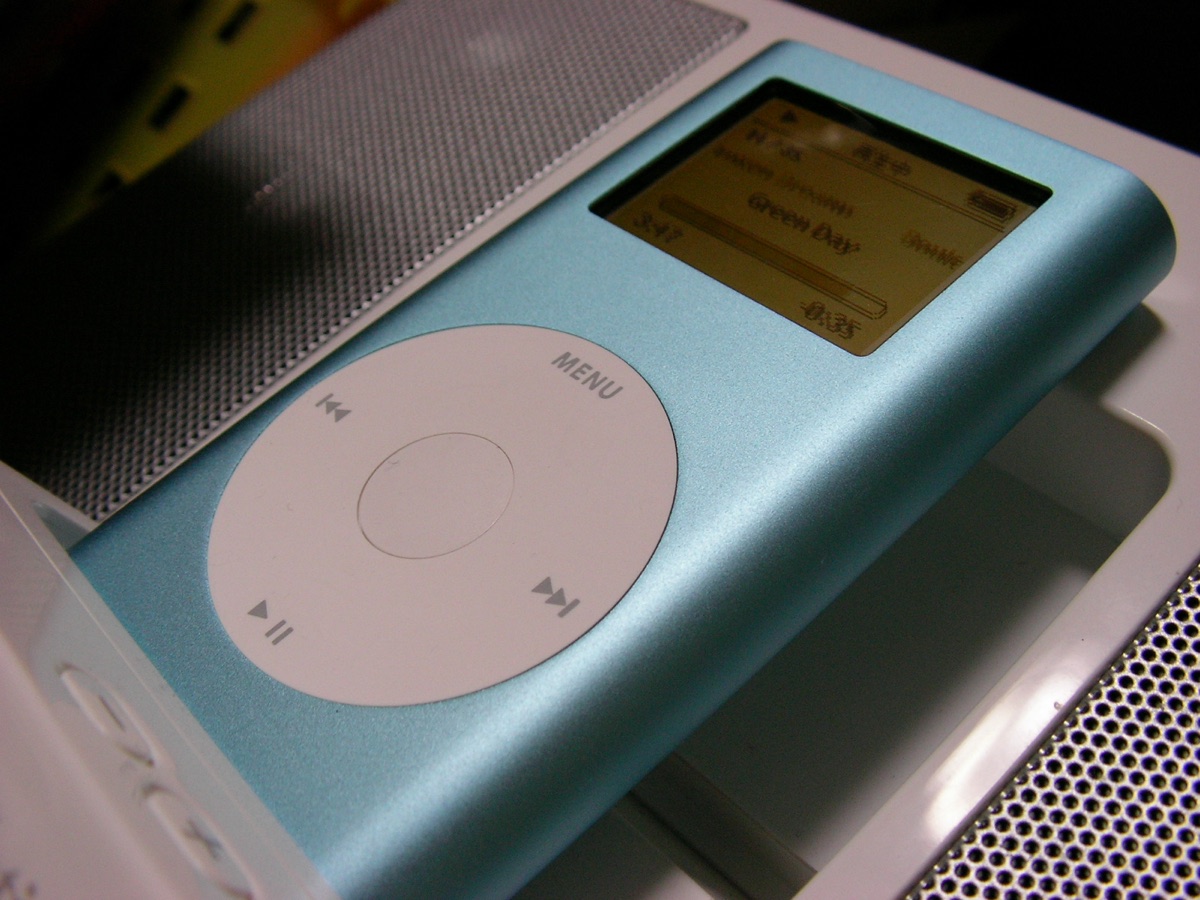
The iPod Mini (introduced January 2004). 249 dollars. Five colors. The product that made the iPod a mainstream consumer phenomenon. Photo: Wikimedia Commons, CC BY-SA.
By 2004, Apple realized the iPod was not just a single product. It was a platform that could span price points and form factors. Over 18 months, Apple shipped four major iPod variants:
| Product | Launch | Price | Position |
| iPod Mini | Jan 2004 | 249 dollars | Entry-level, 5 colors, 4 GB |
| iPod Shuffle | Jan 2005 | 99 dollars | Sub-100 entry, no screen, 512 MB - 1 GB |
| iPod Nano | Sep 2005 | 199 dollars | Replaced Mini, flash-based, color screen |
| iPod Video (5G) | Oct 2005 | 299 dollars | Video playback, color display |
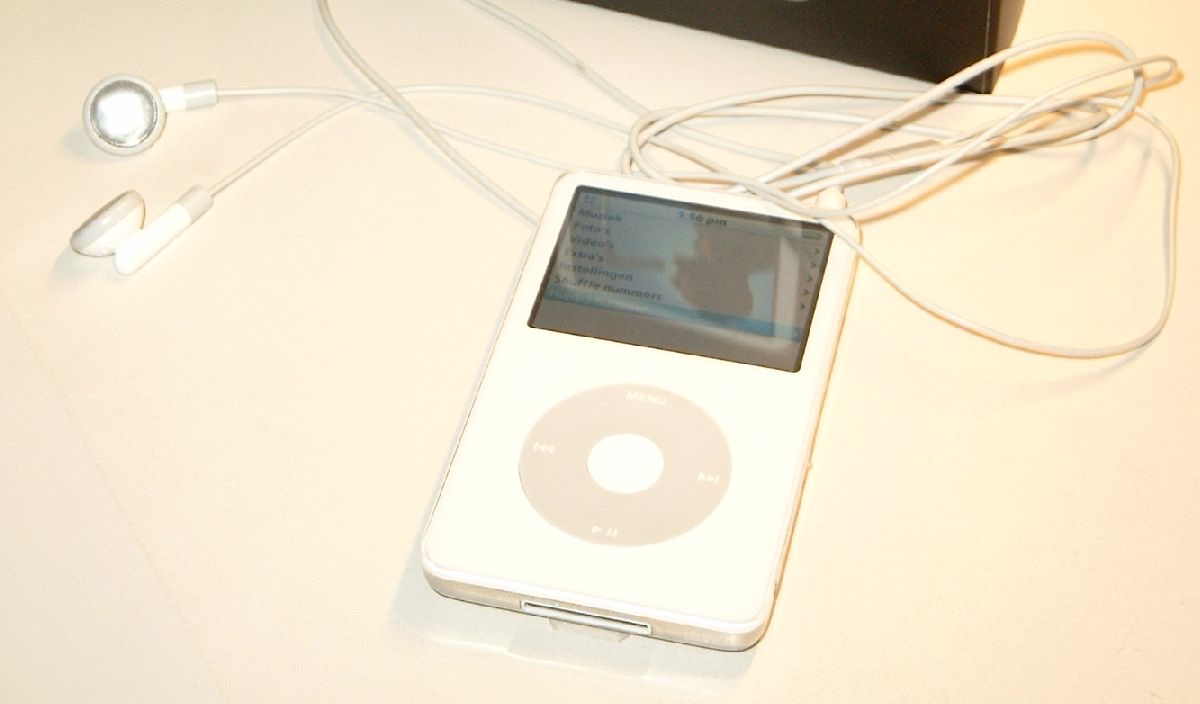
iPod Video (October 2005). 30 GB. 2.5-inch color display. The first iPod that could play video - including TV shows and music videos sold via the iTunes Store. Photo: Wikimedia Commons, CC BY-SA.
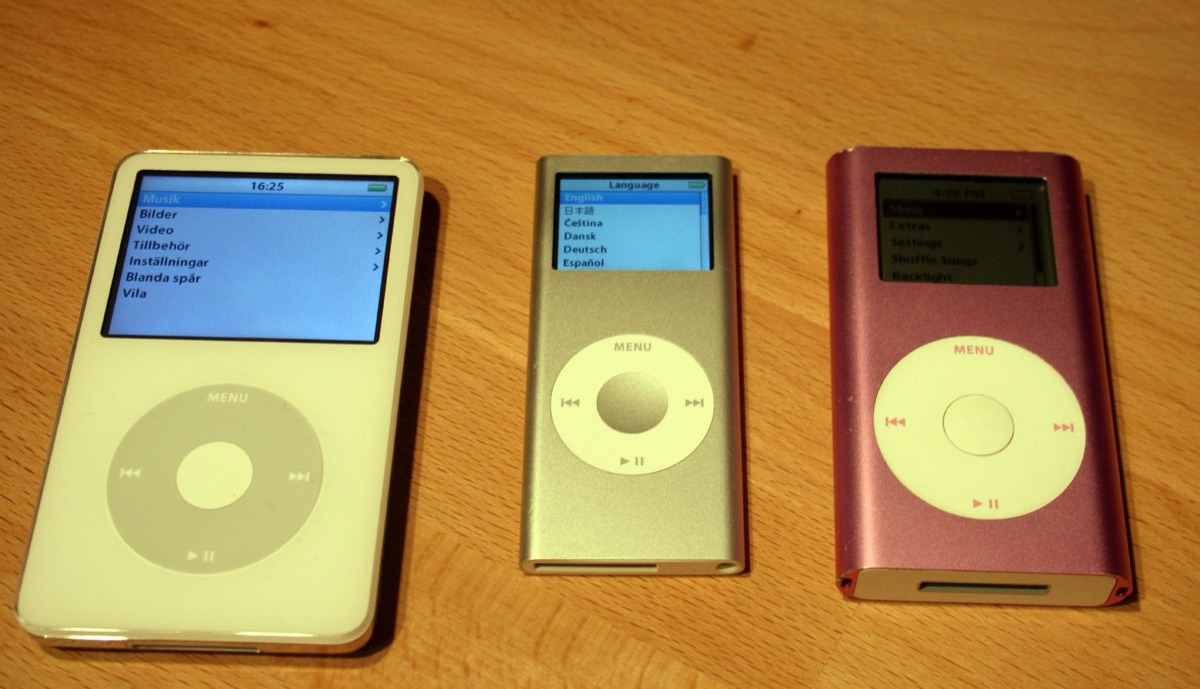
Three iPods together: 5G Video (left), Nano 2G (middle), Mini 2G (right). Apple covered every price point from 99 to 399 dollars. Photo: Wikimedia Commons, CC BY-SA.
By the end of 2006:
- Over 100 million iPods sold cumulatively
- iPod was approximately 40 percent of Apple's revenue
- iPod had over 70 percent share of the global digital music player market
- iTunes Music Store was the largest music retailer in America
4. June 6, 2005 - The Intel Transition
At WWDC 2005, Jobs announced one of the most consequential technical decisions in Apple's history: Apple was abandoning the PowerPC architecture and moving the entire Mac product line to Intel x86 processors.
The reasons were practical. PowerPC's performance per watt had fallen behind Intel's. Mobile chips, in particular, were a problem - PowerPC G5 was too power-hungry for laptops. Apple had developed Mac OS X to run on Intel as a hidden contingency plan since 2001. It was time to use it.
| Date | Milestone |
| June 6, 2005 | Transition announced at WWDC |
| January 10, 2006 | First Intel iMac and MacBook Pro shipped (replacing PowerBook G4) |
| May 2006 | MacBook (consumer laptop) launched |
| August 2006 | Mac Pro (workstation) shipped - transition complete |
Promised in 2 years, completed in 14 months. The transition was famously smooth. Rosetta translation software let users run PowerPC apps on Intel hardware. Boot Camp, released in March 2006, allowed Macs to run Windows natively. Mac sales surged.
5. January 24, 2006 - Disney Buys Pixar
While Apple was riding the iPod wave, Pixar was on its own remarkable trajectory. After Toy Story (1995), Pixar shipped:
- A Bug's Life (1998)
- Toy Story 2 (1999)
- Monsters, Inc. (2001)
- Finding Nemo (2003) - 940 million dollar gross
- The Incredibles (2004)
- Cars (2006)
Pixar's distribution deal with Disney was up for renewal. Disney CEO Michael Eisner had a famously hostile relationship with Steve Jobs. When Eisner was replaced by Bob Iger in 2005, the relationship reset. Iger pursued a full acquisition.
| Deal Term | Detail |
| Acquisition price | 7.4 billion dollars in Disney stock |
| Closing date | May 5, 2006 |
| Steve Jobs's stake at acquisition | ~50.6 percent of Pixar |
| Steve Jobs's payout in Disney stock | ~3.7 billion dollars (largest individual Disney shareholder) |
| Board seat | Jobs joined Disney's Board of Directors |
The 10 million dollars Jobs had paid in 1986 became 3.7 billion dollars in 2006. He was now wealthier from Pixar than he had ever been from Apple - and he had become Disney's largest individual shareholder.
6. The Health Story (2003-2006)
Quietly underneath the product announcements, Steve Jobs was facing a serious health crisis.
In October 2003, a routine kidney scan picked up a tumor on Jobs's pancreas. Most pancreatic cancers are aggressive adenocarcinomas with poor survival rates. Jobs's was a rare neuroendocrine tumor - much more treatable. Doctors recommended immediate surgery.
Jobs initially refused conventional treatment, instead trying an alternative diet for 9 months. He had surgery (a Whipple procedure) in July 2004. He told the public the cancer was "cured."
In June 2005, Jobs gave the now-famous Stanford University commencement address. The speech included:
"Your time is limited, so don't waste it living someone else's life. Don't be trapped by dogma - which is living with the results of other people's thinking. Don't let the noise of others' opinions drown out your own inner voice. And most important, have the courage to follow your heart and intuition. They somehow already know what you truly want to become. Everything else is secondary."
- Steve Jobs, Stanford Commencement, June 12, 2005
The cancer would return in 2008. The urgency Jobs brought to the iPhone, App Store, and iPad in his remaining years was, in part, a reaction to knowing his time was limited.
7. January 9, 2007 - The iPhone
At Macworld San Francisco on January 9, 2007, Steve Jobs walked on stage and gave one of the greatest product launch keynotes ever delivered. He started slow:
"Today, Apple is going to reinvent the phone."
"We're introducing three revolutionary products. The first one is a widescreen iPod with touch controls. The second is a revolutionary mobile phone. And the third is a breakthrough internet communications device."
"An iPod. A phone. An internet communicator. An iPod. A phone... are you getting it?"
"These are NOT three separate devices. This is ONE device. And we are calling it iPhone."
7.1 The Specs
| Spec | Original iPhone (2G) |
| Display | 3.5-inch capacitive multi-touch, 480x320 pixels |
| Processor | Samsung S5L8900 ARM 11 @ 412 MHz |
| RAM / Storage | 128 MB RAM, 4 GB or 8 GB |
| Camera | 2 megapixel rear, no front, no video |
| Network | 2G EDGE only (no 3G) |
| Apps | No native third-party apps. Only web apps until App Store launched in July 2008. |
| OS | iPhone OS 1 (later renamed iOS) |
| Carrier | AT&T (Cingular) - 2-year exclusive in the US |
| Price | 499 dollars (4 GB) / 599 dollars (8 GB) with 2-year contract |
7.2 The Same-Day Renaming
In the same keynote, Jobs announced that Apple Computer Inc. was now Apple Inc. The word "Computer" was dropped from the corporate name after 30 years. Apple was no longer in the personal computer business as a primary identity. It was a consumer technology company that also happened to make computers.
7.3 The Ship and the Numbers
The iPhone shipped on June 29, 2007. People lined up overnight at Apple Stores. The first weekend produced over 270,000 sales.
| Period | iPhone Sales |
| Launch weekend (June 29 - July 1, 2007) | 270,000+ |
| First fiscal quarter (Q4 2007) | 1.39 million |
| First generation total (June 2007 - June 2008) | 6.1 million units |
8. September 2007 - The iPod Touch
In September 2007, Apple launched the iPod Touch - essentially an iPhone without the phone. This let people who did not want to switch carriers (or pay AT&T's data plans) get the multi-touch iPhone interface. The iPod Touch became hugely popular with kids and teens who used Wi-Fi only. By 2010 it was the dominant gaming platform among younger users, foreshadowing the App Store's mobile-gaming dominance.
9. The 2007 Apple by the Numbers
| Metric | FY 2001 (start of era) | FY 2007 (end of era) |
| Revenue | 5.4 billion | 24 billion |
| Net income | -25 million (break-even) | 3.5 billion |
| Cash & equivalents | ~4 billion | ~15 billion |
| Stock price (split adjusted) | ~9.50 dollars | ~200 dollars |
| Market cap | ~7 billion | ~175 billion |
In six years, Apple's market cap grew from 7 billion to 175 billion dollars - a 25x increase. Revenue grew 4.5x. Net income went from break-even to 3.5 billion. The iPod alone was a larger business than most Fortune 500 companies. iTunes was the largest music store in America. The iPhone had just shipped.
And the App Store - which would launch in July 2008 - was about to make all of this look small.
10. Why This Era Matters
2001-2007 was the era when Apple stopped being a computer company. The Mac became one product among several. The iPod, iTunes Store, and iPhone were the platform plays. Apple learned how to negotiate with the music industry, manage a global supply chain at scale, integrate hardware and software at consumer-product price points, and turn a single device into a software-driven ecosystem. Every one of those skills would, two years later, be deployed at iPhone scale.
Series Roadmap
| Part 1 | The Garage That Started It All (1976) |
| Part 2 | The Apple II Boom (1977-1980) |
| Part 3 | The Macintosh Revolution (1984-1985) |
| Part 4 | The Dark Years (1985-1997) |
| Part 5 | The Greatest Comeback (1997-2001) |
| Part 6 (This Post) | From iPod to iPhone (2001-2007) |
| Part 7 | The iPhone Era to Apple at 50 (2007-2026) |