
 العربية
 Español
 中文
中文 Deutsch
 Français
 Português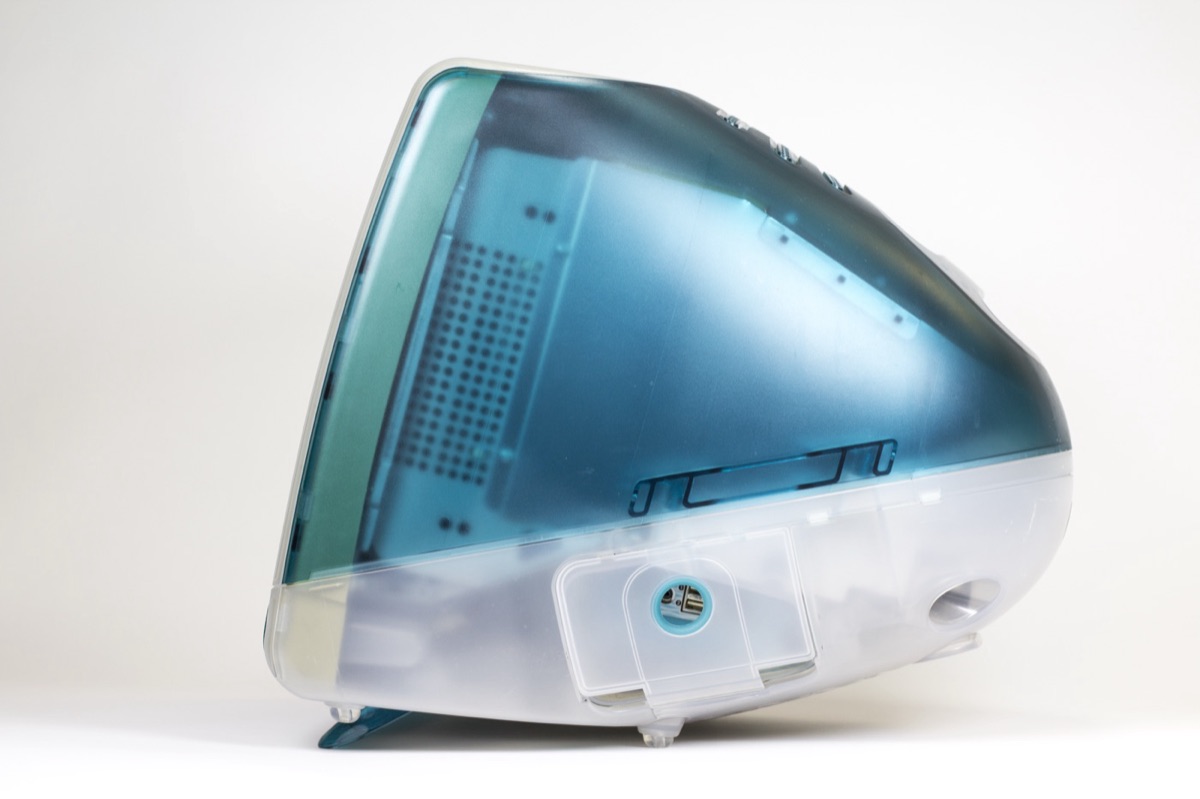
This is Part 5 of a 7-part series: "Apple at 50." Part 4 ended with Apple buying NeXT in December 1996, Steve Jobs returning, and Jobs being named interim CEO in July 1997 with Apple about 90 days from running out of cash. Part 5 is what happens next.
Between July 1997 and October 2001, Apple went from near-bankruptcy to defining the consumer technology industry for the next two decades. The four years of Jobs's second tenure produced - in order - the Think Different campaign, the iMac, Mac OS X, the Apple Store, and the iPod. Each of these was, individually, a major business or cultural event. Together, they made Apple one of the most influential companies in human history.
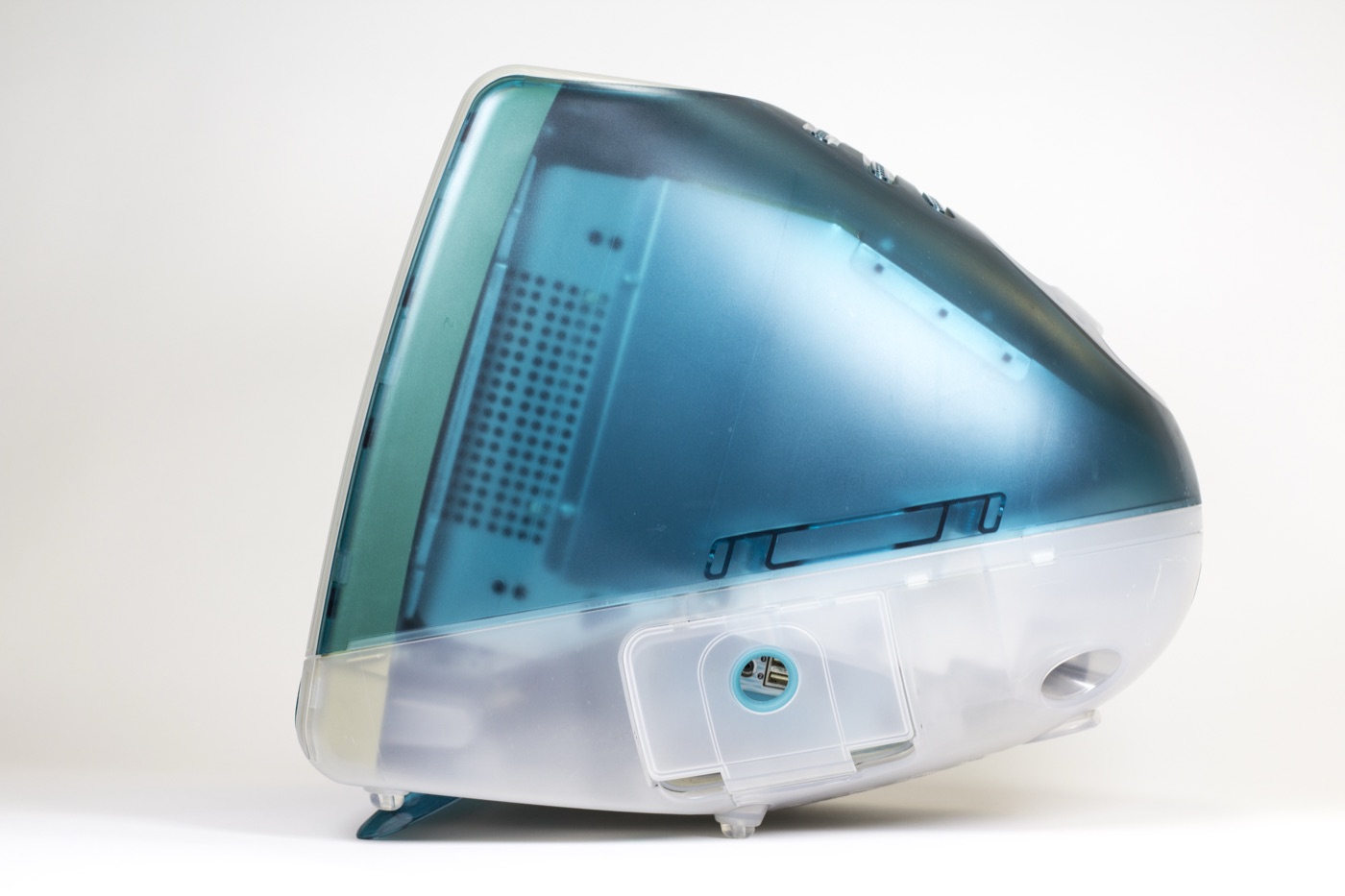
The Bondi Blue iMac G3 (August 1998) - the computer that announced Apple was back. Designed by Jonathan Ive, championed by Steve Jobs. Photo: Wikimedia Commons, CC BY-SA.
1. The Cuts (July to September 1997)
Jobs's first decisions on returning were not about new products. They were about subtraction. Apple in 1997 was a sprawling mess: 350 SKUs, multiple competing internal product teams, the Mac Clone program, the Newton platform, a printer business, the eMate, and dozens of other projects burning cash.
Jobs killed almost all of it.
| Killed | Reason |
| Mac Clone program | Cannibalizing Apple hardware sales |
| Newton MessagePad | Money pit, distracted from core |
| Printer business | Low margin, off-mission |
| Open Doc, Cyberdog, OpenStep for Mac | Distracting platform bets |
| 70 percent of Apple's product line | Focus on a 2x2 grid only |
The Four-Square Matrix
Jobs reportedly walked to a whiteboard at one of his early meetings, drew a 2x2 grid, and labeled the columns "Consumer" and "Pro" and the rows "Desktop" and "Portable." "This is what Apple is going to make," he said. "One product per quadrant. Four products. That's it."
2. September 28, 1997 - Think Different
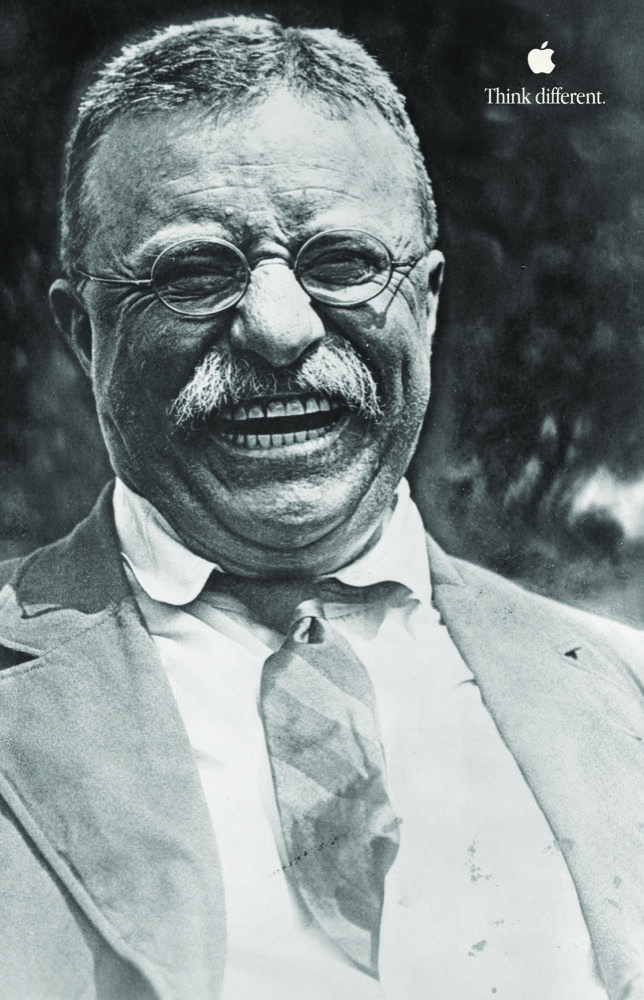
A Think Different campaign poster from 1997. The campaign featured black-and-white portraits of Einstein, Gandhi, John Lennon, Bob Dylan, MLK, Picasso, and other "crazy ones." Photo: Wikimedia Commons.
The Think Different campaign aired during the prime-time TV premiere of Toy Story on September 28, 1997. The 60-second commercial featured no Apple products. No prices. No features. Just black-and-white footage of Einstein, Gandhi, Edison, John Lennon, Martin Luther King Jr., Bob Dylan, Picasso, and a dozen others - with a Richard Dreyfuss voiceover:
"Here's to the crazy ones. The misfits. The rebels. The troublemakers. The round pegs in the square holes. The ones who see things differently. They're not fond of rules. And they have no respect for the status quo. You can quote them, disagree with them, glorify or vilify them. About the only thing you can't do is ignore them. Because they change things. They push the human race forward. And while some may see them as the crazy ones, we see genius. Because the people who are crazy enough to think they can change the world, are the ones who do."
Created by Lee Clow at TBWA Chiat Day - the same agency that had made the 1984 ad. Apple did not show a single product. The point was repositioning. Within months, Apple was no longer perceived as a struggling tech company. It was perceived as a brand for creative people.
3. May 6, 1998 - iMac Unveiled
At a press event at the Flint Center - the same auditorium where Jobs had unveiled the Macintosh in 1984 - Jobs introduced the iMac. The product had been developed in secret over the previous year by an industrial design team led by Jonathan Ive.
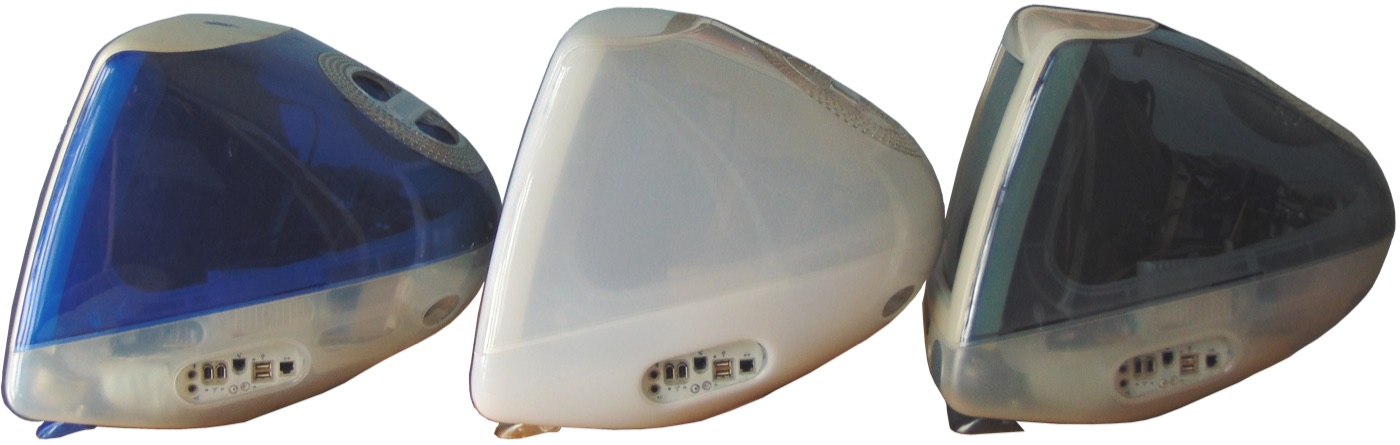
The iMac in its five "fruit" colors (1999): Strawberry, Blueberry, Tangerine, Lime, Grape. Apple did color marketing in computers in a way no one had since the 1970s. Photo: Wikimedia Commons.
3.1 The Industrial Design Decisions
| Decision | Detail |
| Translucent Bondi Blue plastic | Inspired by Bondi Beach in Sydney |
| All-in-one design | CRT, computer, speakers in one shell |
| No floppy drive | Apple bet floppy was dead. Industry mocked the choice. Within 5 years, every PC dropped the floppy. |
| USB-only ports (no ADB or serial) | Apple drove USB adoption single-handedly |
| Built-in modem | First computer marketed for getting online in 2 minutes out of the box |
| Round mouse ("hockey puck") | Universally hated. Apple replaced it within 2 years. |
| Handle on top | Subtle - this isn't a serious computer, you don't have to be afraid of it |
3.2 The Launch Numbers
| Metric | Value |
| Ship date | August 15, 1998 |
| Launch price | 1,299 dollars |
| First weekend | Sold out across most retailers |
| First 5 months | 800,000 units |
| Total iMac G3 sales (1998-2003) | ~6 million units |
| Apple FY 1998 Q4 | First profitable quarter in years |
The iMac saved Apple. Six months earlier, Wall Street analysts had been pricing in a 50 percent probability that Apple would be acquired or go bankrupt within 18 months. By Q1 1999, Apple was profitable, growing, and the iMac was the best-selling consumer computer in America.
4. The Filling-Out (1999-2001)
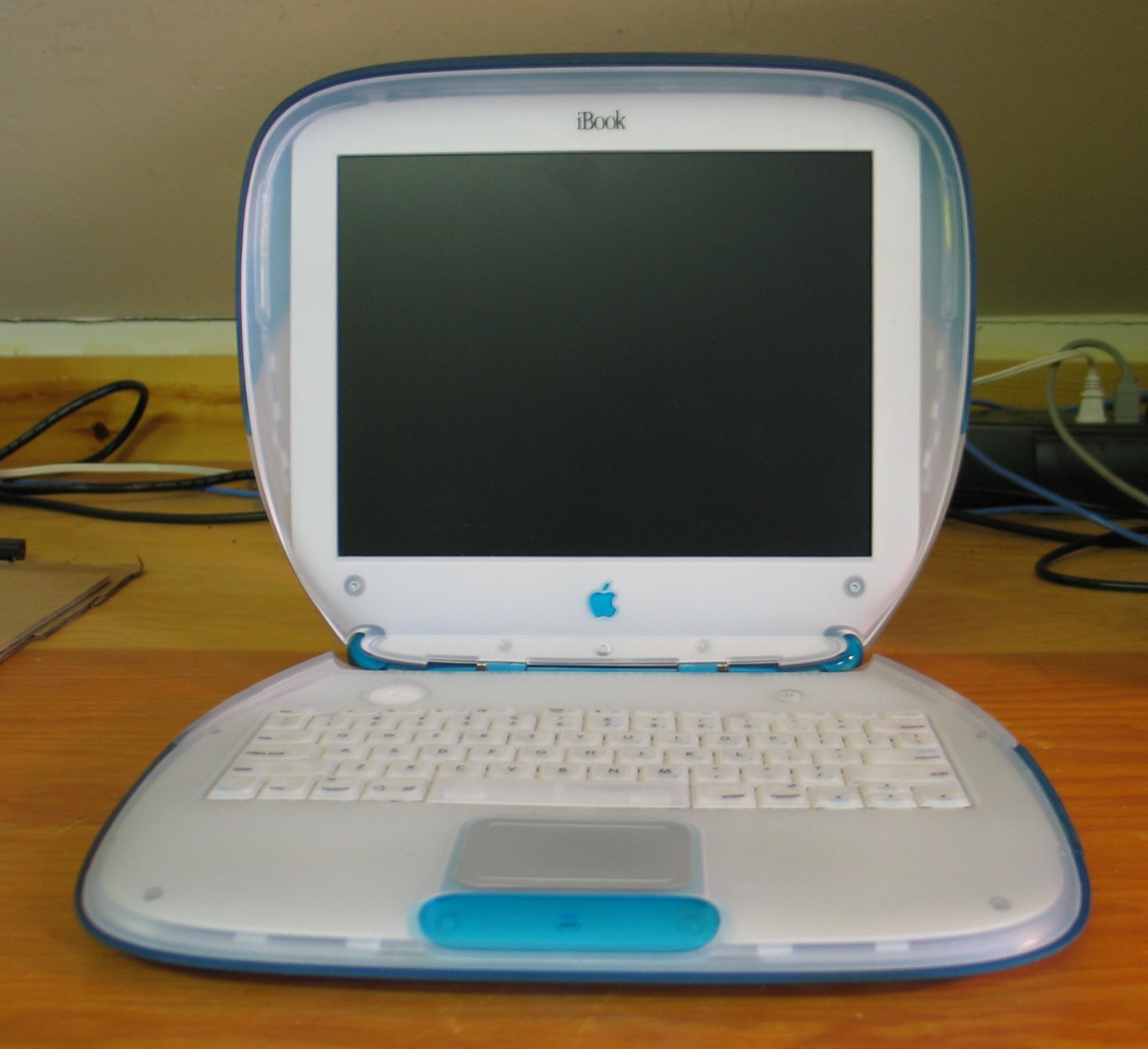
The original iBook (clamshell, 1999) - the consumer laptop that completed the four-square strategy. Translucent, colorful, designed for confidence rather than performance. Photo: Wikimedia Commons, CC BY-SA.
With the iMac succeeding, Jobs filled in the rest of the four-square grid:
| Quadrant | Product | Year |
| Consumer Desktop | iMac G3 | 1998 |
| Pro Desktop | Power Mac G3 / G4 | 1997 / 1999 |
| Consumer Laptop | iBook (clamshell) | July 1999 |
| Pro Laptop | PowerBook G4 Titanium | January 2001 |
5. The G4 Cube - The Beautiful Failure
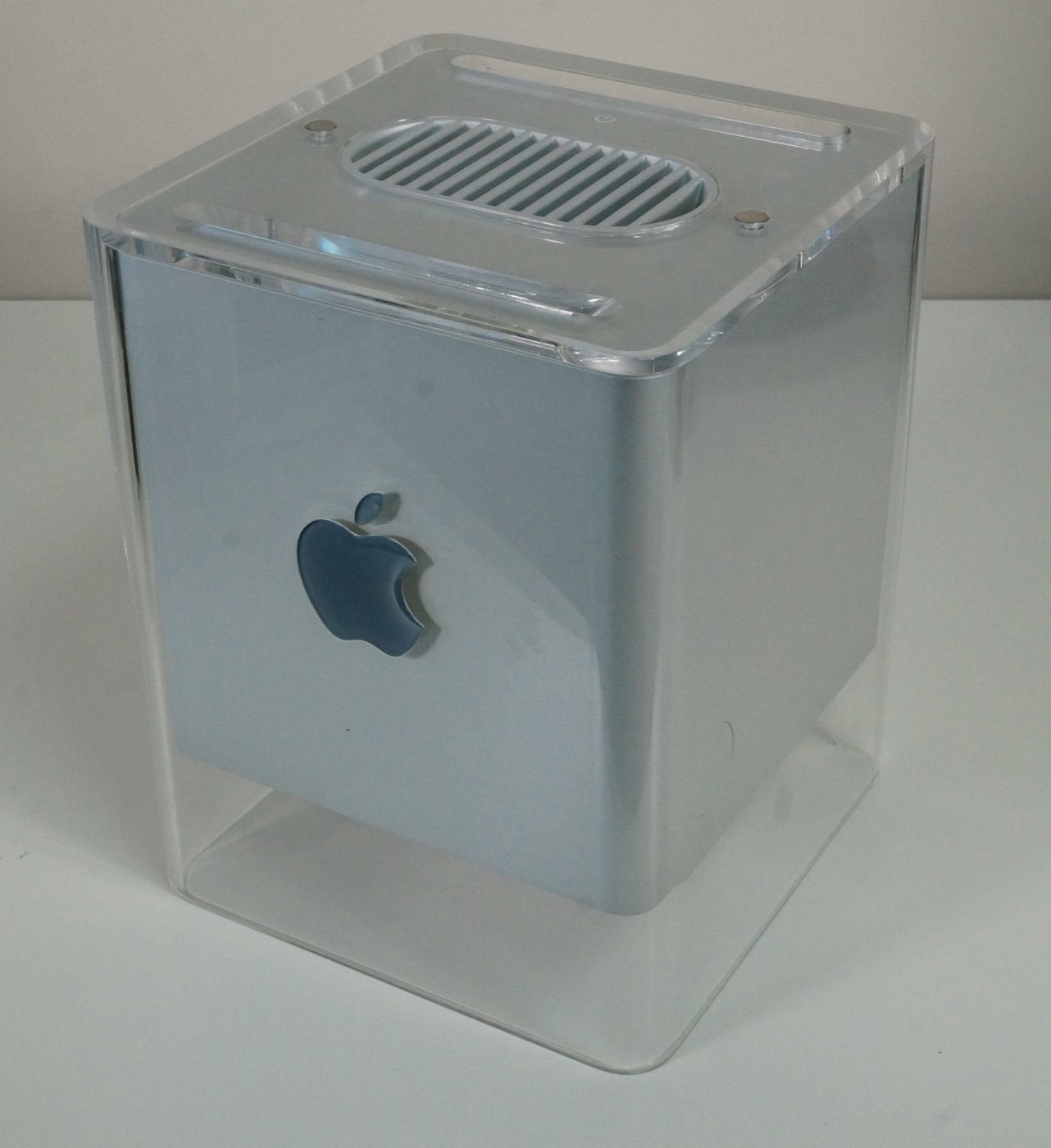
The Power Mac G4 Cube (July 2000) - 8-inch transparent acrylic cube, fanless, gorgeous, and a commercial flop at 1,799 dollars. Now a permanent exhibit at the Museum of Modern Art. Photo: Wikimedia Commons, CC BY-SA.
In July 2000, Jobs unveiled the Power Mac G4 Cube: an 8-inch acrylic cube suspended inside a transparent enclosure. No fan. No internal expansion. Just a beautiful object containing a complete G4 computer, priced at 1,799 dollars (without monitor).
It is widely considered one of the most beautiful computers ever designed. It now lives in the permanent collection of the Museum of Modern Art.
It was also a commercial disaster. It was caught between markets - too expensive for consumers, not expandable enough for pros. Apple sold about 150,000 units in a year and discontinued it in July 2001.
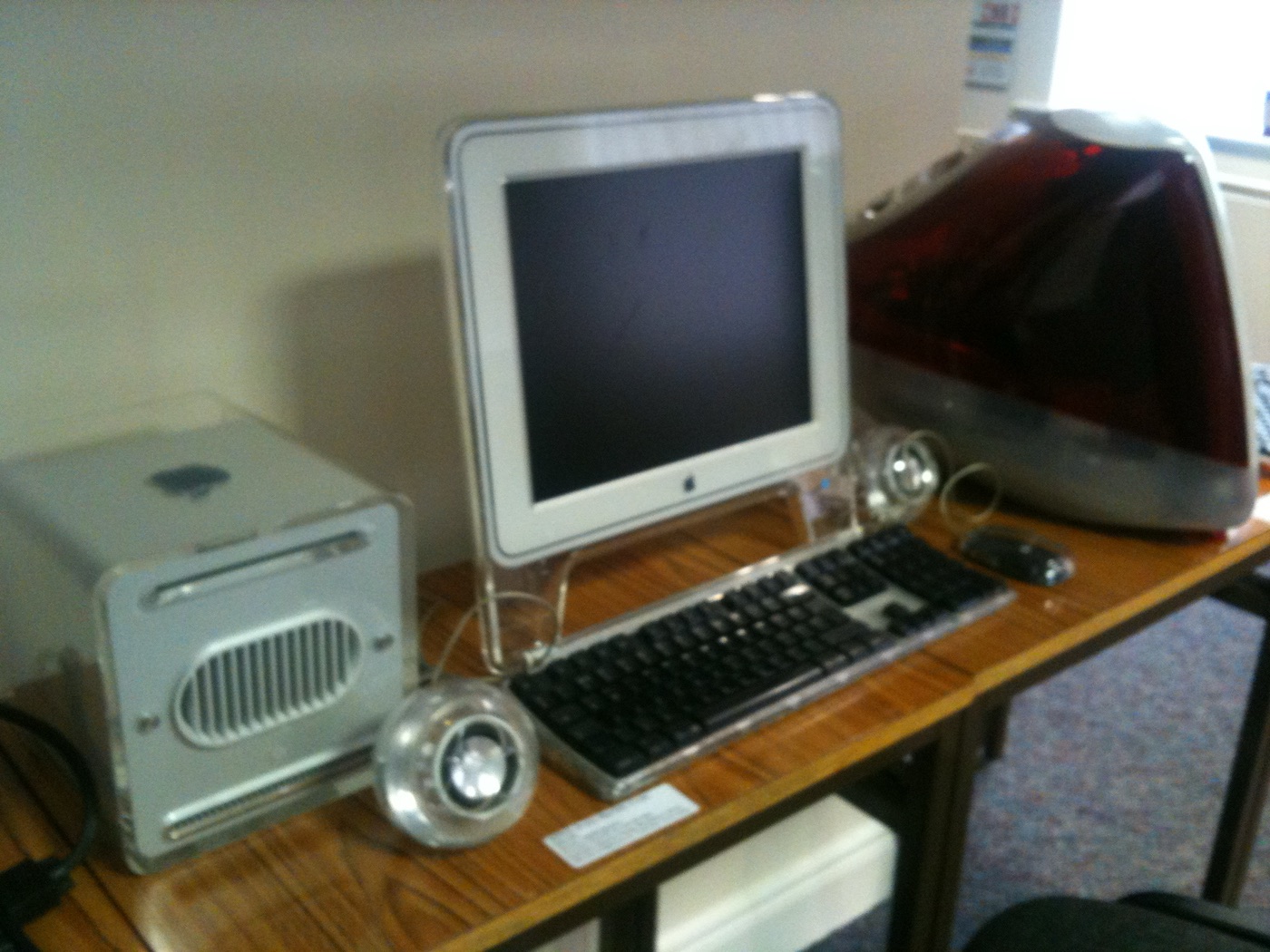
The G4 Cube alongside a graphite iMac. Both designed by Jonathan Ive's team. Together they bracketed Apple's design language at the turn of the millennium. Photo: Wikimedia Commons, CC BY-SA.
The Cube was the first major commercial failure of the comeback era. Jobs took the lesson seriously. The next decade would see Apple ship fewer experimental products and stick more rigidly to the four-square framework. The Cube's DNA reappeared in the Mac Mini (2005) and the trash-can Mac Pro (2013).
6. March 24, 2001 - Mac OS X 10.0 Cheetah
After more than five years of development, Mac OS X 10.0 - codenamed Cheetah - finally shipped on March 24, 2001. Built on the NeXTSTEP foundation that had come from Jobs's exile company, OS X was a full ground-up rewrite of the Mac operating system.
| Kernel | Mach + BSD Unix |
| Memory | Protected memory, preemptive multitasking - finally |
| UI | Aqua - water-droplet glassy buttons, the candy-apple visual language of the 2000s |
| Quartz | Modern compositing graphics with PDF-based imaging |
| Compatibility | Classic environment ran old Mac OS apps in a sandbox |
Cheetah was slow. It needed at least 128 MB of RAM to run reasonably (huge at the time). It had limited app compatibility. But it was the foundation that Apple would build on for the next 25 years - macOS, iOS, watchOS, tvOS, and visionOS all descend from this single shipment.
7. May 19, 2001 - The First Apple Store
On May 19, 2001, the first Apple Store opened at Tysons Corner Center, McLean, Virginia. A second opened the same day at Glendale Galleria, California.
The retail industry was hostile. BusinessWeek ran a 2001 piece titled "Sorry Steve, Here's Why Apple Stores Won't Work." Apple had only 5 percent computer market share. PC retail was a low-margin commodity business. Building stores meant building dozens of expensive leases. The strategy was, by analyst consensus, doomed.
The numbers two years later (2003): Apple Stores had become the highest-grossing retail in America measured in sales-per-square-foot, surpassing Tiffany & Co. and every other luxury brand. Within five years, Apple Stores were generating more revenue per location than any retail concept in modern history.
The store concept Jobs and Ron Johnson built had several distinctive elements:
- Geniues Bar - a tech support bar staffed by Apple employees, free for any Apple customer
- Hands-on demos - every product on the floor was running and connected, ready to use
- Open architecture - no clutter, no glass cases, products were the heroes
- Glass storefronts - the iconic transparent retail aesthetic that became Apple's signature
- Massive locations - prime mall positions and flagship street stores
8. October 23, 2001 - The iPod
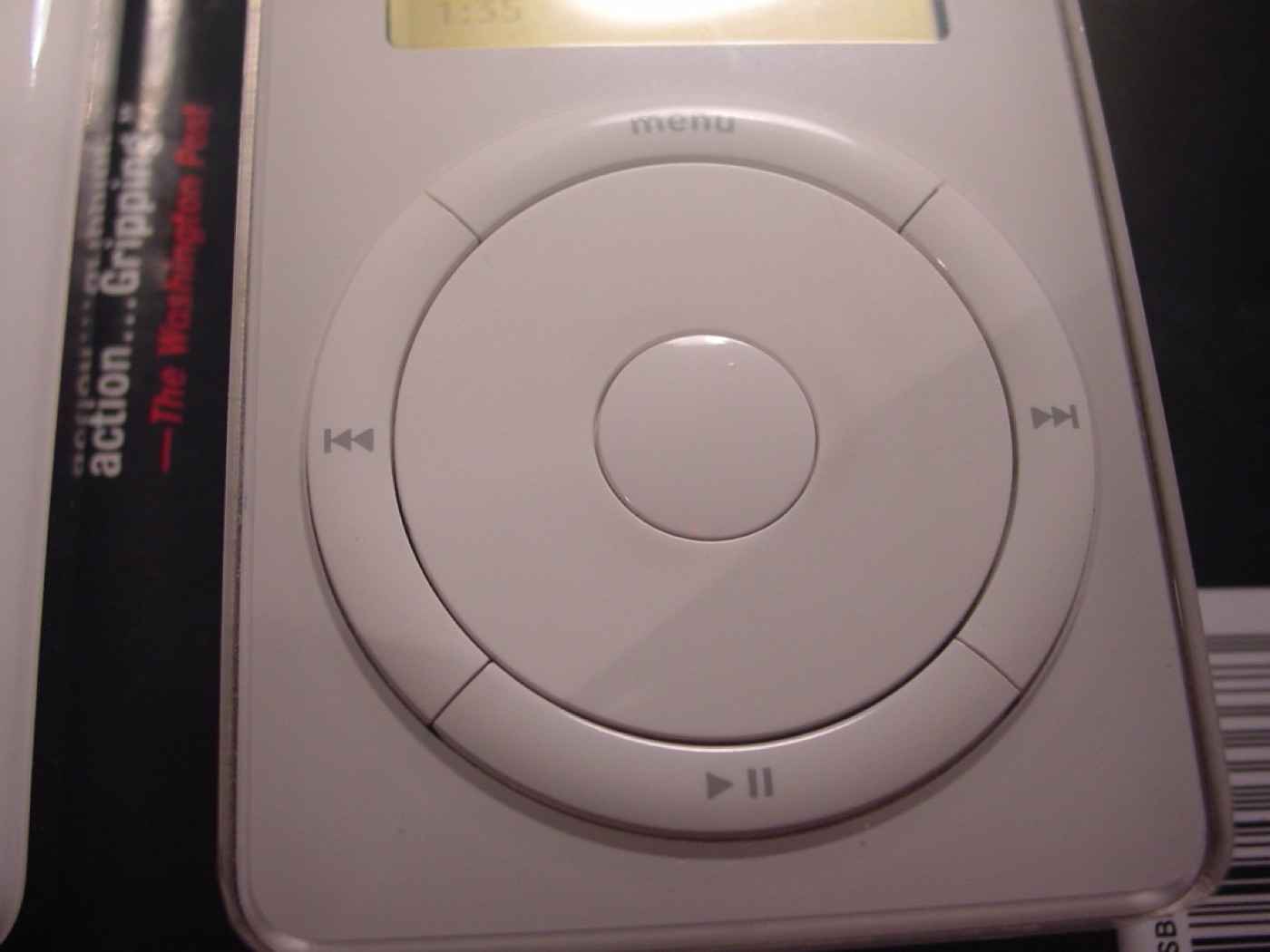
The original iPod (October 23, 2001). 5 GB hard drive. Mechanical scroll wheel. FireWire sync. 1,000 songs in your pocket. Mac-only at launch. Photo: Wikimedia Commons, CC BY-SA.
Six weeks after September 11, 2001, into a recession-stunned media environment, Jobs walked on stage at a small Apple press event and unveiled the iPod.
The product was a 5 GB hard drive in a stainless-steel-and-white-acrylic enclosure with a mechanical scroll wheel. The marketing tagline: "1,000 songs in your pocket."
| iPod 1st Gen Specs | Detail |
| Storage | 5 GB hard drive (1.8-inch Toshiba) |
| Display | 2-inch monochrome LCD with backlight |
| Wheel | Mechanical scroll wheel (later replaced by touch wheel) |
| Sync | FireWire (1,000 songs in 10 minutes) |
| Battery life | 10 hours |
| Price | 399 dollars |
| Compatibility | Mac-only at launch (Windows support came in 2002) |
The press response was mixed. Slashdot's headline: "No wireless. Less space than a Nomad. Lame." Reviewers thought 399 dollars was overpriced. Industry analysts pointed out Mac-only made the addressable market tiny.
By 2005: the iPod had over 70 percent share of the global digital music player market. By 2006, the iPod was generating more than 40 percent of Apple's revenue. By 2007, the iPod's commercial success and the iTunes Store ecosystem (launched 2003) had taught Apple how to ship a portable computing device with a software platform attached. That muscle memory built the iPhone.
9. The Digital Hub Strategy
At Macworld 2001, Jobs articulated the strategic frame for everything Apple was doing - what he called the Digital Hub strategy.
The thesis: the personal computer was no longer the destination. It was becoming the hub - the centerpiece - of a constellation of digital devices: digital cameras, MP3 players, camcorders, mobile phones. Apple's bet was to make the Mac the best hub possible, with software (iMovie, iPhoto, iTunes, iDVD) that turned digital data into something meaningful.
This strategic frame justified the iPod. It justified Apple's growing software investment. It would, two years later, justify the iTunes Music Store. And eventually, it would lead Apple to ship its own digital camera, its own phone, and its own everything.
10. The Numbers - Apple Reborn
| Metric | FY1997 (Jobs returns) | FY2001 (Year of iPod) |
| Revenue | 7.1 billion (loss-making) | 5.4 billion (profitable) |
| Net income | -1.04 billion | -25 million (essentially break-even after dot-com crash) |
| Cash & equivalents | ~1.2 billion (precarious) | ~4 billion |
| Stock price (split adjusted) | ~3.30 | ~9.50 |
| Market cap | ~3 billion | ~7 billion |
The 2001 numbers were modest by what was coming - Apple's market cap would cross a trillion within 16 years. But the trajectory had reversed. Revenue was stable. Cash was growing. The product line had momentum. The retail strategy was proven. Mac OS X was shipping. And the iPod was about to become the most important consumer device of the 2000s.
In 2001, Jobs dropped the "interim" from his title. He became Apple's permanent CEO.
The comeback was complete. What came next - the iPod's domination of music, the iTunes Music Store reshaping the recording industry, and ultimately the iPhone reshaping computing itself - is Part 6.
Series Roadmap
| Part 1 | The Garage That Started It All (1976) |
| Part 2 | The Apple II Boom (1977-1980) |
| Part 3 | The Macintosh Revolution (1984-1985) |
| Part 4 | The Dark Years (1985-1997) |
| Part 5 (This Post) | The Greatest Comeback (1997-2001) |
| Part 6 | From iPod to iPhone (2001-2007) |
| Part 7 | The iPhone Era to Apple at 50 (2007-2026) |