
 العربية
 Español
 中文
中文 Deutsch
 Français
 Português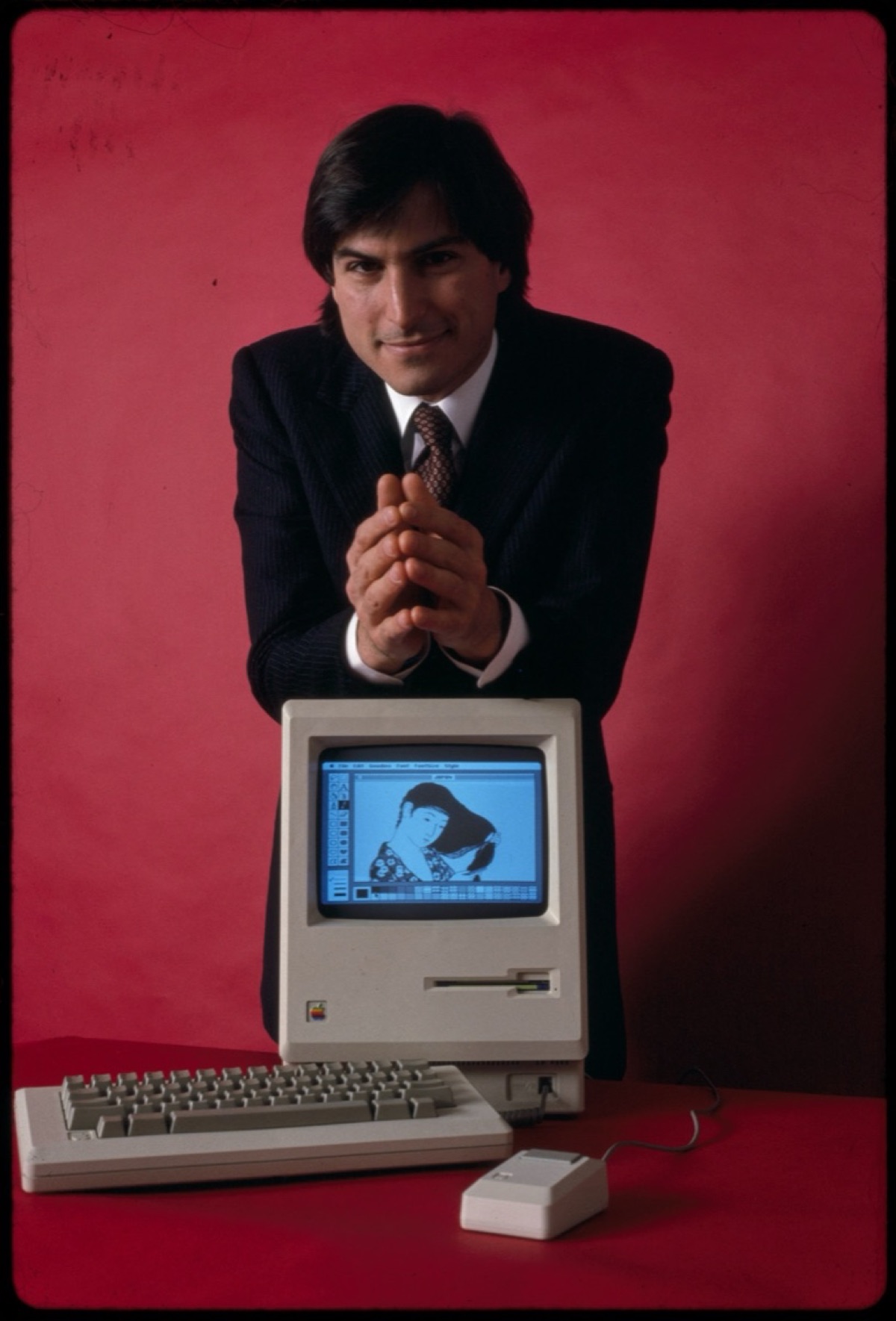
This is Part 3 of a 7-part series: "Apple at 50." Part 1 covered the garage founding. Part 2 followed the Apple II boom and the $1.79B IPO. Now we arrive at Apple's most creative and most turbulent moment: the birth of the Macintosh.
Between January 1984 and May 1985, Apple produced the most influential personal computer of all time, aired what is still widely considered the greatest commercial ever made, and tore itself apart in a power struggle that ended with Steve Jobs being fired from the company he founded.
This is how it happened.
1. The Xerox PARC Visit (December 1979)
The Macintosh story does not begin in Cupertino. It begins at the Xerox Palo Alto Research Center (PARC) in December 1979.
Xerox had made a small investment in Apple pre-IPO in exchange for a deal: Steve Jobs and a small team of Apple engineers would get a demonstration of what PARC's researchers had been working on.
What Jobs saw there was not a computer. It was the future:
- A graphical user interface with windows that overlapped like paper on a desk
- A pointing device called a mouse
- Bitmapped graphics - every pixel individually addressable
- Networked computers that could share files and messages
- Laser printing at presentation quality
Jobs was transfixed. He later said: "Within ten minutes it was obvious to me that all computers would work this way someday. It was so obvious once you saw it. It didn't require tremendous intellect."
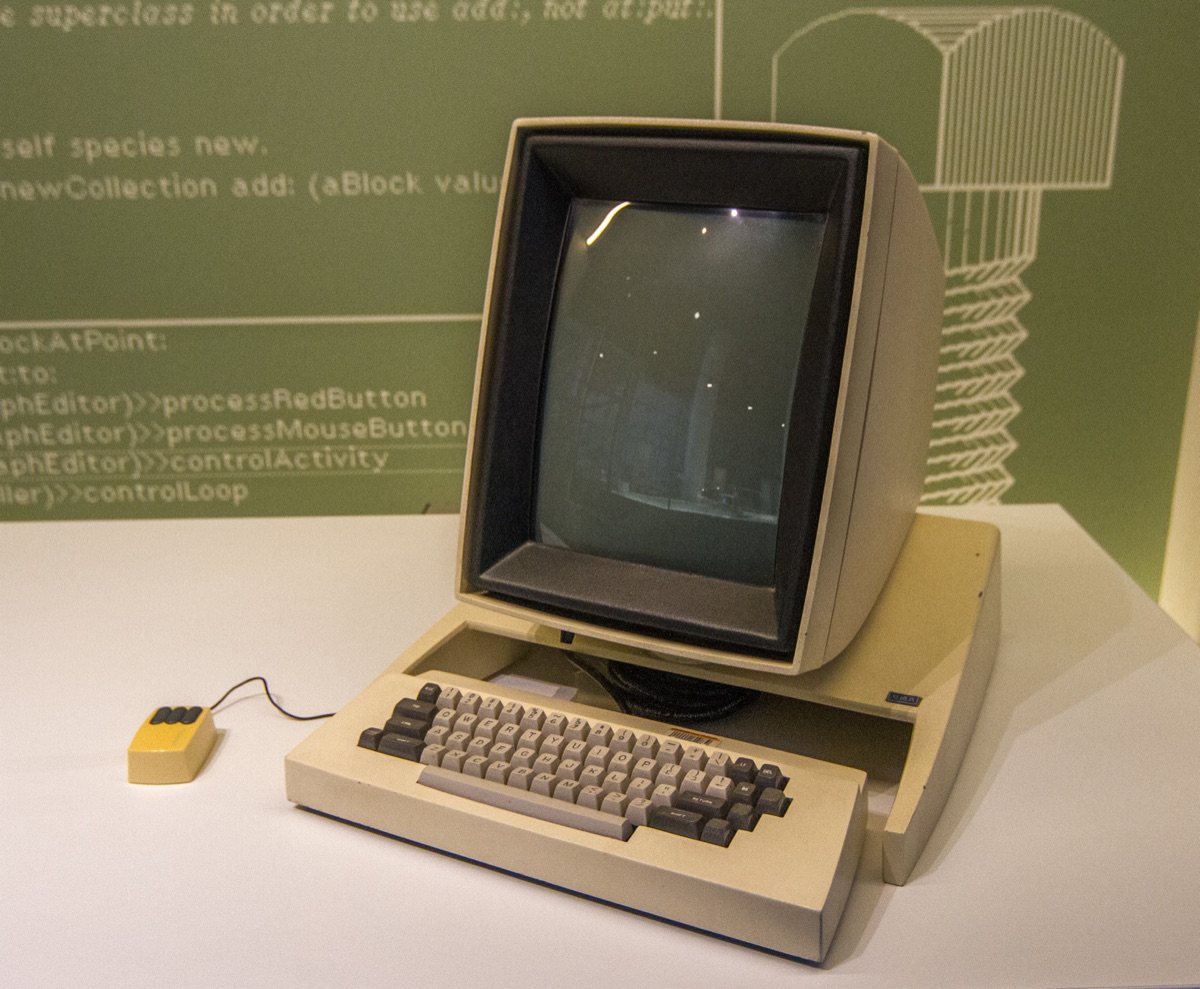
The Xerox Alto - the computer Jobs saw at PARC in 1979. Bit-mapped display, three-button mouse, overlapping windows, object-oriented programming. Xerox invented the future and didn't know what to do with it. Photo: Wikimedia Commons, CC BY-SA.
The Great Xerox Tragedy: Xerox had invented the entire graphical computing paradigm at PARC - the GUI, the mouse, object-oriented programming, Ethernet networking, laser printing. But Xerox's management in Stamford, Connecticut, could not figure out what to do with it. They were a copier company, not a computer company. Apple would take these ideas, refine them, and ship them to millions of people. PARC would enter Silicon Valley folklore as the greatest missed opportunity in business history.
2. The Lisa and the Macintosh Split
When Jobs returned to Apple, he threw his weight behind two projects aimed at building a graphical computer:
| Project | Target | Fate |
| Apple Lisa | Business market, $9,995 | Launched January 1983. Commercial flop - too expensive, too slow. Fewer than 10,000 units sold. |
| Macintosh | Consumer market, ~$1,000 target | Became the GUI computer that actually changed the world |
Jobs was kicked off the Lisa project in 1980 after clashing with the engineering team. He then did something that would reshape Apple: he took over a small skunkworks project that a former Apple engineer named Jef Raskin had been running since 1979.
Raskin's original Macintosh was meant to be a simple, low-cost appliance computer - no mouse, no fancy graphics, just an easy-to-use text-based machine for under $1,000. Jobs saw the project differently. He took Raskin's name and vision, then completely changed the product.
By 1981, Jobs had pushed Raskin out and installed himself as the leader of the Macintosh team. Within a year, the project's budget had ballooned, the launch date had slipped, and the Mac's ambitions had grown enormously.
3. The Pirate Flag
Jobs ran the Macintosh project like a rebel operation inside Apple. He separated the team from the rest of the company, moved them into a building called Bandley 3, and gave them a motto that became famous throughout Silicon Valley:
"It's better to be a pirate than to join the Navy."
- Steve Jobs to the Macintosh team
In 1983, a designer on the team (Susan Kare) sewed a black pirate flag with a rainbow Apple logo as the eye patch. It was raised over Bandley 3 and became the team's symbol. The message was clear: the Mac team was not playing by Apple's rules. They were building something that would disrupt the computing industry - and, if necessary, Apple itself.
The team worked 90 hours per week. Jobs famously printed T-shirts that read "90 HOURS A WEEK AND LOVING IT". Andy Hertzfeld later said the team called it "the Reality Distortion Field" - Jobs's ability to convince them that the impossible was not only possible but already behind schedule.
4. The Core Macintosh Team
| Person | Role | Legacy |
| Steve Jobs | Leader, vision, design tyrant | Defined every product decision, obsessed over typography and case design |
| Bill Atkinson | Software architect | Created QuickDraw (the graphics engine), MacPaint, and later HyperCard |
| Andy Hertzfeld | System software | Wrote much of the original Mac OS including the Control Panel and Scrapbook |
| Burrell Smith | Hardware design | Designed the Mac's logic board - a masterpiece of compact engineering |
| Susan Kare | Graphic designer | Designed the original Mac icons, fonts (Chicago, Geneva, Monaco), and the pirate flag |
| Jef Raskin | Original project founder | Named the Macintosh (after his favorite apple variety, McIntosh). Pushed out by Jobs. |
| Steve Capps | Finder | Co-authored the desktop Finder - the UI most Mac users knew |
Their signatures were engraved on the inside of every original Mac's case - one of Jobs's signature gestures. "Real artists," Jobs told them, "sign their work."
5. The "1984" Super Bowl Ad
While the engineers built the Mac, Apple's advertising agency Chiat/Day was working on something equally revolutionary: a commercial unlike any television advertisement that had ever aired.
Creative director Lee Clow and writer Steve Hayden conceived a 60-second dystopian short film inspired by George Orwell's novel 1984. They hired Ridley Scott - fresh off Blade Runner (1982) - to direct it.
5.1 The Production
| Director | Ridley Scott |
| Agency | Chiat/Day (Lee Clow, Steve Hayden) |
| Production cost | $900,000 - the most expensive commercial of the era |
| Airtime cost | $500,000 for a single 60-second slot during Super Bowl XVIII |
| Filming location | Shepperton Studios, England |
| The runner | Anya Major, a discus thrower (most actresses couldn't throw the sledgehammer) |
| The drone extras | Actual skinheads recruited from London streets (cheaper than shaving extras) |
5.2 The Board Almost Killed It
When Apple's board of directors screened "1984" in December 1983, they were horrified. It did not show the product. It did not say what Apple did. It was dark, violent, and strange.
The board voted to sell the airtime. Chiat/Day was ordered to unload the two Super Bowl slots Apple had already purchased.
Chiat/Day did something remarkable: they only half-complied. They sold the 30-second slot but quietly held onto the 60-second slot, claiming they couldn't find a buyer. This bought the ad one chance.
Wozniak's Offer: When Steve Wozniak heard the board wanted to kill the ad, he offered to pay for half the airtime personally out of his own pocket. "I was willing to put up my own money," he later said. "I thought it was an incredible commercial."
5.3 The Airing: January 22, 1984
Super Bowl XVIII: Los Angeles Raiders vs. Washington Redskins. Late in the third quarter, a 60-second commercial appeared that looked like a film trailer.
A dystopian world. Rows of gray drones marching into a hall. A giant screen showing Big Brother speaking. A young woman in bright red shorts running down the corridor carrying a sledgehammer, pursued by riot police. She throws the hammer into the giant screen. It explodes in a blinding flash.
Text scrolls: "On January 24th, Apple Computer will introduce Macintosh. And you'll see why 1984 won't be like 1984."
No product shot. No features. No price. No logo until the very last second.
5.4 The Reaction
The response was without precedent in advertising history:
- All three network evening news broadcasts replayed the entire ad for free that night as a news story
- Time and Newsweek wrote feature stories about it
- The phones at Apple dealers rang off the hook
- It is estimated the free media coverage was worth $150 million in 1984 dollars
The ad ran exactly once as a paid national spot (plus a single market test in Twin Falls, Idaho, on December 31, 1983, to qualify for ad awards). That was all it needed. Advertising Age and TV Guide have repeatedly named it the greatest commercial of all time.
6. The Launch Event: January 24, 1984
Two days after the Super Bowl ad, Jobs took the stage at the Flint Center for the Performing Arts in Cupertino for Apple's annual shareholder meeting. It was a conventional corporate event - until Jobs walked out in a gray double-breasted suit.
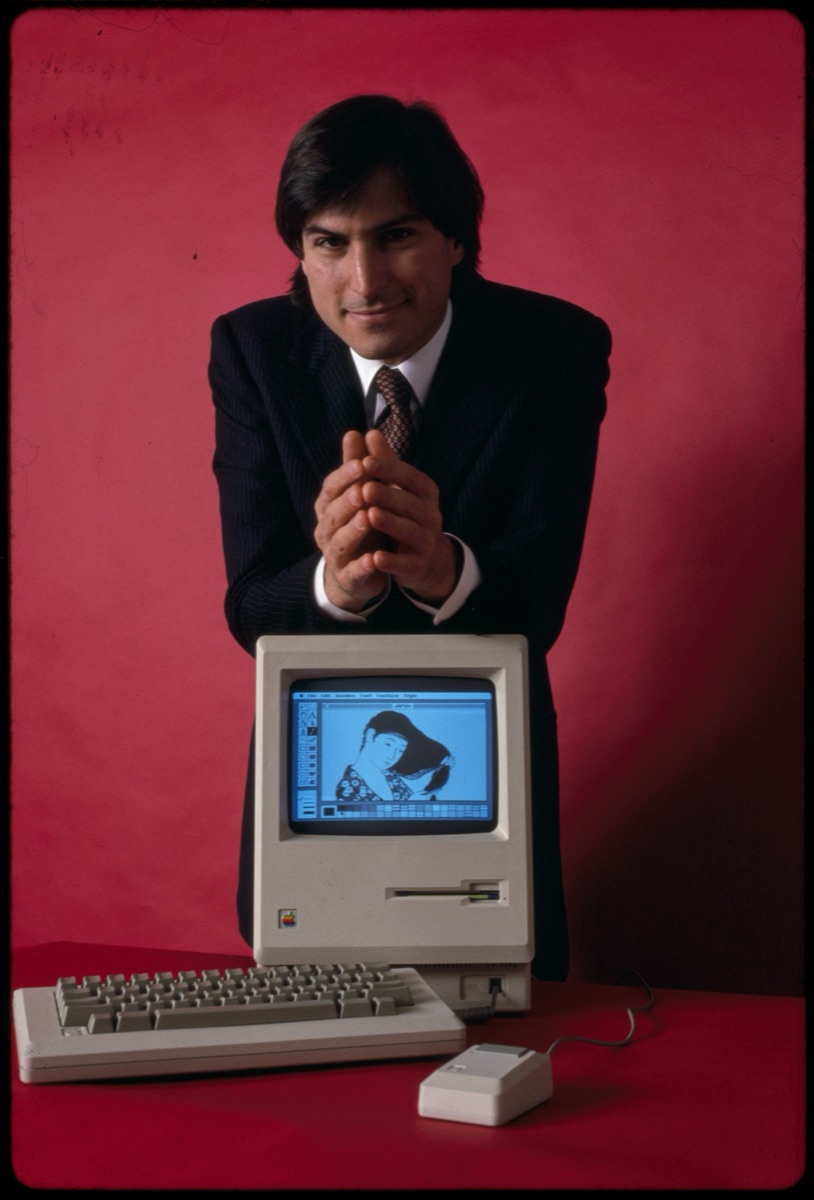
Steve Jobs with the original Macintosh, January 1984. Photo: Bernard Gotfryd, Library of Congress (Public Domain).
After a brief introduction, he reached into a small canvas bag on stage and pulled out a Macintosh. He connected it and stepped back. The room was silent.
The Mac then did something no computer had ever done in public before: it talked.
"Hello, I am Macintosh. It sure is great to get out of that bag."
"Unaccustomed as I am to public speaking, I'd like to share with you a maxim I thought of the first time I met an IBM mainframe: NEVER TRUST A COMPUTER YOU CAN'T LIFT."
"Obviously, I can talk. But right now, I'd like to sit back and listen. So it is with considerable pride that I introduce a man who's been like a father to me: Steve Jobs."
The audience erupted. Jobs was visibly moved. The standing ovation lasted five minutes. Many in the audience were crying. It was, as Andy Hertzfeld later wrote, "one of the greatest moments of our lives."
7. The Macintosh 128K: Specs
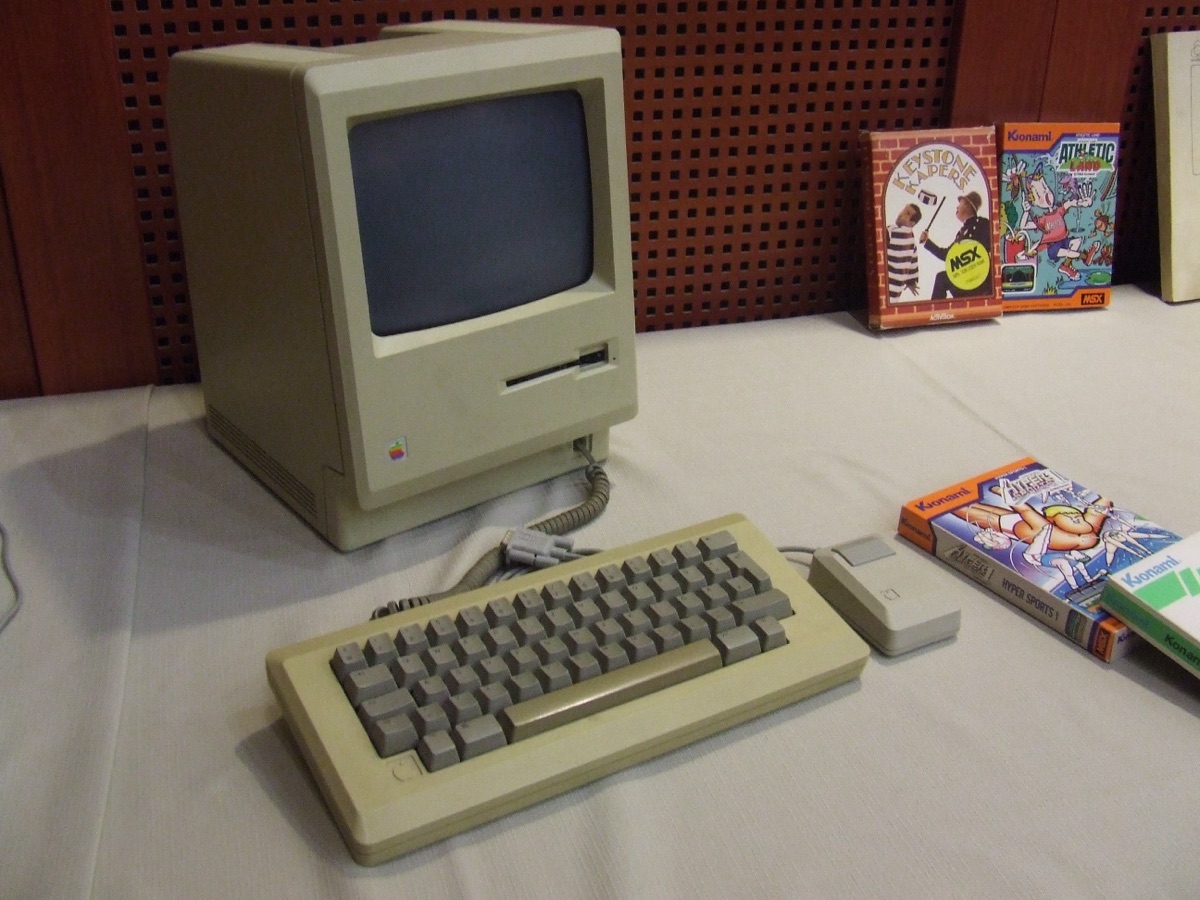
The Macintosh 128K - the computer that changed the personal computing industry. All-in-one design, 9-inch monochrome CRT, 3.5-inch floppy drive, handle on top. Photo: Wikimedia Commons, CC BY-SA.
| Spec | Macintosh 128K (Jan 1984) |
| Processor | Motorola 68000 @ 7.83 MHz |
| RAM | 128 KB (not expandable without modification) |
| Display | 9-inch built-in monochrome CRT, 512×342 pixels |
| Storage | 3.5-inch Sony floppy drive, 400 KB per disk (introduced the 3.5" standard) |
| Input | One-button mouse + keyboard |
| OS | System 1 (first commercial GUI OS for consumers) |
| Bundled software | MacWrite, MacPaint |
| Weight | 16.5 lbs (7.5 kg) - with a handle, designed to be portable |
| Price | $2,495 (approximately $7,500 in 2026 dollars) |
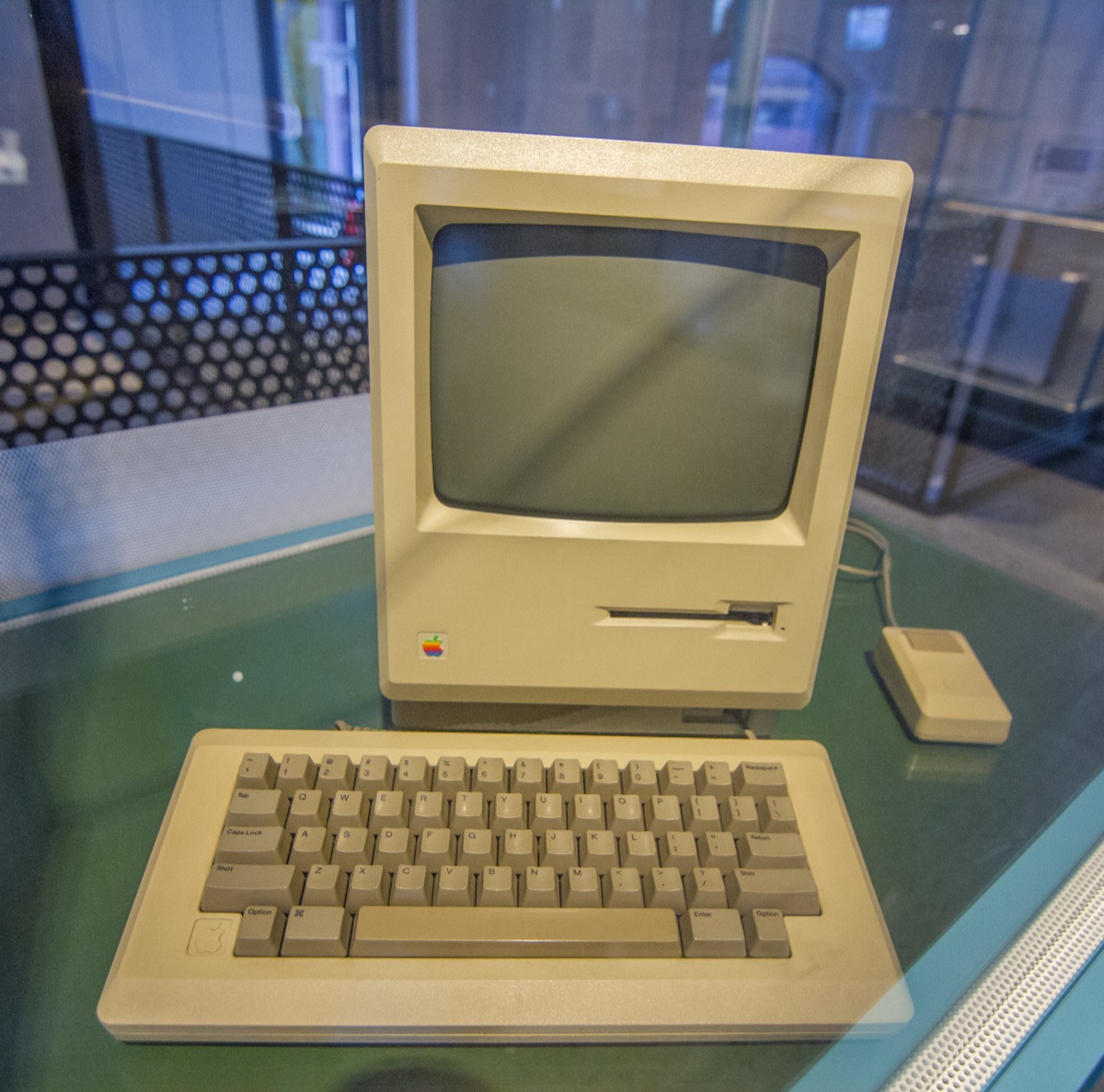
The complete Macintosh 128K system: the all-in-one computer, the original single-button mouse, and the keyboard. Note the minimalist design - Jobs insisted there be no sharp edges or visible screws on the front. Photo: Wikimedia Commons, CC BY-SA.
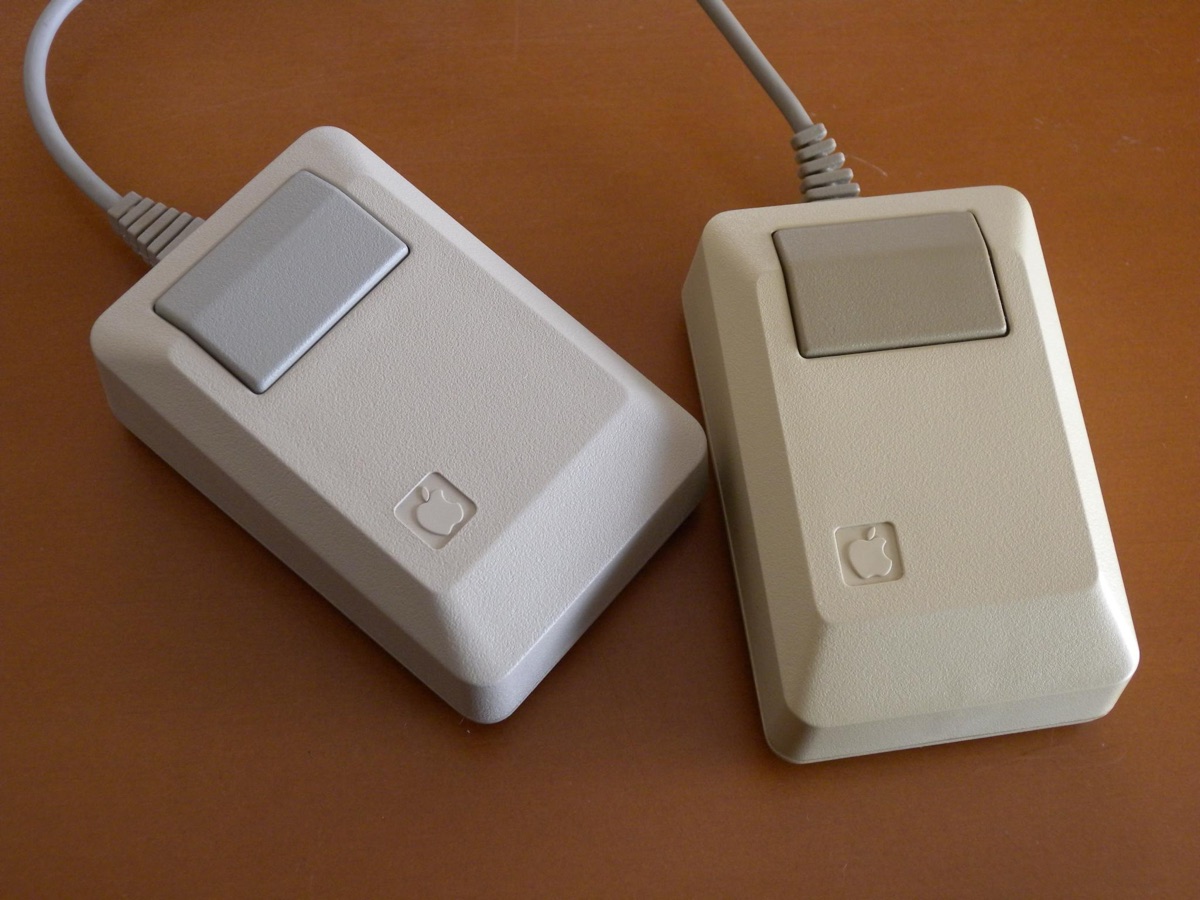
The Apple M0100 mouse - the original one-button mouse that shipped with every Macintosh. Its simplicity was radical. Xerox's research mouse had three buttons; Apple's usability team argued that one was enough - and won. Photo: Wikimedia Commons, CC BY-SA.
Signed by the Artists: Jobs insisted that the Macintosh team's signatures be engraved inside every original Mac's case. Regular users would never see them - but Jobs insisted. "When you're a carpenter making a beautiful chest of drawers, you're not going to use a piece of plywood on the back, even though it faces the wall. For you to sleep well at night, the aesthetic, the quality has to be carried all the way through."
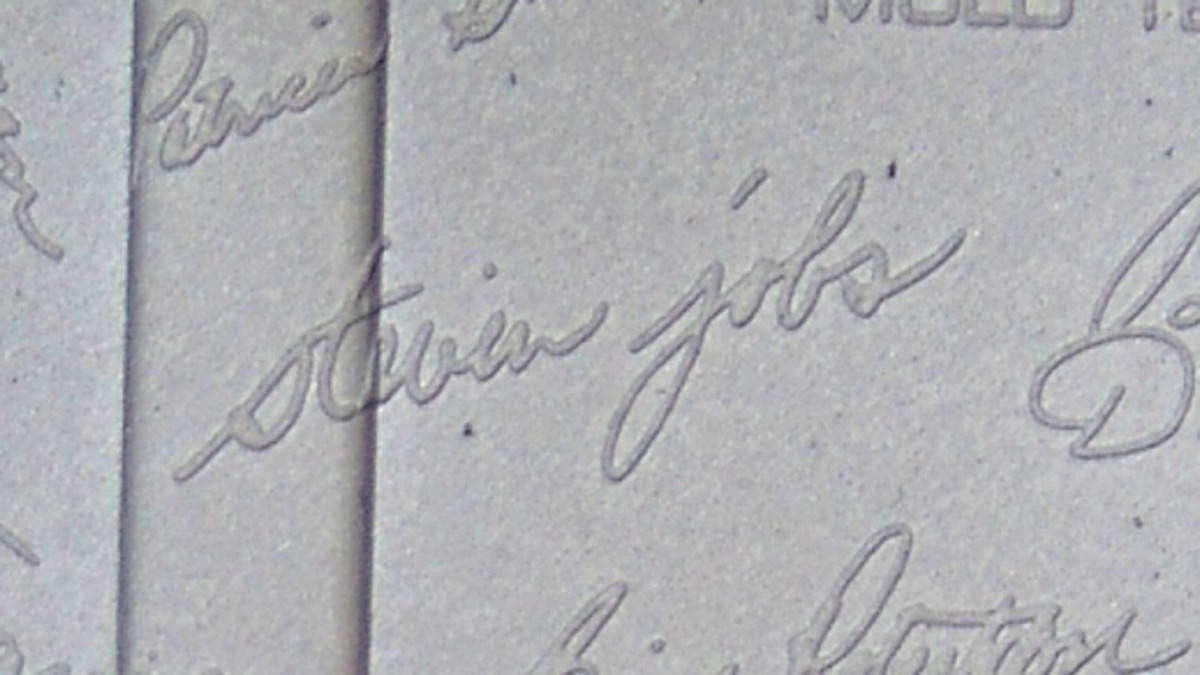
The Macintosh team's signatures engraved inside every original Mac case. Hidden from users but present in every unit - Jobs's gesture of honoring the artists. Photo: Wikimedia Commons, CC BY-SA.
8. The Fat Mac and the Sales Collapse
The Macintosh sold 72,000 units in its first 100 days - beating Apple's internal projection of 50,000. But by fall 1984, sales collapsed.
The problem was simple: 128 KB was not enough RAM. Users couldn't run complex documents. The software library was thin. The single floppy drive meant constant disk swapping. A major review famously compared using the Mac to "trying to do real work with a pocket calculator."
In September 1984, Apple rushed out the Macintosh 512K (nicknamed the "Fat Mac") to address the memory problem. But by then, damage had been done. IBM PC clones were flooding the market at lower prices. Apple missed its 1984 sales projections badly.
| Period | Mac Sales | Context |
| Jan-Apr 1984 | 72,000 units | Beat internal projections, strong launch momentum |
| May-Aug 1984 | ~80,000 units | Slowing but acceptable |
| Sep-Dec 1984 | Far below target | Sales collapse. Dealers had unsold inventory. |
9. The Sculley War
Hovering over all of this was a conflict that would define Apple's future: Steve Jobs versus John Sculley, the CEO Jobs himself had recruited in 1983.
"Do you want to sell sugared water for the rest of your life, or do you want to come with me and change the world?"
- Steve Jobs to John Sculley, then CEO of Pepsi, 1983
Sculley joined Apple in April 1983 as CEO. Jobs initially treated him like a mentor. But by late 1984, with Mac sales cratering and Apple's strategy in doubt, the relationship had become toxic.
- Jobs wanted to slash Mac prices and focus all of Apple behind the Macintosh
- Sculley wanted to keep the profitable Apple II line alive and raise Mac prices to show margins
- Jobs, who ran the Macintosh division, increasingly acted as a separate company within Apple
- Sculley, backed by the board, began to see Jobs as an uncontrollable liability
The stage was set for Apple's most famous boardroom battle - the story of Part 4.
10. Why the Macintosh Still Matters
The Macintosh 128K was a commercial disappointment in its first year. But its cultural and technical impact was seismic:
- The GUI became the standard. Microsoft Windows 1.0 shipped in November 1985 - 21 months after the Mac. Every major operating system today traces its UI lineage through Macintosh.
- The mouse became universal. Before the Mac, mice were lab curiosities. After the Mac, they were how you used a computer.
- Desktop publishing was born. The Mac + PostScript + the Apple LaserWriter (1985) + PageMaker (1985) created an entire industry.
- Product launches became theater. Jobs's stagecraft at the Flint Center set the template for every Apple keynote that followed - and was copied by every tech company that wanted to matter.
- Advertising was redefined. The "1984" ad proved that commercials could be cultural events. The Super Bowl ad industry we know today was born that January.
Series Roadmap
| Part 1 | The Garage That Started It All (1976) |
| Part 2 | The Apple II Boom (1977-1980) |
| Part 3 (This Post) | The Macintosh Revolution (1984-1985) |
| Part 4 | The Dark Years (1985-1997) |
| Part 5 | The Greatest Comeback (1997-2001) |
| Part 6 | From iPod to iPhone (2001-2007) |
| Part 7 | The iPhone Era to Apple at 50 (2007-2026) |
Sources: