
 العربية
 Español
 中文
中文 Deutsch
 Français
 Português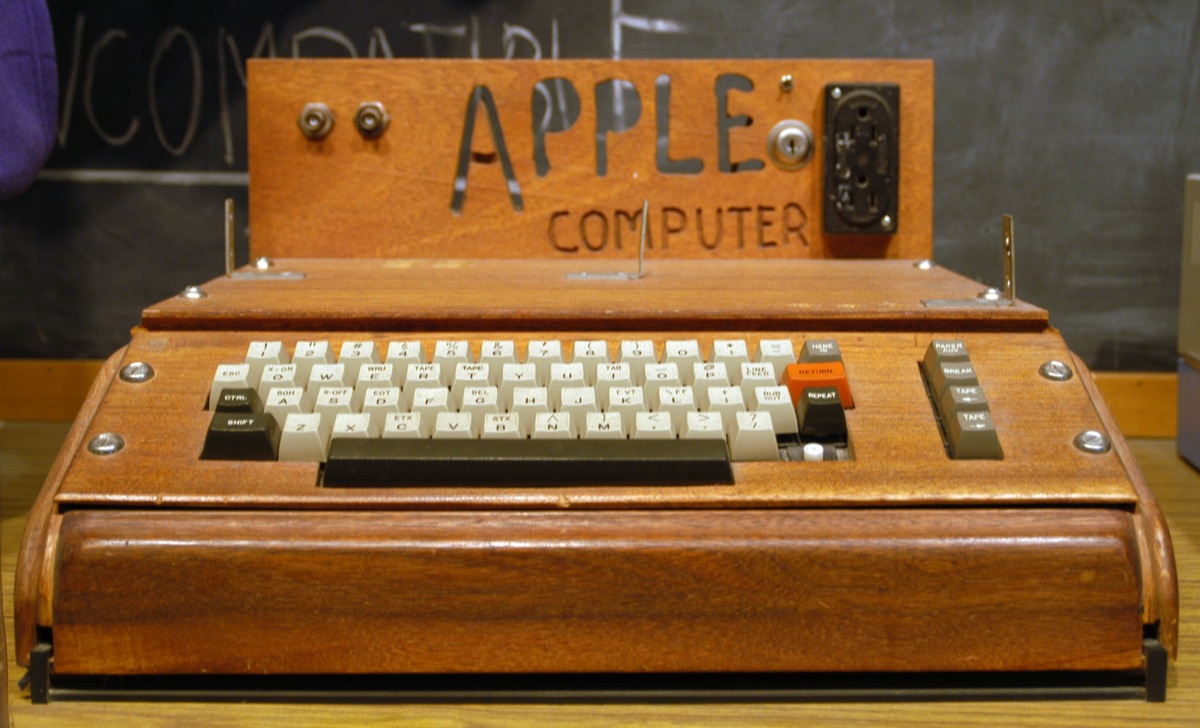
This is Part 1 of a 7-part series: "Apple at 50: The Wild, Brilliant & Sometimes Crazy Story." From a garage in Los Altos to the most valuable company on Earth.
On April 1, 1976, three very different people sat down in a suburban home in Los Altos, California, and signed a simple three-page contract.
Steve Jobs was 21 years old — charismatic, intense, and convinced the world needed personal computers.
Steve Wozniak was 25 — a brilliant engineer who could design entire computers in his head.
Ronald Wayne was 41 — the only adult in the room, with a mortgage, a car, and a steady job at Atari.
They called their new company Apple Computer Co.
There was no office. No investors. No employees. Just $1,300 in cash, a cluttered garage at 2066 Crist Drive, and one big dream: build computers that normal people could actually use.
The Real Garage Story (Not the Myth You’ve Seen)
You’ve probably seen the famous photo of Jobs and Wozniak working in the garage. It’s real — but it was staged later for publicity.
In reality:
- Most of the early design work happened in Wozniak’s apartment or at the Homebrew Computer Club, a legendary group of electronics hobbyists in Silicon Valley
- The Jobs family garage became the assembly line and shipping department
- Jobs’ bedroom was also used as a workspace when the garage got too crowded
As Wozniak himself said in a 2014 interview: "We did no designs there, no breadboarding, no prototyping, no planning of products. The garage didn’t serve much purpose, except it was something for us to feel was our home."
They were building the Apple I — not a finished computer, but a bare circuit board. No keyboard, no monitor, no case. Just the brain. Jobs had the vision and salesmanship. Wozniak had the engineering genius. Wayne was there to keep the young company from falling apart.
The Homebrew Computer Club: This was the fertile ground from which Apple grew. Meeting in a Menlo Park garage (later Stanford’s auditorium), the Homebrew Club was where Silicon Valley’s earliest personal computer enthusiasts shared ideas, showed off projects, and inspired each other. Wozniak first demonstrated the Apple I here, and the enthusiastic response convinced Jobs there was a real market for personal computers.
The First Big Sale
Jobs walked into a local computer store called The Byte Shop in Mountain View and convinced the owner, Paul Terrell, to buy 50 fully assembled Apple I boards for $500 each — cash upfront.
To fulfill the order, they needed parts. Jobs sold his Volkswagen bus. Wozniak sold his HP programmable calculator. Together, they scraped together the money and worked day and night hand-soldering the boards in the garage.
The Apple I sold to the public for $666.66 — a price Wozniak chose simply because he liked repeating digits. (It caused some concern among those who noticed the "number of the beast" connection, but Wozniak has always maintained it was just math: he wanted a 33% markup on the $500 wholesale price, and $666.66 was the result.)
| Apple I Specs | Details |
| Processor | MOS 6502 @ 1 MHz |
| RAM | 4 KB (expandable to 8 KB) |
| Display | 40 columns x 24 lines text (user supplied their own TV) |
| Storage | Cassette tape interface (optional) |
| Retail Price | $666.66 |
| Units Produced | ~200 (175 sold) |
| Auction Value (2025) | $300,000–$900,000+ for working units |
The $800 Mistake That Still Hurts Today
Just 12 days after signing the partnership agreement, Ronald Wayne got nervous. He worried the young company might rack up debts that he — as the only co-founder with real assets — would be personally responsible for.
So he sold his 10% stake back to Jobs and Wozniak for $800.
A few years later, he received another $1,500 to fully give up any future claims.
| Wayne’s payout (1976) | $800 + $1,500 = $2,300 total |
| Value of 10% Apple today | ~$300 billion |
| The original contract (sold at auction, 2011) | $1.6 million |
Wayne has said many times he has no regrets — he was simply protecting his family. But it remains one of the most expensive business decisions in history.
The Ironic Detail: Wayne didn’t just co-found Apple — he also designed the company’s first logo (a detailed pen-and-ink drawing of Isaac Newton under an apple tree) and wrote the original partnership agreement. The logo was replaced almost immediately by Rob Janoff’s iconic rainbow Apple, but the partnership document Wayne drafted became a $1.6 million artifact.
What the Apple I Looked Like
The photo above shows an original Apple I computer on display at the Smithsonian National Museum of American History. Note the hand-carved wooden case with "APPLE COMPUTER" burned into the wood — this wasn’t an Apple-designed enclosure. The Apple I shipped as a bare circuit board; users built their own cases out of wood, metal, or whatever they had. This particular unit’s wooden case perfectly captures the handmade, garage-era spirit of the company’s founding.
Of the approximately 200 Apple I units produced, only about 60–70 are known to survive. Working units have sold at auction for over $900,000.
Why This Garage Moment Still Matters in 2026
Fifty years later, Apple is one of the most valuable companies on Earth — worth over $3 trillion. But the spirit of that garage is still deeply embedded in Apple’s DNA:
- The obsession with making technology personal and beautiful
- The belief that hardware and software should be designed together
- The willingness to bet everything — literally selling your car — on a vision that others think is crazy
Every time you pick up a beautifully designed product that "just works," you’re feeling the echo of two young guys tinkering in a suburban garage with almost no money, but an enormous belief that computers could change the world.
Series Roadmap
| Part 1 (This Post) | The Garage That Started It All (1976) |
| Part 2 | The Apple II Boom (1977-1980) |
| Part 3 | The Macintosh Revolution (1984-1985) |
| Part 4 | The Dark Years (1985-1997) |
| Part 5 | The Greatest Comeback (1997-2001) |
| Part 6 | From iPod to iPhone (2001-2007) |
| Part 7 | The iPhone Era to Apple at 50 (2007-2026) |
Photo: Original Apple I computer at the Smithsonian. Photo by Ed Uthman, CC BY-SA 2.0.
Sources: