
 العربية
 Español
 中文
中文 Deutsch
 Français
 Português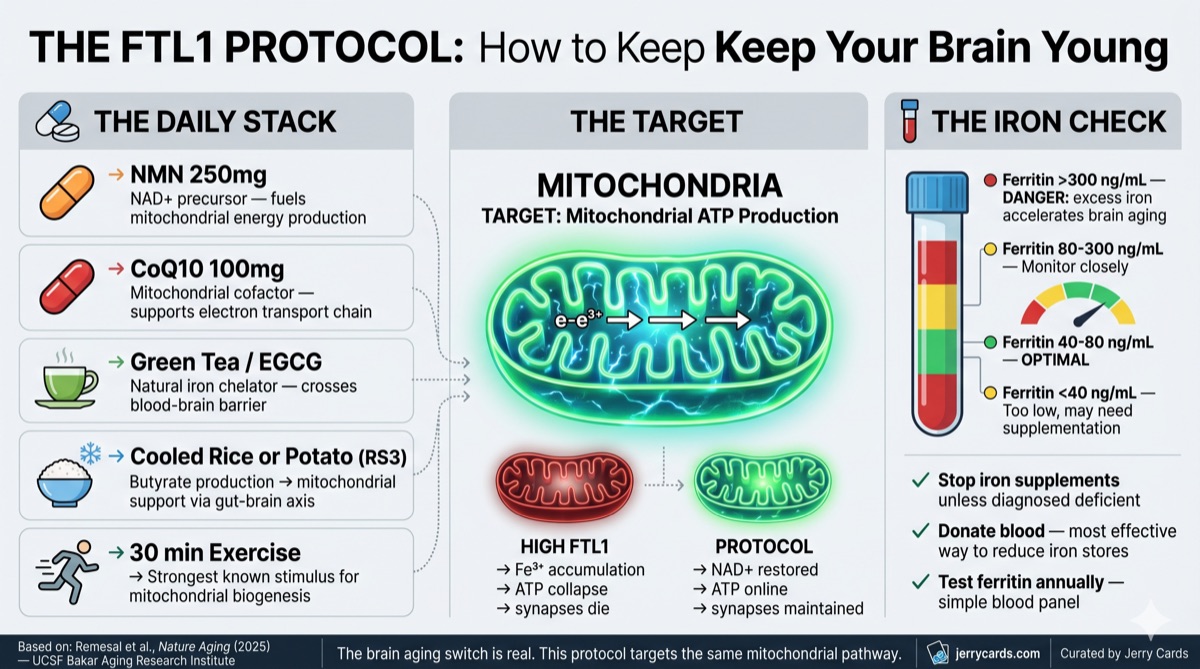
This is the practical follow-up to our FTL1 brain aging article. Yesterday we covered the science: a single protein (FTL1) drives brain aging by disrupting iron metabolism and mitochondrial energy. Today: what you can actually do about it.
The UCSF study revealed something crucial: NADH supplementation blocked FTL1 damage even with the protein still elevated. You may not need gene therapy or CRISPR. You may just need to keep your mitochondria fueled.
The Core Problem (30-Second Recap)
FTL1 accumulates with age → iron oxidizes (Fe²⁺ → Fe³⁺) → mitochondria can’t produce ATP → neurons starve → synapses die → memory declines
Every intervention below targets one or more steps in this cascade.
The Daily Stack: 5 Interventions, 1 Target
| Intervention | Dose | Mechanism | When |
| NMN | 250mg | NAD+ precursor — directly fuels mitochondrial energy production (the pathway FTL1 disrupts) | Morning |
| CoQ10 | 100–200mg | Mitochondrial cofactor in the electron transport chain — supports ATP synthesis | Morning with food |
| Green Tea / EGCG | 2–3 cups or supplement | Natural iron chelator that crosses the BBB — binds excess Fe³⁺. Also anti-inflammatory. | Morning/afternoon |
| Cooled Starch (RS3) | 15–30g RS/day | Butyrate from gut fermentation boosts mitochondrial function in hippocampal neurons (RS Series) | Lunch |
| Exercise | 30 min | Strongest known stimulus for mitochondrial biogenesis — creates NEW mitochondria | Any time |
1. NMN: The NAD+ Precursor
The UCSF study showed that NADH supplementation prevented FTL1’s pro-aging effects on neurons, even with FTL1 still elevated. NADH is the reduced form of NAD+ (nicotinamide adenine dinucleotide), the central cofactor in mitochondrial energy production.
NMN (nicotinamide mononucleotide) is the most studied NAD+ precursor available over-the-counter:
- Dose: 250–500mg per day (start at 250mg)
- Alternative: NR (nicotinamide riboside) — similar mechanism, slightly different metabolism
- Natural boosters: Exercise, intermittent fasting, and avoiding excessive alcohol all increase NAD+ levels
- Caveat: The ability of oral NMN to cross the blood-brain barrier at therapeutic doses is still debated. Human trials are ongoing.
2. CoQ10: The Electron Transport Helper
Coenzyme Q10 is a direct participant in the mitochondrial electron transport chain — the exact machinery that FTL1 disrupts via iron oxidation.
- Dose: 100–200mg per day (ubiquinol form is better absorbed than ubiquinone)
- CoQ10 declines naturally with age — supplementation restores levels
- Synergy with NMN: NAD+ and CoQ10 work at different steps of the same electron transport chain
3. Green Tea / EGCG: The Natural Iron Chelator
The FTL1 mechanism centers on iron oxidation (Fe²⁺ → Fe³⁺). EGCG (epigallocatechin gallate) in green tea is a natural iron chelator that:
- Crosses the blood-brain barrier (critical — most chelators cannot)
- Binds excess Fe³⁺, reducing oxidative damage
- Has independent anti-inflammatory and neuroprotective properties
- Dose: 2–3 cups of quality green tea daily, or EGCG supplement (200–400mg)
Note: Curcumin (from turmeric) is another natural iron chelator with neuroprotective properties, though its bioavailability is lower unless taken with piperine (black pepper extract).
4. Cooled Starches (RS3): The Gut-Brain Pathway
Our entire Resistant Starch series demonstrated that butyrate from RS fermentation:
- Boosts mitochondrial function in hippocampal neurons
- Increases BDNF (brain-derived neurotrophic factor)
- Repairs the blood-brain barrier
- Reduces neuroinflammation via NF-κB suppression
This is the same mitochondrial target as the FTL1 research, approached from a different direction. The Cook-Cool-Reheat hack is the easiest way to get 15–30g RS3 per day.
5. Exercise: Mitochondrial Biogenesis
While NMN, CoQ10, and butyrate fuel existing mitochondria, exercise does something more powerful: it creates new ones.
- Exercise activates PGC-1α, the master regulator of mitochondrial biogenesis
- 30 minutes of moderate-to-vigorous activity is sufficient
- Both aerobic (running, cycling) and resistance training stimulate biogenesis
- This is the single most evidence-backed intervention for long-term brain health
The Iron Check: The Most Overlooked Factor
FTL1 accumulates oxidized iron in aging neurons. But you can manage your overall iron status today:
| Ferritin Level | Status | Action |
| >300 ng/mL | Excess — accelerates iron-driven aging | See doctor. Donate blood. Eliminate iron supplements. |
| 80–300 ng/mL | Monitor closely | Stop iron supplements. Consider blood donation. Retest in 3 months. |
| 40–80 ng/mL | OPTIMAL | Maintain. Annual check. |
| <40 ng/mL | Low — may need supplementation | Consult doctor. Iron-rich foods or targeted supplementation. |
Practical iron management:
- Stop iron supplements unless you have a diagnosed deficiency (most men and postmenopausal women have sufficient or excess iron)
- Avoid multivitamins with iron (unless menstruating or anemic)
- Donate blood — one of the most effective ways to reduce iron stores (and you help someone else)
- Test ferritin annually — a simple, inexpensive blood panel
The Convergence: Three Pathways, One Target
| FTL1 Research | Iron management + NAD+ → protect mitochondria from Fe³⁺ damage |
| Resistant Starch | Butyrate → boost mitochondrial function via gut-brain axis |
| Exercise | PGC-1α activation → create NEW mitochondria (biogenesis) |
Three independent research domains. Three different entry points. One convergent target: keeping hippocampal neurons energized enough to maintain their synaptic connections.
Important Caveats
- The FTL1 research is in mice. No human trials of FTL1 reduction have been conducted.
- NMN’s ability to cross the human blood-brain barrier at oral doses is still debated.
- This protocol is based on the best available evidence from multiple converging research lines, not a single definitive trial.
- Consult your physician before starting any supplement regimen, especially if you have existing health conditions or take medications.
- None of this is medical advice. It’s a science-informed framework.
The Simple Version
Morning: NMN (250mg) + CoQ10 (100mg) + green tea
Lunch: Cooled rice or potato salad (RS3 → butyrate)
Daily: 30 min exercise (anything that raises heart rate)
Evening: No iron supplements. Good sleep.
Annual: Ferritin blood test. Target: 40–80 ng/mL.
Sources: