
 العربية
 Español
 中文
中文 Deutsch
 Français
 Português
Big news from Cupertino today. Apple has announced that Tim Cook will step down as CEO, effective September 1, 2026, and transition to Executive Chairman of the Board. John Ternus, Senior Vice President of Hardware Engineering, will become the company's next CEO.
This is one of the most consequential leadership transitions in modern technology history. Below: the full context, the Cook era in numbers, who Ternus is, and what this means for Apple's next decade.
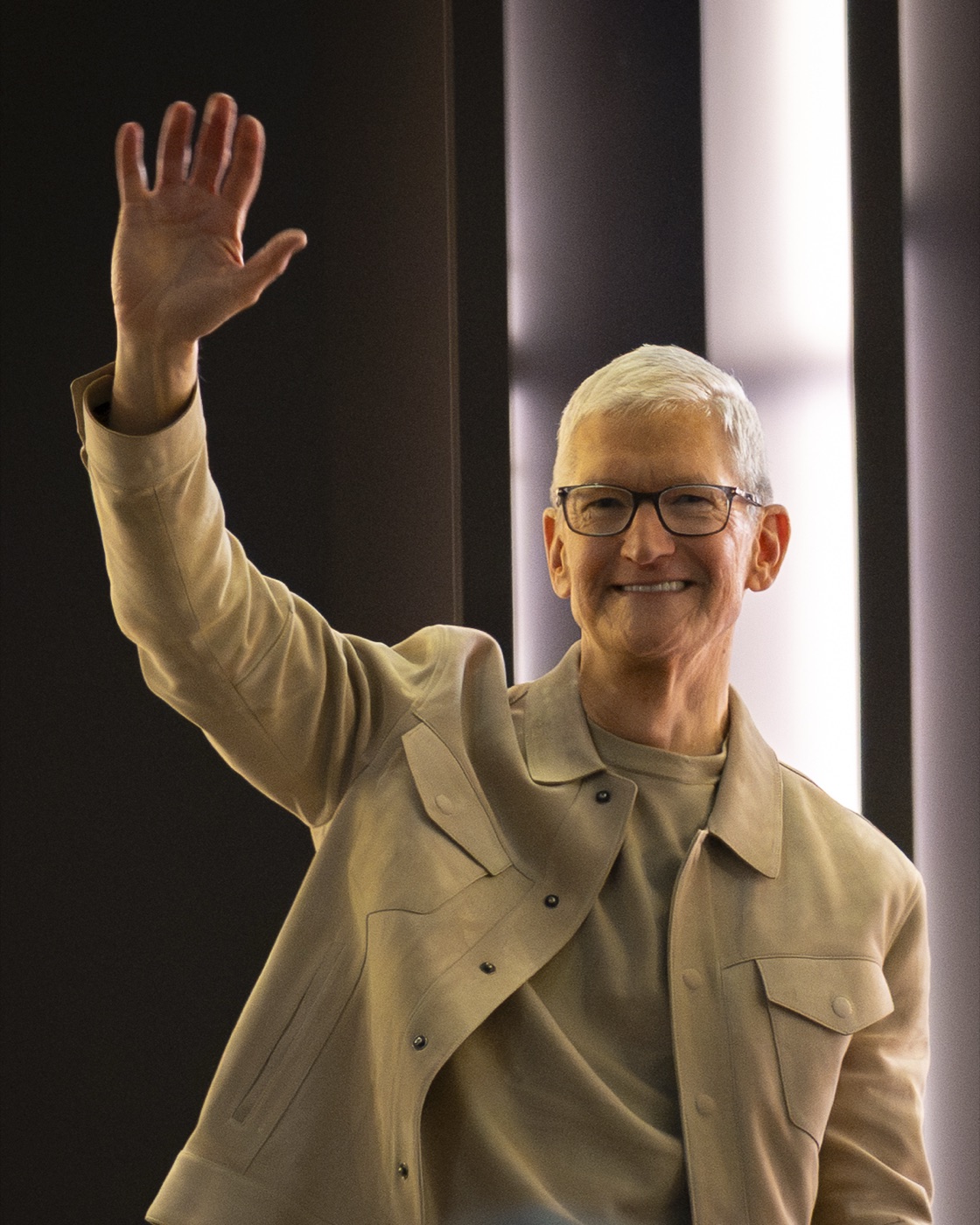
Tim Cook, Apple CEO, photographed in March 2026 - weeks before the announcement. Photo: Wikimedia Commons, CC BY-SA.
1. The Announcement
In a statement released this morning (April 20, 2026), Apple's Board of Directors confirmed what had been the subject of quiet speculation for more than a year. Cook will hand over the CEO role to Ternus on September 1, 2026. Arthur Levinson, current non-executive Chairman, will shift to Lead Independent Director. Ternus joins the Board of Directors.
"John Ternus has the mind of an engineer, the soul of an innovator, and the heart to lead with integrity and with honor."
- Tim Cook
"We believe John is the best possible leader to succeed Tim. His love of Apple, his leadership, deep technical knowledge, and relentless focus on creating great products will help lead Apple to an extraordinary future."
- Arthur Levinson, Apple Board
"I am profoundly grateful for this opportunity to carry Apple's mission forward."
- John Ternus
2. The Cook Era in Numbers
Tim Cook joined Apple in 1998, recruited personally by Steve Jobs to run operations. He became COO in 2005, took over as interim CEO in January 2011 when Jobs went on medical leave, and became permanent CEO in August 2011. Jobs died two months later.
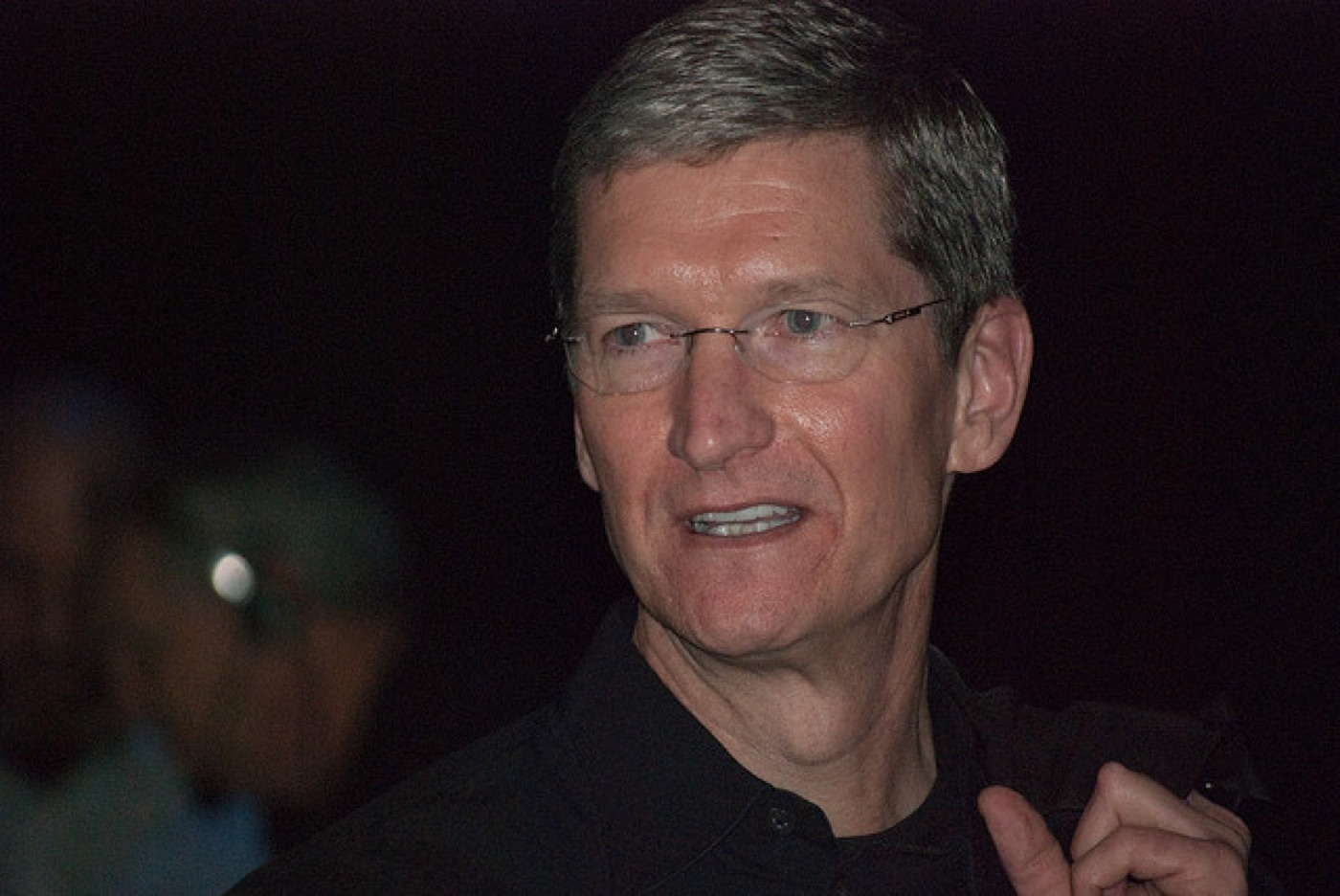
Tim Cook in 2009, during his time as COO under Steve Jobs. Jobs's choice of Cook as successor was, in retrospect, one of the most consequential single decisions in corporate history. Photo: Wikimedia Commons, CC BY-SA.
Cook's 15-year tenure as CEO produced numbers that were, at the time of his appointment, considered impossible.
| Metric | August 2011 (Cook takes over) | April 2026 (Cook steps down) |
| Market capitalization | ~350 billion USD | Over 4 trillion USD |
| Annual revenue | 108 billion USD (FY2011) | Over 416 billion USD (FY2025) |
| Active installed base | ~300 million devices | 2.5+ billion devices |
| Services revenue | ~9 billion USD | Over 100 billion USD annually |
| Retail stores | ~350 | Over 500 in 26 countries |
| Employees | ~60,000 | ~160,000 |
Of all the successions in corporate history, Cook following Jobs was the one most widely expected to fail. The analyst consensus in 2011 was that Jobs was irreplaceable and that Apple would stagnate within five years. What happened instead was among the largest sustained wealth creations in the history of public markets.
3. What Cook Actually Did
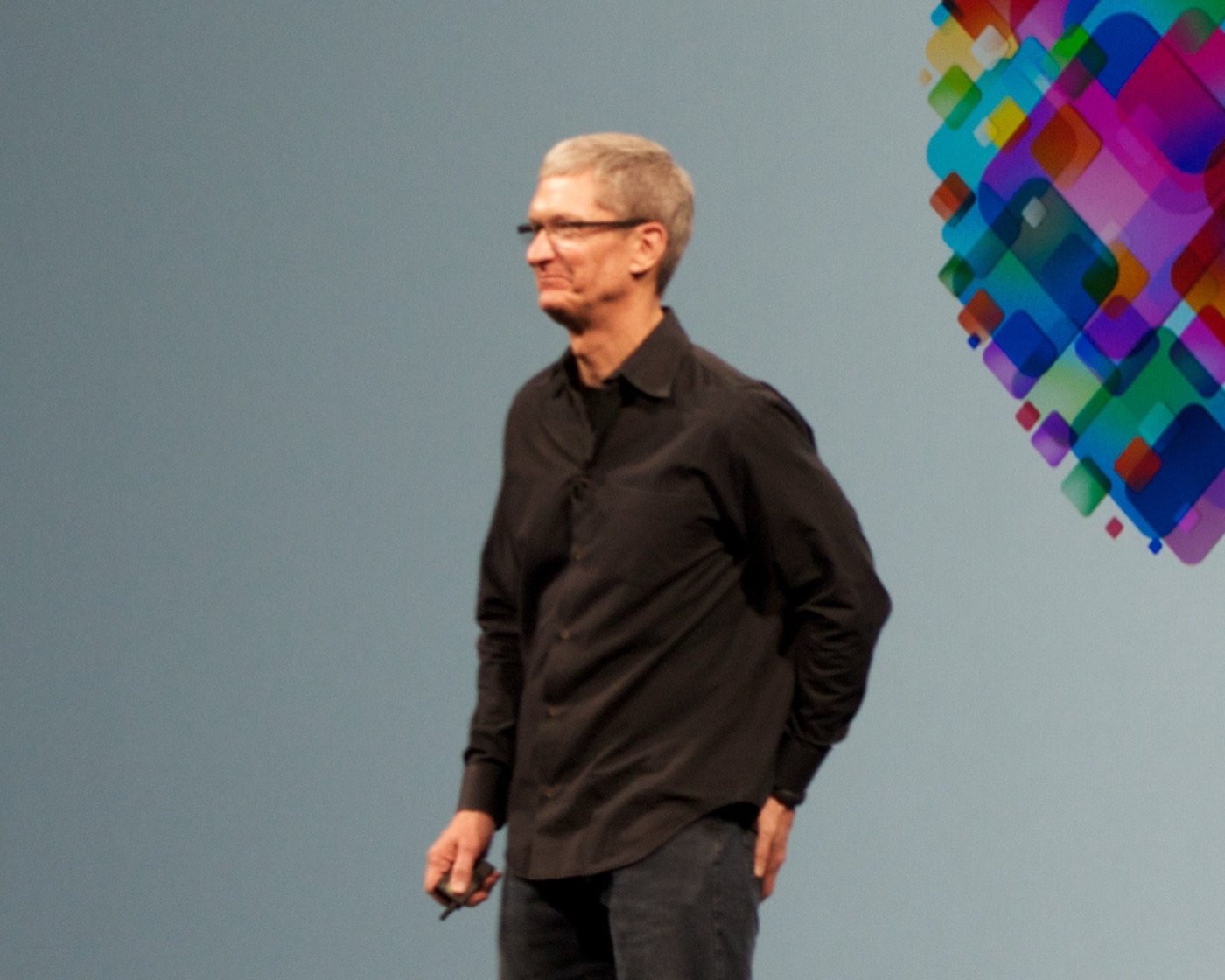
Cook at WWDC 2012 - his first full WWDC as CEO. The Cook era stage style emerged here: calm, detailed, operator-focused. Photo: Wikimedia Commons, CC BY-SA.
Cook is not Jobs. He was never going to be. What Cook did was leverage his operational background - 12 years at IBM and 6 years at Compaq before Apple - to transform a brilliant product company into a ruthlessly efficient platform. The major moves of the Cook era:
3.1 Category Expansion
- Apple Watch (April 2015) - the first completely new product category launched post-Jobs. Initial skepticism gave way to a roughly 20 billion dollar annual wearables business.
- AirPods (December 2016) - Cook personally championed the wireless earbud product against internal skepticism. AirPods are now the best-selling consumer audio product in history and the flagship product in a roughly 40 billion dollar wearables, home, and accessories segment.
- Apple Vision Pro (February 2024) - the first all-new product platform launch since the Apple Watch. Defined the spatial computing category.
3.2 The Services Pivot
Under Jobs, Services was an afterthought - iTunes, the App Store, a small cloud business. Under Cook, Services became the growth engine.
| Service | Launch under Cook |
| Apple Music | 2015 |
| Apple Pay | 2014 |
| Apple News+ | 2019 |
| Apple TV+ | 2019 |
| Apple Arcade | 2019 |
| Apple Fitness+ | 2020 |
| Apple Card | 2019 |
Services revenue grew from roughly 9 billion to over 100 billion annually, at margins far higher than hardware.
3.3 Apple Silicon
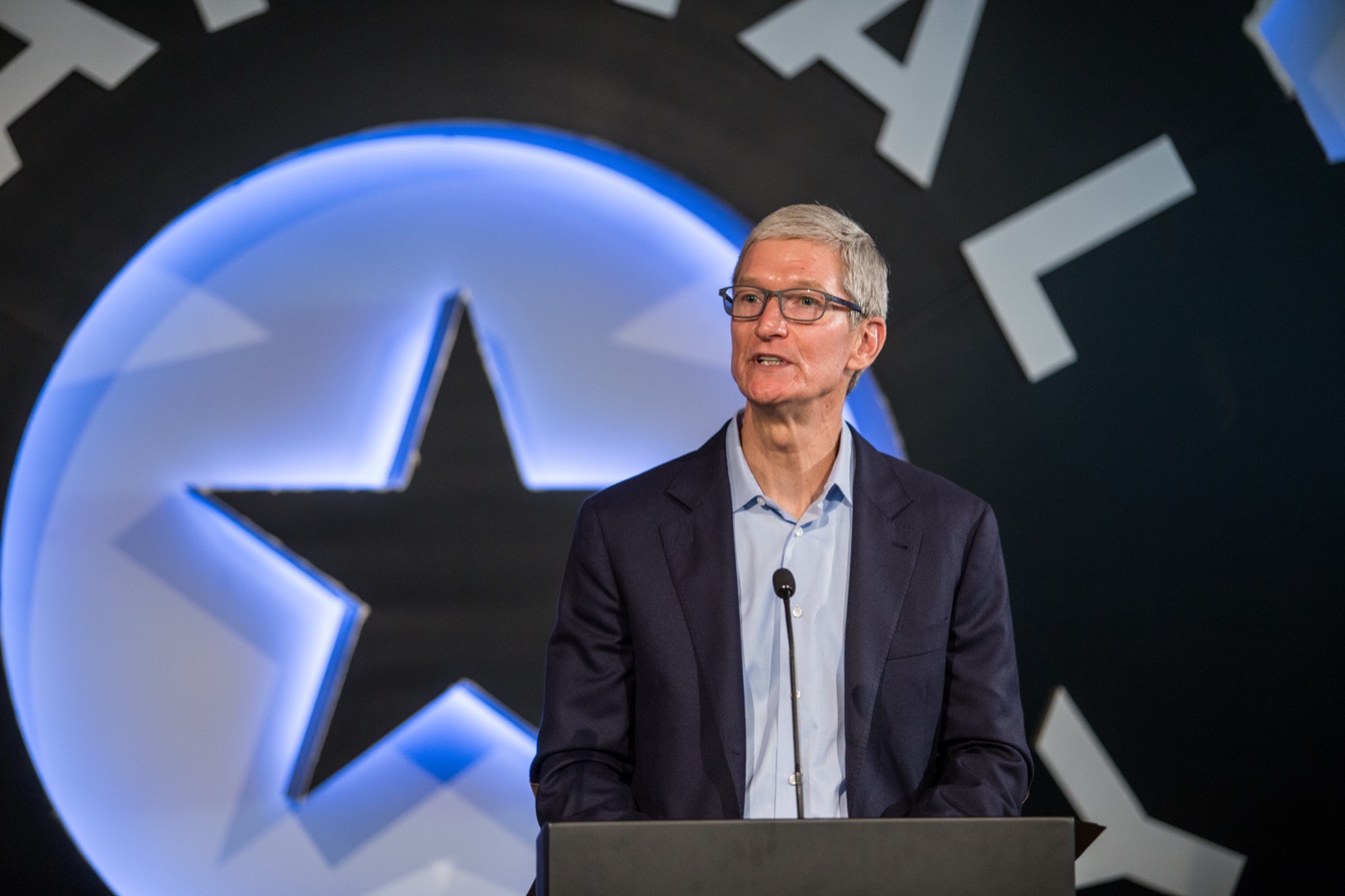
Cook in 2017 - the Apple Park era. The M-series transition announced in 2020 was the most ambitious hardware bet of Cook's tenure. Photo: Wikimedia Commons, CC BY-SA.
In June 2020, Cook announced Apple would transition every Mac from Intel processors to Apple's own silicon within two years. The company hit that target with the M1, M2, M3, and now M5 families. Apple Silicon was the single most technically ambitious bet of the Cook era, and it worked.
This is the same bet that put John Ternus in the CEO chair. He was the executive running hardware engineering during the Apple Silicon transition.
3.4 Apple Park
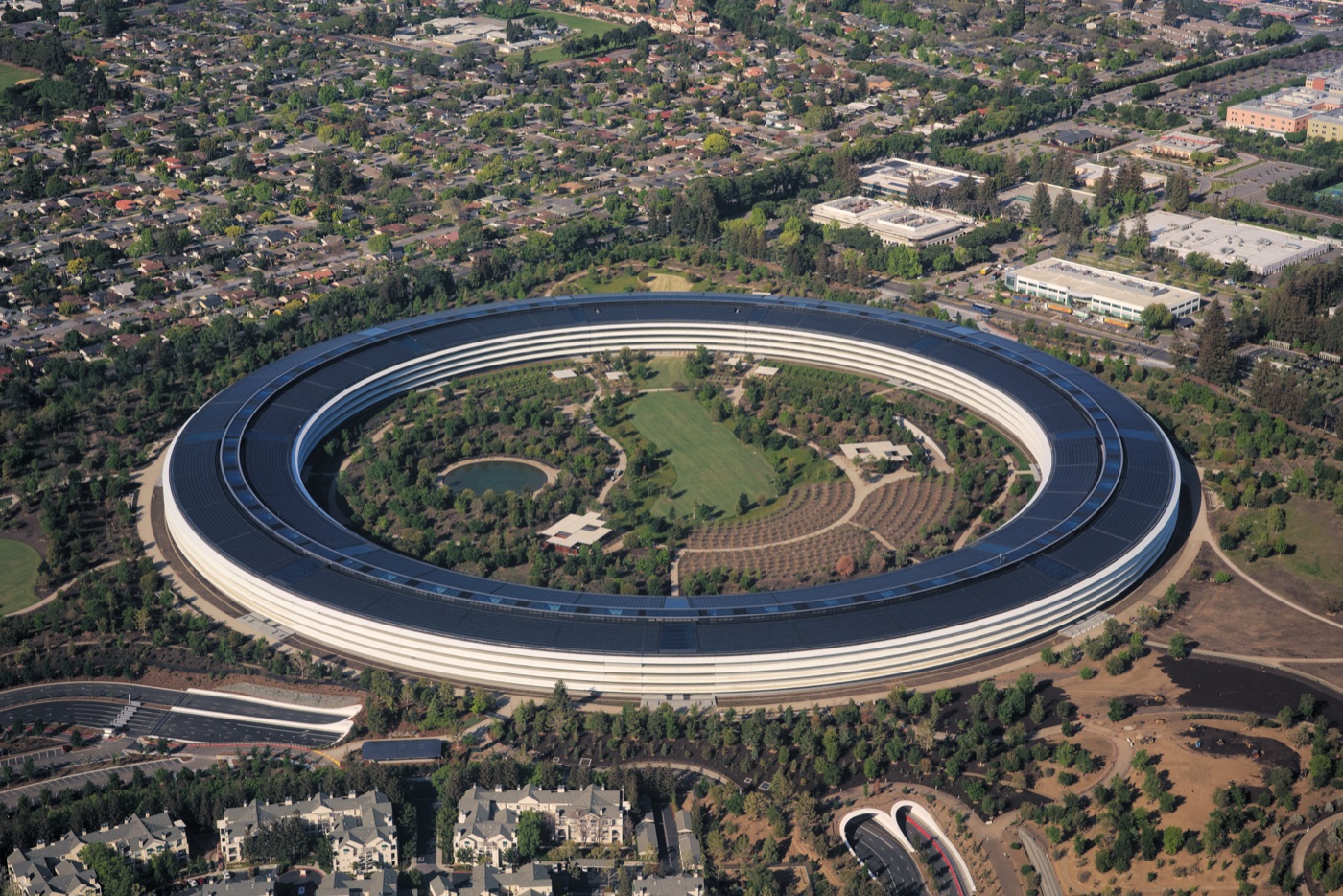
Apple Park - the circular headquarters that opened in 2017. Conceived by Jobs, built under Cook. A physical symbol of the Cook era: Jobs's vision, executed at scale. Photo: Wikimedia Commons, CC BY-SA.
Apple Park - the 175-acre circular headquarters designed by Norman Foster - was conceived by Jobs in his final years but built entirely under Cook. It opened in 2017 and houses about 12,000 employees. The building is, in many ways, the physical metaphor for the Cook-Jobs relationship: Jobs's vision, Cook's execution at industrial scale.
3.5 The Operator's Eye for Margins
Cook's IBM/Compaq operations DNA showed everywhere. Apple's supply chain under Cook became one of the most closely watched in the world. Inventory turns, component pre-purchasing, vendor relationships, and manufacturing flexibility became Apple's quiet moat. Apple's gross margin climbed from around 40% to 46%+ during his tenure. Operating margin stayed consistently above 30%.
4. The Moments That Defined Cook
- The 2014 diversity letter - Cook came out publicly and wrote about it in Bloomberg Businessweek. He was the first CEO of a Fortune 500 company to do so.
- The 2016 FBI encryption fight - Cook refused a federal court order to weaken iPhone encryption. The posture defined Apple as a privacy-first brand for the next decade.
- The COVID pivot (2020) - Apple retooled supply chains, shipped at scale through lockdowns, and made Services more resilient than any hardware-first company.
- The India expansion (2022-2026) - Cook personally led the manufacturing diversification out of China, building a significant iPhone assembly base in India.
- The Trump tariff navigation (2025-2026) - Cook's relationships across administrations kept Apple mostly insulated from the worst of renewed trade tensions.
5. Who Is John Ternus?
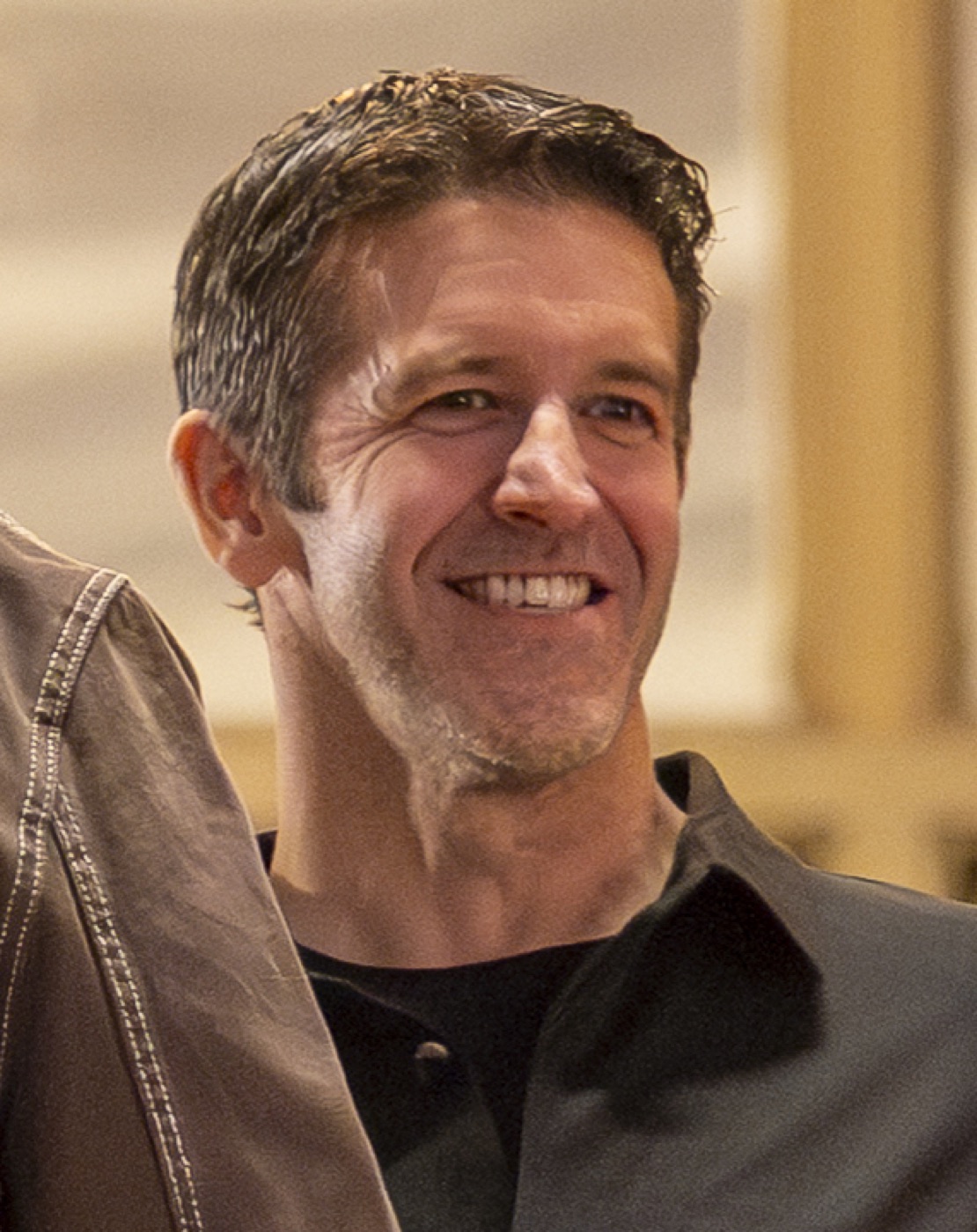
John Ternus at the Apple 50th Anniversary Kickoff, 2026. He becomes Apple's CEO on September 1, 2026. Photo: Wikimedia Commons, CC BY-SA.
| Age | 51 (nearly the exact age Cook was in 2011) |
| Joined Apple | 2001, product design team (Apple Cinema Display) |
| VP Hardware Engineering | 2013 (under Dan Riccio) |
| SVP Hardware Engineering | 2021 (replacing Riccio) |
| Education | BS Mechanical Engineering, University of Pennsylvania, 1997 |
| Products led | iPhone, iPad, Mac, Apple Watch, AirPods, Vision Pro hardware |
| Notable | Worked directly under Steve Jobs for the first decade of his career at Apple. Central to the Apple Silicon transition. |
Importantly, Ternus is a classic Apple engineer - not a finance or operations executive. This matters. The last time Apple had an engineer as CEO was Steve Jobs. The Cook-era succession back to an engineer is, in the view of many industry watchers, a deliberate statement about where Apple thinks it needs to go in the AI decade.
6. What Ternus Inherits
Cook is handing Ternus a company in extraordinary shape - but with four meaningful fights on the horizon:
- The AI platform war. Apple Intelligence launched in 2024 and has been criticized as behind Google's Gemini and OpenAI's frontier models. WWDC 2026 in June is widely expected to announce a major rebuild of Apple Intelligence, possibly including deep partnerships and new on-device model architecture. Ternus will be the one executing that bet.
- Regulation. The EU's Digital Markets Act continues to reshape the App Store economics. The US DOJ antitrust case is ongoing. India and Brazil are exploring similar measures. Apple's 30% commission on digital goods is under sustained pressure.
- The spatial computing slow burn. Vision Pro is technically impressive but commercially small. Whether Apple can drive the category to iPhone-scale adoption is the key product bet of the second half of the decade.
- The China-India manufacturing rebalance. Apple's supply chain is being rewoven geopolitically in real time. Cook's personal relationships with Chinese leadership were a quiet asset. Ternus inherits a more complex map.
7. What This Means for Apple at 50
Apple turned 50 on April 1, 2026. We are currently running a 7-part series on Apple's history. The Cook-Ternus transition is, in effect, Apple's fourth major CEO era:
| Era | CEO | Years | Defining bet |
| Founding | Jobs, Scott, Sculley, Spindler, Amelio | 1976-1997 | Personal computing |
| The Comeback | Steve Jobs (2nd tenure) | 1997-2011 | iMac, iPod, iPhone, iPad |
| The Platform Era | Tim Cook | 2011-2026 | Services, Silicon, wearables, spatial computing |
| The AI Era? | John Ternus | 2026 onward | To be written |
8. The Immediate Market Reaction
Apple's stock dipped modestly on the announcement, as is typical in high-profile succession events. Analysts remain generally positive on the handoff given:
- Ternus's long tenure and clear institutional knowledge
- Cook staying on as Executive Chairman - reducing perceived transition risk
- The deliberate, multi-year succession planning disclosed
- Apple Silicon success providing evidence that Ternus can execute massive technical transitions
The more interesting question is how Wall Street reprices Apple as an AI company rather than a hardware company. That is the frame of Ternus's tenure.
9. The Symbolism
When Jobs handed the company to Cook, he was handing it to an operator who could scale what Jobs had built. When Cook hands it to Ternus, he is handing it to an engineer who must invent what comes next. The shape of the handoff - engineer to operator to engineer - is itself a message about what Apple thinks the next decade requires.
10. What Cook Will Do
Cook remains Apple's Executive Chairman. In practice, this usually means: strategic oversight, board leadership, and external relationships (government, major partners, diplomacy). Cook has also been increasingly personally involved in Apple's health initiatives - the Apple Watch health platform, the cardiovascular research studies, the FDA-cleared features. Expect that influence to continue.
He is 65 years old. He can do this for as long as he wants to.