
 العربية
 Español
 中文
中文 Deutsch
 Français
 Português
Big news from Cupertino - actually, no. From Hawthorne, Memphis, and orbit.
Elon Musk announced today that xAI will be dissolved as a standalone company and fully integrated into SpaceX. The combined entity's AI products will operate under a new brand: SpaceXAI. Grok, the Colossus supercomputer in Memphis, and the entire xAI team are now part of SpaceX.
This is one of the largest corporate reorganizations in tech history. It comes weeks before SpaceX is expected to file for a 2 trillion dollar IPO. And it includes a strategic detail that has not gotten enough attention: Anthropic - typically positioned as one of Musk's chief AI rivals - just signed a deal to lease 300+ megawatts of compute capacity at SpaceX's Colossus 1 data center.
Below: the full breakdown.
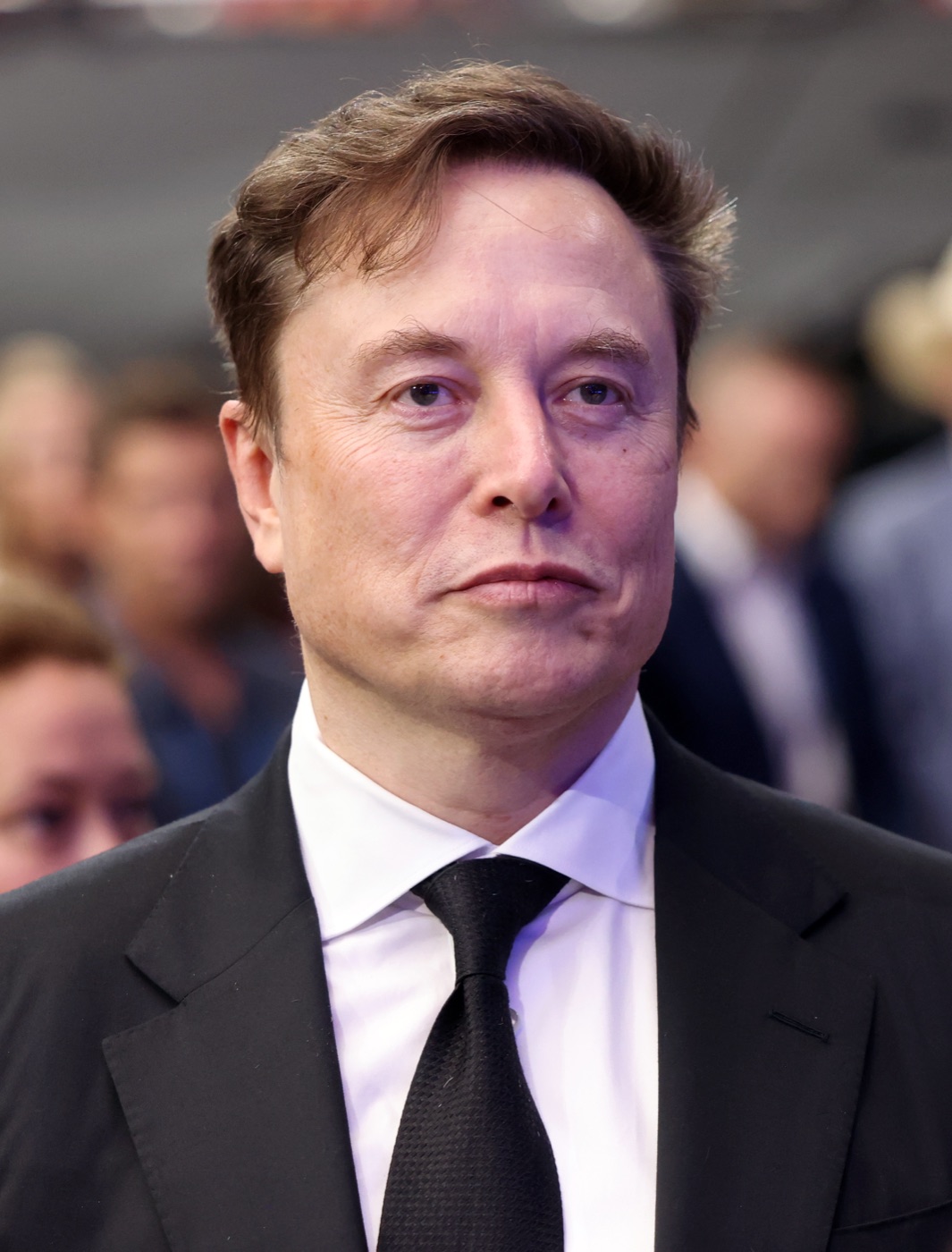
Elon Musk, 2025. Today he announced one of the most ambitious corporate consolidations in tech history. Photo: Wikimedia Commons, CC BY-SA.
1. What Was Announced
| Element | Detail |
| xAI as a standalone company | Being dissolved |
| New brand | SpaceXAI - the AI division of SpaceX |
| Products transferring | Grok chatbot, Colossus supercluster, all xAI IP and talent |
| Backdrop | Builds on the SpaceX-xAI integration announced February 2026 |
| Stated goal | Build orbital data centers in space, vertically integrate AI + space |
| Timing | Comes ahead of a planned mid-2026 SpaceX IPO at 1.75 - 2 trillion dollar valuation |
2. The Colossus Supercomputer
Colossus is the centerpiece of what xAI - now SpaceXAI - is bringing to the merger.
| Colossus Specs | Detail |
| Location | Memphis, Tennessee (former Electrolux factory) |
| Build time | 122 days for the initial 100,000-GPU cluster |
| Current GPUs | ~200,000 NVIDIA H100/H200 (with stated goal of 1 million) |
| Power draw | ~150 megawatts at full capacity |
| Cooling water | Millions of gallons daily |
| Primary purpose | Training Grok and serving X / SpaceX compute needs |
| Status | Believed to be the largest AI supercomputer on Earth |
Why it matters: Building Colossus in 122 days made xAI a credible compute player almost overnight. Now that compute - and the team that built it - belongs to SpaceX. Combine SpaceX's launch capacity, Colossus's compute capacity, and Grok's model stack, and you have the only fully vertically integrated AI infrastructure stack on the planet.
3. The Orbital Data Center Thesis
SpaceX Falcon Heavy launch. The vehicle that proved heavy-lift to orbit at radically reduced cost - the foundation of the orbital data center thesis. Photo: Wikimedia Commons, Public Domain.
The strategic case for orbital compute rests on three problems Earth-based AI is hitting hard:
| Problem on Earth | Solution in Space | |
| Power supply | Gigawatt-class clusters require small-city electricity. Grids cannot deliver fast. | |
| Solar power in space | Unlimited, 24/7 in geostationary orbit (no day/night cycle), no weather attenuation | |
| Cooling on Earth | Millions of gallons of water per day; air cooling no longer scales | |
| Cooling in space | Radiative cooling to vacuum is essentially free. The bottleneck is radiator surface area, not water supply. | |
| Real-estate constraint on Earth | Memphis, Phoenix, Northern Virginia - all approaching grid limits | |
| In space | Effectively unlimited orbital volume |
The bottleneck for orbital compute has always been launch cost. SpaceX is the company that has driven launch cost down by approximately 10x over the past decade. Falcon Heavy made heavy-lift commercially viable. Starship - now flying repeatedly - is targeting another 10x reduction.
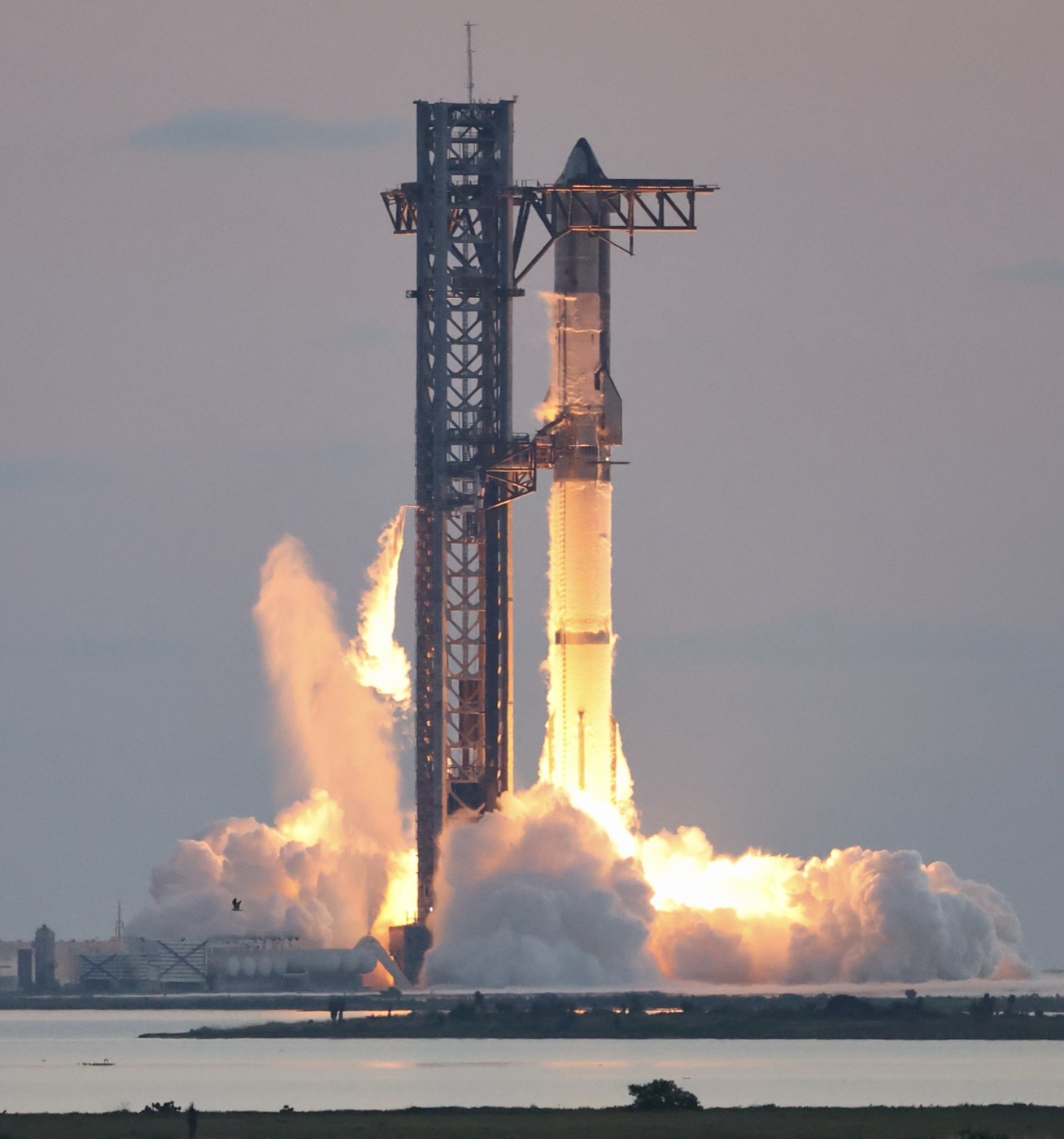
SpaceX Starship ignition during IFT-5. Starship's payload-to-orbit cost is the linchpin of the orbital data center thesis. Photo: Wikimedia Commons, CC BY-SA.
4. The Anthropic Deal
The other announcement this week is in some ways more surprising than the merger itself.
Anthropic - the maker of Claude, founded in part by former OpenAI executives, and frequently positioned in the press as Elon Musk's AI competitor - signed a deal with SpaceX to use over 300 megawatts of compute at the Colossus 1 data center in Memphis.
Anthropic also publicly expressed interest in working with SpaceX to develop multi-gigawatt orbital compute capacity.
This is significant for several reasons:
- Anthropic is choosing to depend on Musk infrastructure for a substantial chunk of Claude's training and inference compute
- Musk personally has had a contentious public history with Anthropic - the deal happens regardless
- Compute supply is the new oil. Whoever has the largest, fastest-deployable capacity wins. SpaceXAI is now positioned as the dominant compute infrastructure provider
- If Anthropic is signing now, every other frontier lab is looking at the same supply curve
5. Starship and the Orbital Compute Pipeline
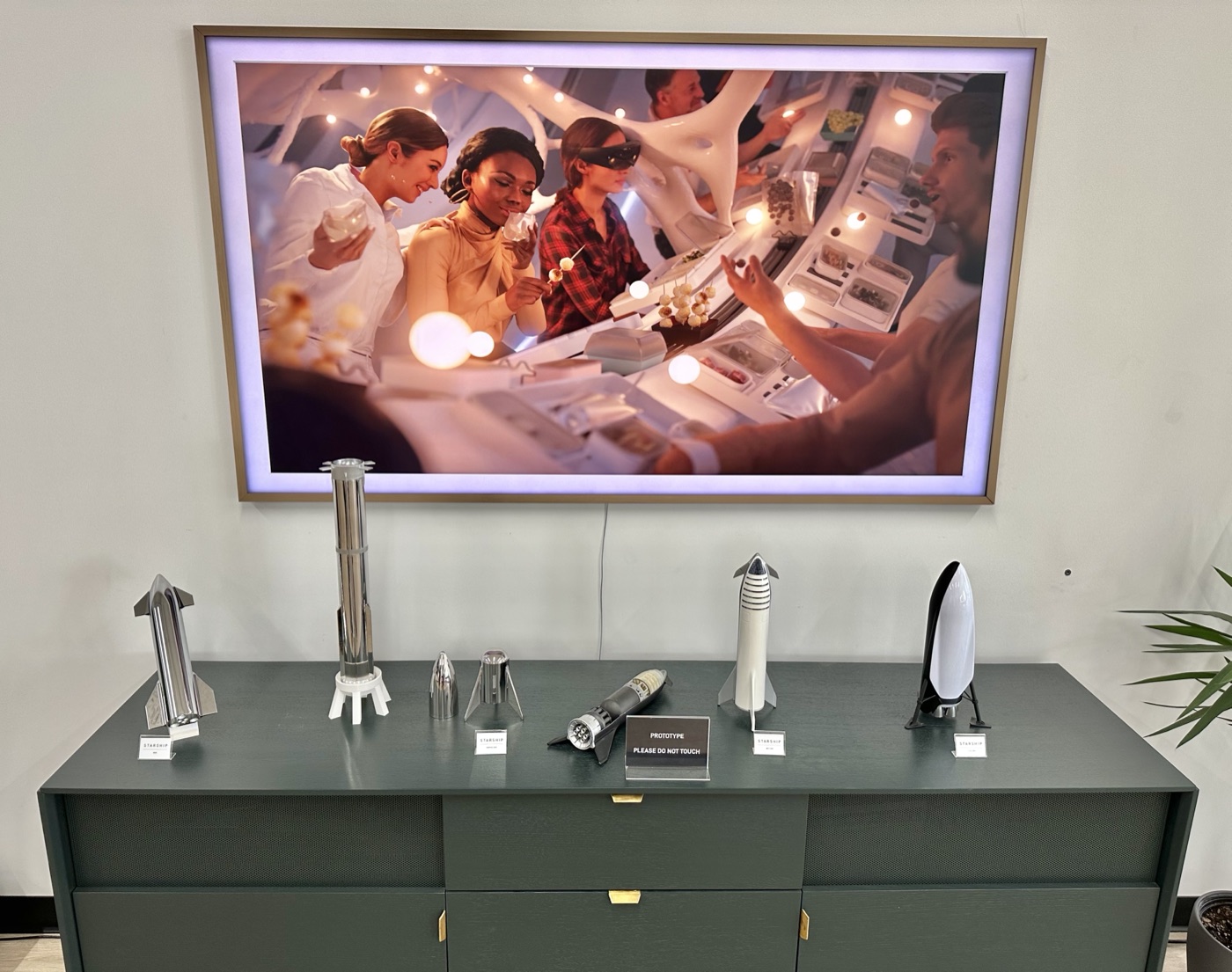
Starship models at the SpaceX Design Center. The architecture that makes orbital data centers economically conceivable. Photo: Wikimedia Commons, CC BY-SA.
For orbital data centers to be economically viable, you need to launch tens of tonnes of GPU + radiator + solar hardware to orbit at radically lower cost than current launch vehicles allow. Starship's stated goal is to lift over 100 tonnes to LEO at a per-launch cost target that, fully amortized, brings cost-per-kg-to-orbit into the low hundreds of dollars range.
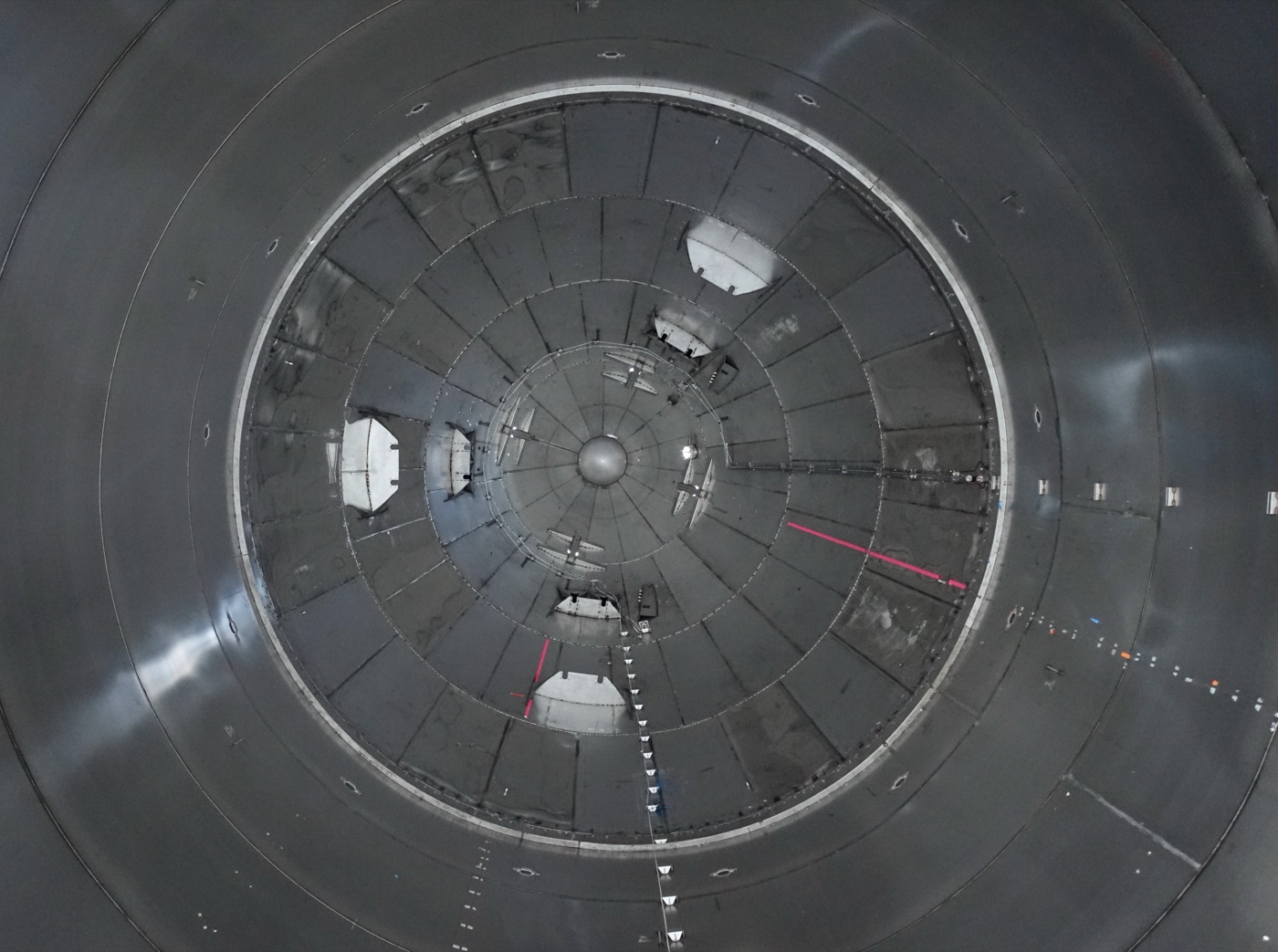
Starship nosecone interior - the cargo bay that will lift orbital compute hardware. Photo: Wikimedia Commons, CC BY-SA.
The honest reality check: Orbital data centers at scale are still 5-10 years away. The first deployments will be small (sub-megawatt). Radiator design at scale is unsolved. On-orbit servicing of GPUs is unsolved. Bandwidth back to Earth is a real constraint. The vision is real and SpaceX is uniquely positioned, but the timeline is decade-scale, not quarters.
6. The IPO Math
SpaceX is reportedly targeting a 2026 IPO with a valuation in the 1.75 to 2 trillion dollar range. That would make it one of the largest IPOs in history - and possibly the largest US IPO ever.
| SpaceX IPO Components | Detail |
| Launch business | Falcon 9, Falcon Heavy, Starship |
| Starlink | Largest satellite constellation, 8,000+ satellites in orbit |
| Now: SpaceXAI | Grok, Colossus, orbital compute thesis |
| Government / DoD contracts | National security launch, Starshield |
| Target valuation | 1.75 - 2 trillion dollars |
The reason SpaceXAI matters for the IPO is not that AI is a hot tag. It is that orbital compute is a category investors have never been asked to price before. By folding xAI in pre-IPO, Musk gives prospective public-market investors a single asset that is simultaneously a launch monopoly, a satellite operator, and the only credible orbital AI infrastructure play. The investment thesis becomes vertically integrated in a way no other company can match.
7. What Could Go Wrong
- Regulatory friction. Concentrating launch + AI + satellite + government contracts inside one entity invites antitrust scrutiny. The FCC, FAA, and DOJ all have legitimate questions.
- Existing xAI investors. The mechanics of converting xAI shares into SpaceX shares are non-trivial. Some investors will resist.
- Anthropic's choice. Anthropic is now compute-dependent on a Musk entity. The optics will be debated.
- Orbital compute timeline. If the first orbital data center demonstration slips past 2030, the IPO thesis loses its most differentiated narrative.
- The Grok product. Grok has been a compute and data play more than a frontier model lead. Whether SpaceXAI can ship a top-3 frontier model is still unproven.
8. The Big Picture
For two decades, Musk has run his companies as separate but adjacent bets - Tesla for energy and transport, SpaceX for launch, xAI for AI, Neuralink for brain interface, X for distribution. Today's announcement is the first time he has explicitly merged two of his largest companies. The integration says something specific about how he sees the next decade: AI compute and space launch are not adjacent businesses. They are the same business.
9. The Timeline at a Glance
| Date | Event |
| 2002 | SpaceX founded |
| March 2023 | xAI founded |
| November 2023 | Grok 1 launched on X |
| July 2024 | Colossus 1 operational (100K GPUs in 122 days) |
| February 2026 | SpaceX-xAI integration first announced |
| May 2026 | xAI dissolved. SpaceXAI established. Anthropic Colossus 1 deal announced. |
| Mid-2026 (target) | SpaceX IPO at 1.75 - 2 trillion dollars |