
 العربية
 Español
 中文
中文 Deutsch
 Français
 Português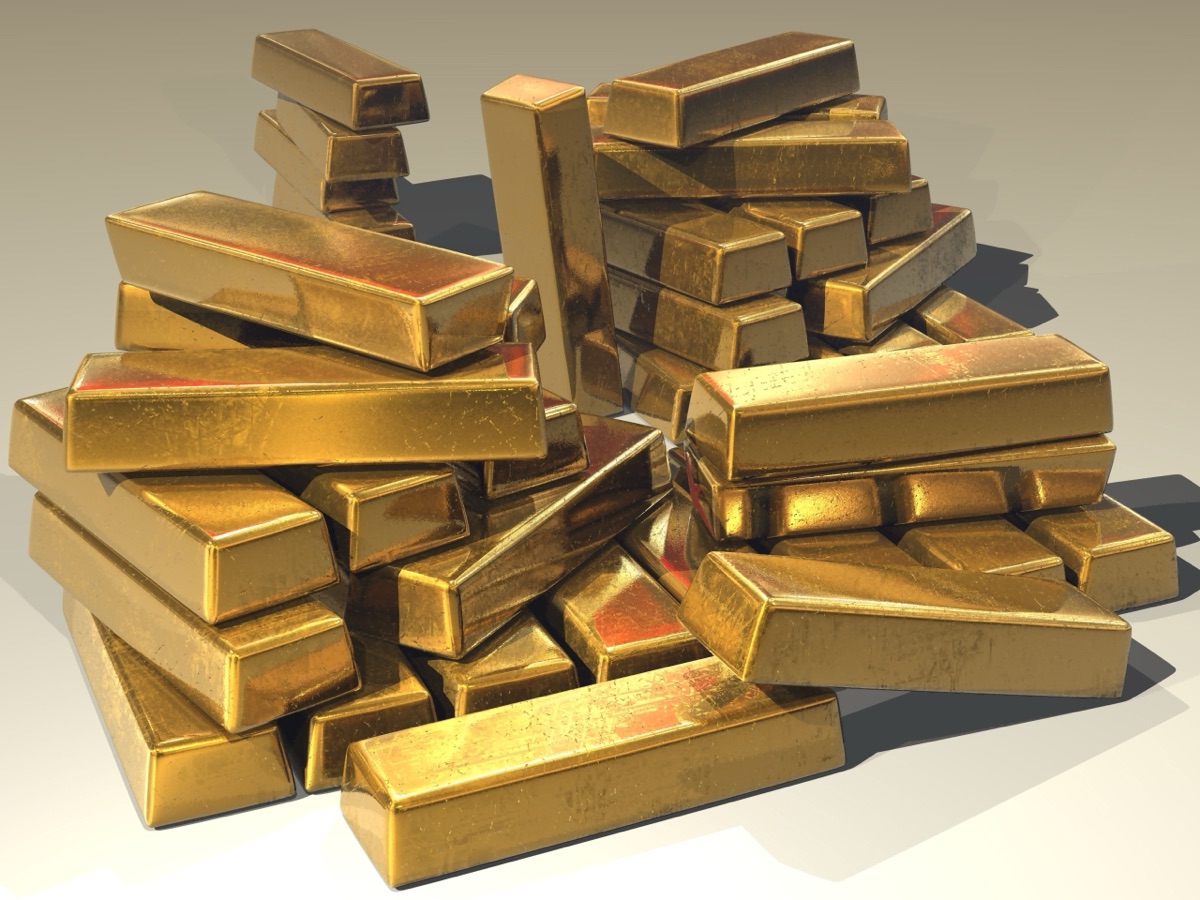
Almost everything humans make eventually decays - iron rusts, silver tarnishes, copper greens over. Gold is the great exception. A gold mask sealed in a tomb three thousand years ago emerges as bright as the day it was made. For generations, chemists explained this with a kind of shrug: gold is a ‘noble’ metal, so it just doesn’t react with oxygen. A new study from Tulane University, published in the journal Physical Review Letters, replaces that shrug with something far more elegant - and a little bit sneaky. It turns out the atoms on a gold surface quietly rearrange themselves into a pattern that slams the door on rust before it can even begin.
- The old story: gold stays bright simply because it ‘doesn’t interact’ with oxygen.
- The new finding: gold’s surface atoms spontaneously reconstruct - shifting from an open, square-like grid into a tightly packed hexagonal pattern.
- Why it matters: that packing leaves oxygen molecules no room to split apart, the essential first step of corrosion.
- The number: the rearrangement slows oxidation by a factor of a billion to a trillion.
- Bonus: the same trick that keeps gold flawless is why it makes a lazy catalyst - and hints at how to unlock it on purpose.
- Source: Biswas & Montemore, Physical Review Letters 136, 206203 (2026).
1. A 3,000-Year-Old Mystery Hiding in Plain Sight
Gold’s permanence is so familiar that we rarely stop to ask why. It is the reason gold has been money, jewelry, and a symbol of the incorruptible across nearly every human culture; it is also why modern electronics plate their most critical contacts in gold, trusting it not to corrode. Chemists have long filed gold under the ‘noble’ metals - the least reactive elements - and mostly left it there. The standard explanation was thermodynamic: gold sits in a comfortable low-energy state, so reacting with oxygen offers it little reward. True enough - but incomplete. It never fully explained just how extreme gold’s resistance to tarnishing really is.
2. The Twist: The Surface Isn’t What You Think
Santu Biswas, a postdoctoral fellow, and Matthew Montemore, an associate professor of chemical and biomolecular engineering at Tulane, used quantum-mechanical simulations to watch, atom by atom, how oxygen behaves on gold. The key realization is that a real gold surface does not look like a clean slice through the crystal. The outermost atoms shift position - a phenomenon surface scientists call reconstruction - settling into a denser, more crowded arrangement than the tidy geometry underneath.
For two of gold’s most common surfaces, the researchers found, the atoms rearrange from a relatively open, square-like layout into a tightly packed hexagonal one. A third common surface is naturally hexagonal to begin with. And that geometric detail, it turns out, is the whole story.
“People have generally thought gold doesn’t tarnish simply because it doesn’t interact strongly with oxygen,” said Montemore. “What we show is that for two of the most common gold surface types, the surface atoms actually rearrange themselves in a way that makes the gold much more resistant to oxidation.” The size of the effect, he noted, was “definitely a surprise” - proof that tiny shifts in atomic position can make a tremendous difference.
3. How the Hexagon Blocks Rust
To understand the mechanism, you have to know one thing about how metals corrode. Oxygen in the air travels as O2 - a molecule of two oxygen atoms bonded together. Before it can attack a metal, that molecule must first dissociate: break into two separate, highly reactive oxygen atoms. Only then can oxygen bind to the metal and begin building the oxide layer we see as rust or tarnish.
Splitting O2 requires a bit of room and a hospitable set of landing sites on the surface. Gold’s open, square-like arrangement provides just enough. But once the atoms reshuffle into the tight hexagonal pattern, those sites vanish - the surface is simply too crowded and too stable. For oxygen to split, the gold would first have to distort all the way back to its open square form, which costs a large amount of energy. That energetic penalty is a locked gate standing in front of the very first step of corrosion.
| Surface arrangement | Room to split O2? | Result |
|---|---|---|
| Open, square-like (unreconstructed) | Yes - sites available | Oxygen can begin to react |
| Tight hexagonal (reconstructed) | No - too crowded | Oxidation slowed a billion to a trillion times |
That is the headline figure: by reshuffling into hexagons, gold makes the first step of rusting roughly a billion to a trillion times slower. On human timescales, that is indistinguishable from never.
4. The Beautiful Paradox: Perfection Makes a Poor Helper
Here is where the story turns genuinely delightful. The exact property that makes gold so wonderfully permanent - its refusal to split oxygen - is also what makes it, most of the time, a mediocre catalyst. Many of the most useful chemical reactions depend on a metal surface pulling oxygen apart so it can be handed off elsewhere. Gold, by design, won’t play along.
But if chemists understand precisely why gold resists, they can also learn how to coax it out of its shell - engineering surfaces, nanoparticles, or conditions that keep gold in its reactive, square-like state right where a reaction is wanted.
“If you can trick gold into dissociating oxygen, it can actually become a very effective catalyst for certain reactions,” said Montemore.
That is not hypothetical. Gold catalysts already help manufacture vinyl acetate (a feedstock for paints, adhesives, and packaging), strip toxic carbon monoxide from vehicle exhaust, and produce propylene oxide, with real promise for cleaner-energy chemistry. A sharper picture of gold’s surface is a recipe for making those catalysts better and more efficient.
What This Is - and Isn’t
- It is a computational study. The findings come from quantum-mechanical simulations, not a new bench experiment - though they elegantly explain behavior humans have observed for thousands of years.
- It refines, rather than overturns, chemistry. Gold is still noble; the work shows that surface geometry, not just weak chemistry, is a decisive part of the reason.
- The applications are a roadmap, not a product. Turning this insight into better coatings and catalysts is the next chapter of work.
Still, there is something quietly profound here. The permanence we prize in gold - the reason it has meant value and trust for millennia - comes down to atoms making one small, self-protective rearrangement. Sometimes the deepest kind of endurance is built from the smallest possible shift.
Sources
- Santu Biswas & Matthew M. Montemore, ‘Role of Reconstruction in the Inertness of Gold toward Oxygen,’ Physical Review Letters 136, 206203 (2026), DOI: 10.1103/g3bc-t1qv
- ScienceDaily / Tulane University: Why gold never tarnishes has finally been explained
- Science News: Physics explains why gold stays pristine
Curated by Jerry Cards - jerrycards.com. We research the most fascinating stories in science, tech, and business so you don’t have to. More at jerrycards.com/news.