
 العربية
 Español
 中文
中文 Deutsch
 Français
 Português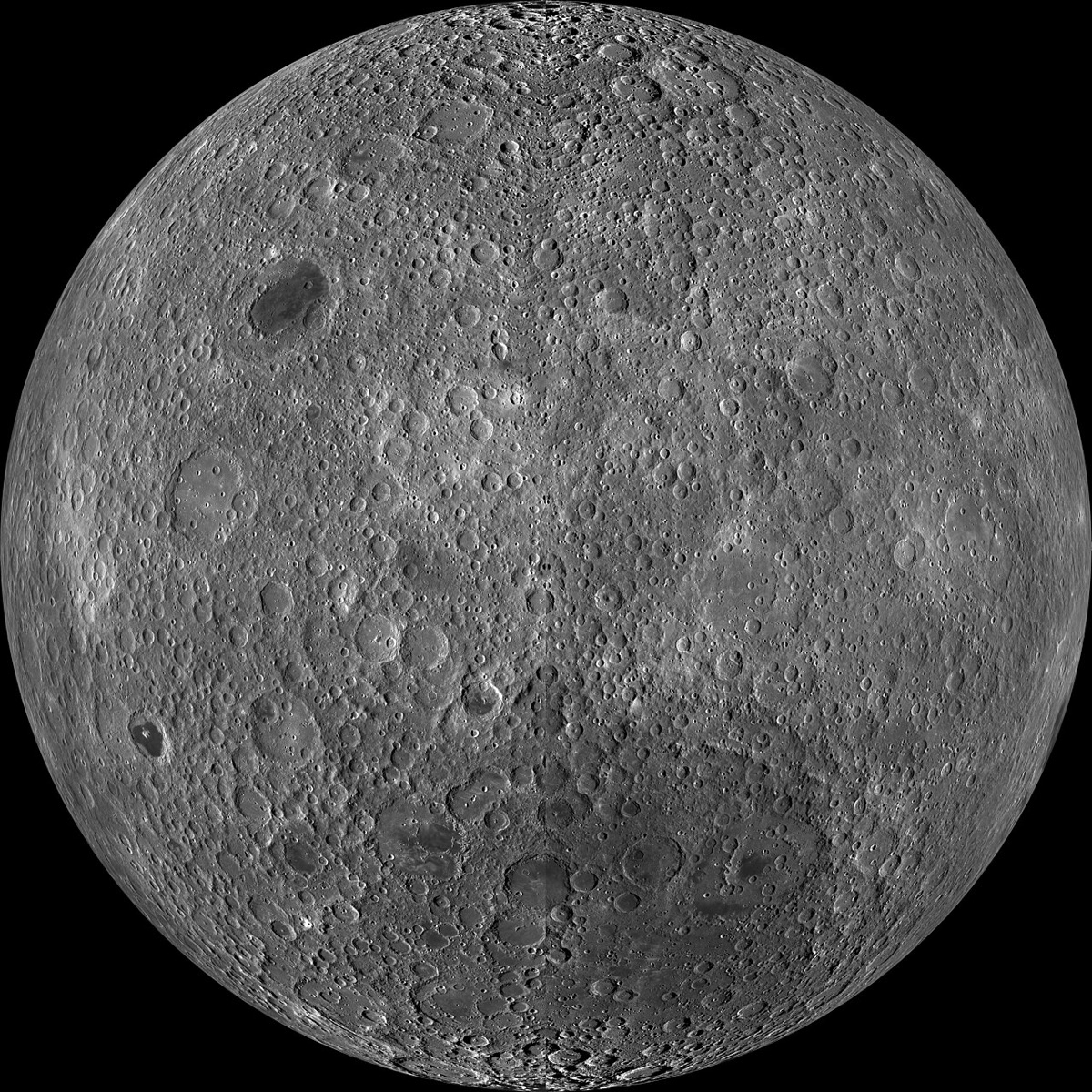
About 4 billion years ago, something roughly the size of a small protoplanet hit the Moon hard enough to gouge out a hole a quarter of the way around it. That scar - the South Pole-Aitken basin - is the largest and oldest impact crater on the Moon, and the biggest confirmed anywhere in the solar system. Now two studies spotlighted this month by the Southwest Research Institute (SwRI) reconstruct exactly how that blow landed, and reach a quietly thrilling conclusion: the impact flung rocks from deep inside the Moon - its mantle - across the surface, and some of that material may sit within reach of the very south-pole sites where upcoming Artemis astronauts are expected to land.
If a crew picks up the right rock, it could be the first confirmed piece of the lunar mantle humans have ever held - and a direct test of how the Moon, and rocky planets like our own, were built.
- The basin: South Pole-Aitken (SPA) - ~2,500 km (1,550 miles) wide, the Moon's largest and oldest crater
- The impactor: a differentiated object - an iron core wrapped in rock - that struck from the north at a shallow angle ~4 billion years ago
- The twist: the blow excavated material from deep inside the Moon, including the lunar mantle, a layer never sampled directly
- The payoff: gravity mapping shows mantle-rich rock spread through the basin and its ejecta - some near candidate Artemis landing sites
- The prize: the first-ever lunar mantle sample, and a direct test of how the Moon (and Earth) formed
1. The Biggest Scar on the Moon
The South Pole-Aitken basin is hard to overstate. It stretches across roughly a quarter of the lunar surface - the kind of distance that, mapped onto Earth, would run from Waco, Texas to Washington, DC - and it is old enough to have been carved during the Late Heavy Bombardment, when the young solar system was still being pelted by leftover debris. It survives today as one of the oldest preserved impact structures anywhere.
| Feature | Value |
|---|---|
| Diameter | ~2,500 km (1,550 miles) - about Waco, TX to Washington, DC |
| Depth | up to ~8 km (5 miles) or more below the surrounding highlands |
| Age | ~4 billion years (Late Heavy Bombardment era) |
| Rank | Moon's largest & oldest impact basin; largest confirmed in the solar system |
Because it punched so deep, planetary scientists have long suspected SPA is the single best place to find rock that started out far below the Moon's surface. The hard part has been knowing how the impact happened - and therefore where that deep rock landed.
2. Rebuilding the Impact, Frame by Frame
The first study, published in Science Advances and led by Dr. Shigeru Wakita of Purdue University, ran high-resolution simulations until one reproduced the basin we actually see. The winning scenario is specific: the impactor was differentiated - it had an iron core surrounded by rock, like a miniature planet or a differentiated asteroid - and it came in from the north at a low, glancing angle, traveling southward.
That geometry matters. A shallow, southward strike is what gives SPA its distinctive elongated, tapered outline rather than a neat circle - and it tells researchers which way the deep material was thrown.
“Our simulation produces the right shape and nature of the impact basin. It also tells us about the projectile that created it and the direction of the impact.”
- Dr. Shigeru Wakita, Purdue University
3. Following the Gravity to the Mantle
Knowing how the impact happened is only half the story; the second study asks where the deep rock ended up. Led by Dr. Gabriel Gowman of the University of Arizona and published in the Journal of Geophysical Research: Planets, it compares high-resolution gravity data from NASA's GRAIL mission with topography from the Lunar Reconnaissance Orbiter, then matches those measurements against models that track both crust and mantle material.
The verdict: SPA likely holds substantial amounts of mantle-derived rock within its interior and mixed through the ejecta blanket that surrounds it. A handful of later, smaller impacts inside SPA appear to have dug into those deposits and lifted some of the material back to the surface - putting it potentially within an astronaut's reach.
“The precise distribution of mantle material has been a big unknown. Our models indicate that the SPA impact ejected enough deep material to form a significant deposit that should still be accessible today.”
- Dr. Gabriel Gowman, University of Arizona
4. Right Where the Astronauts Are Headed
Here is the part that turns a geology result into an exploration story. NASA's candidate landing regions for its upcoming crewed Artemis missions cluster around the lunar south pole - which sits on the rim of the SPA basin. Several of those candidate regions, including Nobile Rim 1 and 2, Haworth, Malapert Massif, and de Gerlache Rim 2, lie on or near the basin. The new gravity map suggests mantle-bearing rock is not hidden far away, but plausibly scattered across terrain a crew could actually traverse.
“The collision struck the lunar surface with such force that it may have excavated material from deep inside the Moon, including portions of the lunar mantle.”
- Dr. William Bottke, Southwest Research Institute
5. A Sample That Tests How Worlds Are Made
Why care so much about one rock? Because we have never confirmed a piece of the Moon's mantle. Apollo and later sample-return missions have brought back crustal rock and volcanic glass, but the mantle - the dense layer beneath the crust - has stayed out of reach.
A genuine mantle sample would let scientists directly test the lunar magma ocean hypothesis: the idea that the newborn Moon was wrapped in a global ocean of molten rock that slowly cooled and separated into a lighter crust floating over a denser mantle. That same process of melting and differentiation is thought to have shaped every rocky world, including Earth. In other words, a chip of the Moon's interior is a window into the assembly instructions for planets - ours included.
What We Still Don't Know
- It is a model, not a rock yet. The impact scenario is a simulation and the mantle distribution is a gravity-based model - both await ground truth from samples.
- Which Artemis crew, and when. Landing-site selection and schedules for the south-pole missions are still being finalized.
- How much is reachable. Even if mantle rock is near the surface, finding and identifying it on the ground is its own challenge.
- Impactor specifics. The differentiated, iron-cored object is the best-fitting candidate, but its exact size and origin remain estimates.
None of that dims the headline. The next time astronauts step onto the Moon, they may not just be returning - they may be walking across debris from the Moon's own depths, with a chance to carry home a piece of how worlds begin.
Sources
- Southwest Research Institute: SwRI team uncovers clues about what future astronauts may find on the Moon · EurekAlert release · ScienceDaily summary
- Wakita et al., Science Advances: A southward differentiated impactor forms the tapered shape of the South Pole-Aitken impact basin (DOI 10.1126/sciadv.aea1984)
- Gowman et al., Journal of Geophysical Research: Planets: Gravity Mapping of Lunar Mantle Material in South Pole-Aitken Basin Ejecta (DOI 10.1029/2026JE009665)
- NASA Science: What is the South Pole-Aitken Basin? · EarthSky: Artemis missions target the South Pole-Aitken basin
Curated by Jerry Cards - jerrycards.com. We research the week's most consequential tech, science, and business news so you don't have to. More at jerrycards.com/news.