
 العربية
 Español
 中文
中文 Deutsch
 Français
 Português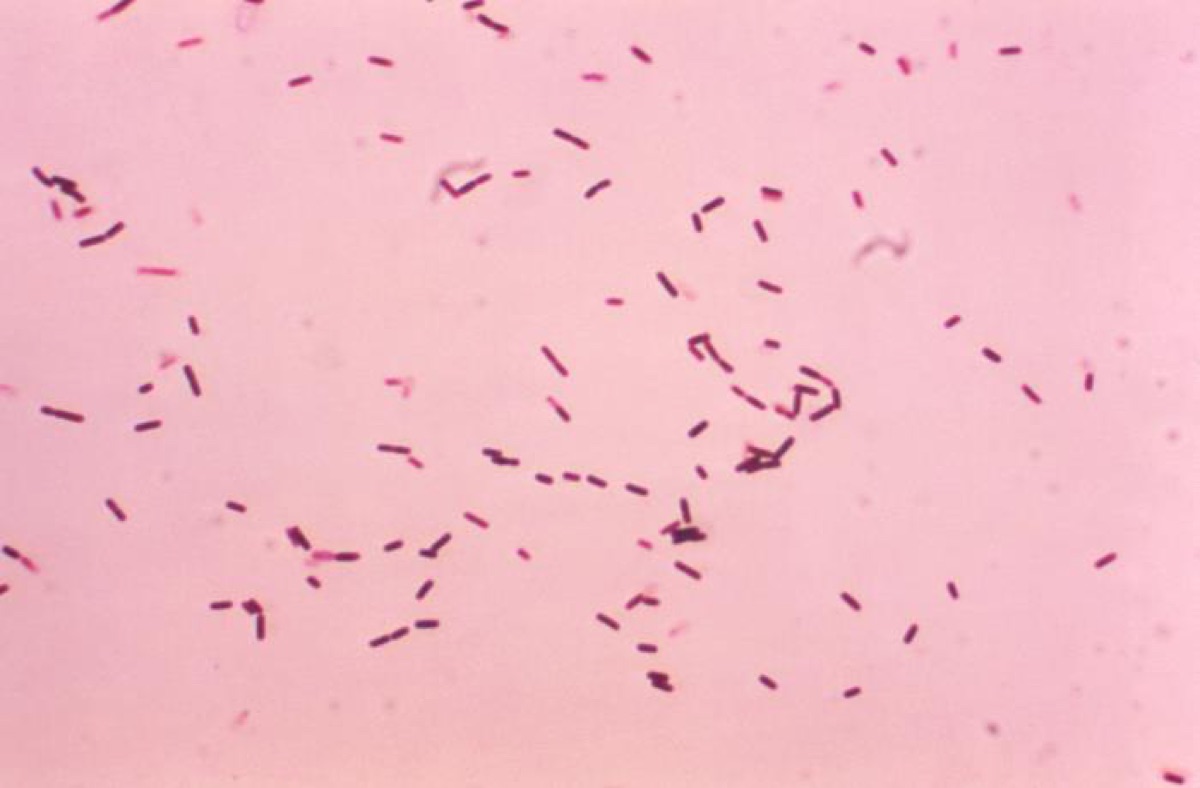
The whole problem with plastic is that it refuses to go away. A team in China has now built one that leaves on command — and, when it does, it leaves nothing behind. Reporting in the journal ACS Applied Polymer Materials, researchers led by Zhuojun Dai at the Shenzhen Institute of Synthetic Biology (part of the Shenzhen Institutes of Advanced Technology, Chinese Academy of Sciences) describe a “living plastic” that carries its own recycling crew inside it. In everyday use it behaves like an ordinary film. Give it the right cue and, within about six days, it digests itself completely — no fragments, no microplastics.
The trick is biology. Sealed dormant inside the plastic are the tough, seed-like spores of Bacillus subtilis — a harmless soil bacterium best known for fermenting the Japanese food natto. The spores sleep through normal handling. When they are woken, they secrete enzymes that take the material apart from the inside out.
- What: a plastic film with engineered Bacillus subtilis spores embedded throughout it, programmed to biodegrade the material on demand
- Plastic tested: polycaprolactone (PCL), a polymer used in 3D-printing filament and dissolvable surgical sutures
- Trigger: a nutrient broth at about 50 °C (122 °F) wakes the spores
- Result: complete breakdown in ~6 days, with no microplastics generated
- Demo: a wearable electrode made from the material fully broke down within two weeks of activation
- Paper: “Degradable Living Plastics Programmed by Engineered Microbial Consortia,” ACS Applied Polymer Materials 2026, 8(8), 5496–5506 (online Apr 9, 2026)
A plastic with a cleanup crew inside it
Most efforts to fix plastic waste focus on cleaning up after the material — better sorting, better recycling, hungrier microbes in a compost heap. Dai’s group asked a different question: what if the ability to biodegrade were built into the plastic from the start, and could be switched on whenever you wanted?
To do that they turned to spores. A bacterial spore is nature’s survival capsule: a dormant cell wrapped in tough protective coats that can shrug off heat, drying, and the harsh chemistry of plastic processing, then spring back to life when conditions turn favorable. That resilience is exactly what let the team mix living machinery into a plastic without killing it. The spores rode out fabrication, sat quietly in the finished film, and — crucially — the material kept mechanical properties similar to ordinary polycaprolactone, staying strong and functional under normal conditions.
How it self-destructs: a two-enzyme relay
The elegance is in the division of labor. Rather than rely on one microbe to do everything, the researchers engineered a small consortium — two cooperating strains of B. subtilis, each carrying an inducible gene circuit that secretes a different plastic-degrading enzyme. The two enzymes work as a relay:
- Enzyme 1 — the random chopper: a lipase (reported as a Candida antarctica lipase) that snips the long polymer chains at random points, rapidly weakening the material and creating a flood of loose ends.
- Enzyme 2 — the finisher: a second lipase (reported as a Burkholderia cepacia lipase) that works processively from those ends, chewing the fragments down into their individual monomer building blocks.
Because the second enzyme keeps grinding the pieces all the way down to single monomers, the cooperation was efficient enough to prevent microplastic particles from ever forming. That is the headline: not just breakdown, but complete breakdown into harmless small molecules the environment can absorb.
Plenty of plastics are technically “biodegradable” yet still crumble into microplastics — tiny persistent fragments now found from mountaintops to human blood. Fragmentation is not the same as disappearance. What makes this result notable is that the two-enzyme relay dismantles the polymer all the way to its monomers, so the material is genuinely consumed rather than merely shattered into smaller, longer-lasting bits.
Durability you can switch off
The team frames the whole idea neatly: their microbes, they write, turn “durability from a problem into a programmable feature.” Plastic is useful precisely because it lasts — and that same longevity is why it chokes landfills and oceans. Embedding a dormant, triggerable cleanup crew lets a product stay tough for its working life, then disappear on cue.
To show it off, the group built a wearable electrode from the living plastic. After activation, the little device broke down entirely within two weeks, leaving no microplastic residue — a hint at how “transient” electronics, temporary medical implants, or single-use sensors might one day be designed to vanish cleanly once their job is done.
| Property | This living plastic |
|---|---|
| Base polymer | Polycaprolactone (PCL) |
| Embedded agent | Dormant spores of engineered Bacillus subtilis (two-strain consortium) |
| Everyday behavior | Strong, functional — similar to ordinary PCL film |
| Activation cue | Nutrient broth at ~50 °C |
| Time to full breakdown | ~6 days (film); ~2 weeks (wearable electrode) |
| Microplastics produced | None detected |
Standing on earlier work
This is not the Dai group’s first living plastic. In 2024 the same lab reported, in Nature Chemical Biology, a first generation of “degradable living plastics programmed by engineered spores.” The new paper’s advance is the cooperative two-enzyme consortium — dividing the chemistry between two specialist strains — which is what drives the material all the way down to monomers, fast, without microplastic leftovers.
Honest limitations
- One polymer so far. The demonstration used PCL, a specialty plastic that is already compostable and is common in sutures and 3D printing — not the everyday commodity plastics (PET bottles, polyethylene bags) that dominate waste streams. The authors believe the same general strategy could be adapted to other materials, but that remains to be shown.
- It needs an intentional trigger. Breakdown is deliberately switched on by heat plus nutrients; the plastic will not simply dissolve on its own in a bin or in the sea — yet. Making activation reliable in real-world settings is the next hurdle.
- Lab scale, not industrial. Cost, large-scale manufacturing, long-term shelf stability, and the safe handling of engineered microbes at scale all still have to be worked out.
- Controlled conditions. The six-day figure comes from a controlled activation in the lab, not from passive weathering in the wild.
What’s next
The most exciting direction the team names is water activation — engineering spores that wake up in water, where so much plastic pollution ultimately collects. Pair that with a wider menu of target polymers, and the vision comes into focus: everyday materials that are perfectly ordinary while you use them, then quietly and completely return to nature when you are finished with them.
For now it is a proof of concept, tested on one polymer under lab conditions. But it reframes a decades-old problem in a hopeful way. We have spent fifty years trying to make plastic last forever. This is a serious, peer-reviewed step toward plastic that knows when to leave.
Sources
- Tang et al., “Degradable Living Plastics Programmed by Engineered Microbial Consortia,” ACS Applied Polymer Materials 2026, 8(8), 5496–5506 (DOI 10.1021/acsapm.5c04611)
- American Chemical Society press release (via EurekAlert), “This living plastic activates and self-destructs on command”
- ScienceDaily: “New living plastic self-destructs in just 6 days without leaving microplastics”
- Chinese Academy of Sciences: earlier “Living Plastics” work (Nature Chemical Biology, 2024)
Curated by Jerry Cards - jerrycards.com. We research the week’s most fascinating tech, science, and business stories so you don’t have to. More at jerrycards.com/news.