
 العربية
 Español
 中文
中文 Deutsch
 Français
 Português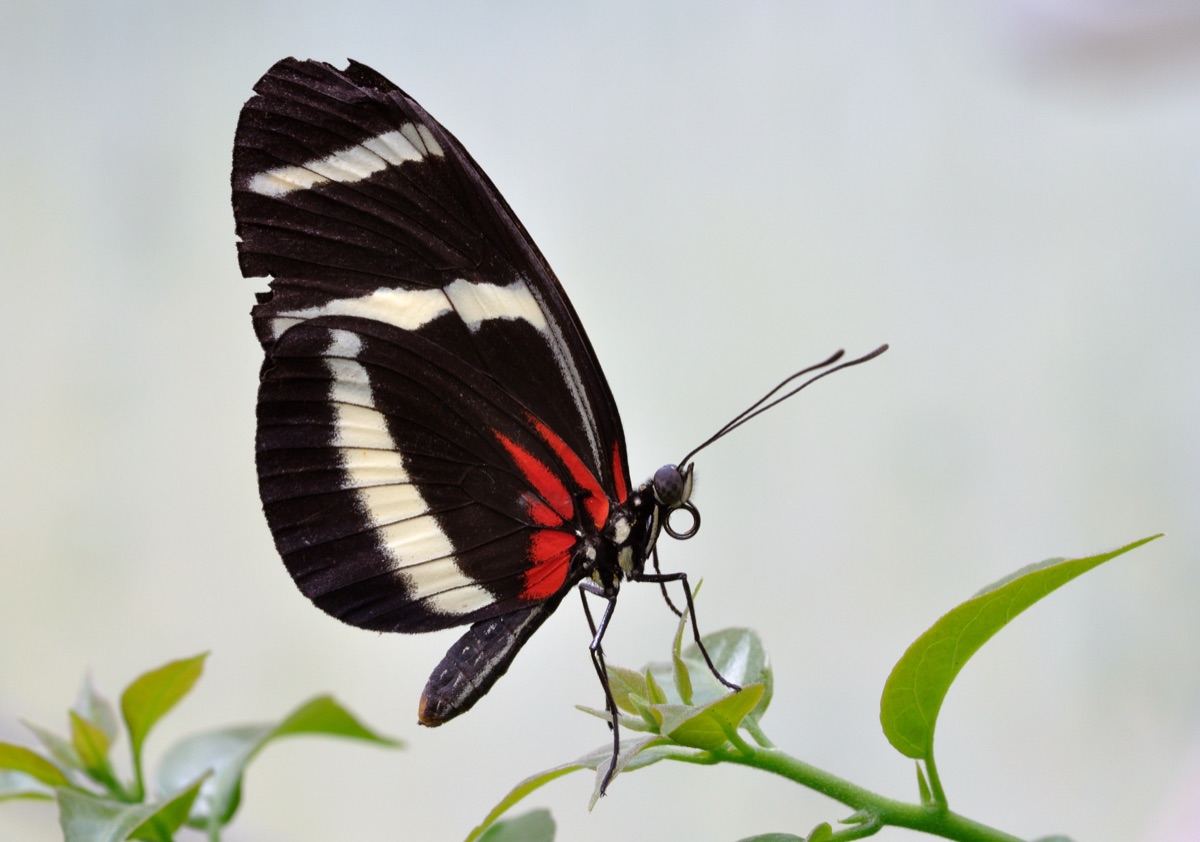
Almost every butterfly you have ever watched flitting through a garden lived only a few weeks as an adult. A monarch, a swallowtail, a painted lady - a short, bright life, and then it is over. So it is genuinely startling to learn that one group of tropical butterflies evolved to do something completely different: to live for the better part of a year, and to spend that time barely aging at all. A new study in Nature Communications puts hard numbers on it - and argues these insects could become a natural laboratory for one of biology's biggest questions: why do some living things age so much more slowly than others?
The work, published June 16, 2026 and led by Dr Jessica Foley at the University of Bristol in collaboration with the Smithsonian Tropical Research Institute in Panama, compared lifespan and aging across the Heliconiini - the tribe of tropical longwing butterflies - and found that the genus Heliconius has evolved two things at once: a longer life, and a slower descent into old age.
- Star species: Heliconius hewitsoni - maximum recorded lifespan 348 days (nearly a year)
- Shortest-lived relative: Dione juno - just 14 days, a ~25-fold gap in maximum lifespan within one butterfly tribe
- On average: pollen-feeding Heliconius reached ~177 days max vs ~57 days for non-pollen-feeders - roughly 3x longer
- Slowed aging: in grip-strength tests, older Heliconius hecale showed no measurable decline; relative Dryas iulia lost ~25% of its grip within five weeks
- The diet edge: Heliconius are the only butterflies known to collect and digest pollen, a protein-rich source of amino acids
- The twist: even without pollen, Heliconius still outlived relatives by ~3 weeks - long life is also written into their biology
- Source: Nature Communications 2026, DOI 10.1038/s41467-026-73635-7
1. A 25-fold spread in lifespan - within one family
Lifespan varies enormously across the animal kingdom, but it is rare to see such a wide range among such close cousins. The Heliconiini are a single tribe of brightly patterned Neotropical butterflies, yet the researchers found their adult lifespans span from a couple of weeks to nearly a year.
| Species | Group | Lifespan |
|---|---|---|
| Heliconius hewitsoni | Pollen-feeding (longest-lived) | up to 348 days |
| Heliconius hecale | Pollen-feeding | several months |
| Pollen-feeding Heliconius (average) | - | ~177 days (max) |
| Non-pollen Heliconiini (average) | - | ~57 days (max) |
| Dryas iulia | Non-pollen-feeding | ~6 weeks |
| Dione juno | Non-pollen-feeding (shortest-lived) | 14 days |
From Dione juno's 14 days to Heliconius hewitsoni's 348, that is roughly a 25-fold difference in maximum lifespan - and on average the pollen-feeding Heliconius lived about three times as long as their non-pollen-feeding kin. For an evolutionary biologist, a set of closely related species that differ this much in such a fundamental trait is a gift: it lets you ask what changed, and why.
Living a long time and aging slowly are related but distinct. An animal could simply be lucky and avoid predators (long lifespan) yet still grow frail on schedule (fast aging). What makes Heliconius remarkable is that they appear to do both: they live longer and their bodies decline more slowly over that longer life. The technical term for a very slow, hard-to-detect rate of physical decline is negligible senescence - and these butterflies edge toward it.
2. They barely age - measured by grip strength
It is one thing to count how long an animal survives; it is harder to measure how well its body is holding up along the way. The team used a clever, low-tech proxy for physical condition: grip strength - essentially, how firmly a butterfly can hold on, tested at different ages.
The contrast was stark. The shorter-lived relative Dryas iulia behaved the way most animals do: it lost roughly a quarter of its grip strength within about five weeks, a clear signature of physical decline. Heliconius hecale, by contrast, showed no measurable drop across its much longer life - an old individual gripped about as strongly as a young one. In other words, these butterflies are not just surviving longer; they are staying functionally young for far more of that time.
“Heliconius butterflies are among the longest-lived butterflies, but what makes them particularly remarkable is that they appear to have evolved not only longer lifespans, but also slower aging.”
- Dr Jessica Foley, University of Bristol, lead author
3. The pollen secret
A big part of the story sits in an unusual habit. Nearly all adult butterflies sip nectar - basically sugar water, energy with little else. Heliconius are the only butterflies known to collect and digest pollen. They gather pollen grains on their proboscis, hold them in a sticky ball, and bathe them in saliva to dissolve out the contents - extracting amino acids, the building blocks of protein, that other butterflies simply never get as adults.
That protein supply changes the math of an adult butterfly's life. Instead of slowly burning through the body reserves built up during the caterpillar stage, a pollen-feeding Heliconius keeps topping up the raw materials its cells need for repair and maintenance. Researchers link this steady amino-acid income to several of the genus's signature traits: a long adult life, the ability to keep laying eggs week after week, and even the chemicals they use for defense. It is, in effect, a richer diet bankrolling a longer, more active life.
4. But it is not only the diet
Here is the most intriguing finding. If pollen were the whole explanation, then take it away and the advantage should vanish. It did not. When the researchers withheld pollen, Heliconius still outlived their non-pollen-feeding relatives by about three weeks. The diet clearly helps - but a meaningful part of their longevity is hard-wired by evolution, present in the animal's underlying biology whether or not it gets its protein-rich meal.
That distinction matters enormously for anyone interested in aging. It means Heliconius are not just well-fed butterflies; they are butterflies whose bodies have genuinely evolved to last longer and decay more slowly. And that points the question squarely at their genes and cellular machinery.
5. How they measured it
Pinning down the lifespan of a wild tropical insect is notoriously tricky, so the team triangulated across three independent kinds of evidence:
- Commercial butterfly houses - long-running records from butterfly exhibits, where individuals can be tracked from emergence to death under stable conditions.
- Mark-release-recapture fieldwork - marking wild butterflies and re-sighting them over time to estimate how long they persist in nature.
- Controlled insectary populations - lab and garden colonies where diet (including the pollen-withholding experiment) and aging metrics like grip strength could be measured directly.
Because the same long-life pattern showed up across captive, semi-wild, and field settings, the conclusion does not hinge on any single artificial environment - a key strength of the study.
6. Why a butterfly matters for the science of aging
Most of what we know about the biology of aging comes from a small cast of laboratory organisms - yeast, roundworms, fruit flies, mice. They are convenient, but they give a narrow view. What the Bristol and Smithsonian team highlight is the value of a natural evolutionary experiment: a cluster of closely related species that, despite sharing much of their biology, differ up to 25-fold in how long they live and how fast they age.
“By comparing long-lived Heliconius butterflies with their short-lived relatives, we have a natural evolutionary experiment that can help reveal how lifespan is extended.”
- Dr Jessica Foley
The practical hope is that comparing these species - their genes, their metabolism, their cellular upkeep - could surface the specific pathways that buy extra healthy years. Those are exactly the kinds of mechanisms that aging researchers ultimately want to understand in humans, where the goal is not just more years but more healthy ones (what scientists call healthspan). A butterfly will never be a person, but it can be a signpost.
What we still don't know
- The exact genes and pathways. The study establishes the striking pattern - long life and slow aging - but the molecular machinery behind it is the next chapter, not this one.
- How directly it translates. Insect physiology differs hugely from ours; any lessons for human healthspan are an inspiration to investigate, not a recipe.
- How far the pollen effect reaches. Pollen-feeding clearly helps, but the size of the genetic, evolved component - and how it works - remains to be teased apart.
- The full reproduction trade-off. These butterflies keep reproducing for a long time; exactly how they balance lifelong egg-laying with such slow aging is a rich question for follow-up work.
A familiar, beautiful insect turns out to be quietly extraordinary: Heliconius longwings evolved to live up to 25 times longer than close relatives and to barely age along the way - powered partly by a one-of-a-kind pollen diet and partly by biology baked in by evolution. It is a hopeful reminder that nature has, time and again, already solved problems we are still working on - and that sometimes the next clue about living longer and healthier is fluttering quietly through a rainforest.
Sources
- Foley, J. et al. Evolution of increased longevity and slowed ageing in a genus of tropical butterfly, Nature Communications 2026, DOI 10.1038/s41467-026-73635-7 · doi.org
- ScienceDaily: Butterfly that barely ages could help unlock longevity secrets · Phys.org: 'Geriatric' butterfly species lives nearly three times as long as its relatives
- Sci.News: Secret to Heliconius Butterflies' Longevity May Be Hidden in Pollen · CNN: Some tropical butterflies have unlocked an evolutionary way to live longer
- bioRxiv preprint (open access)
- Image: Heliconius hewitsoni by Quartl, Wikimedia Commons, CC BY-SA 3.0.
Curated by Jerry Cards - jerrycards.com. We research the week's most consequential science, tech, and health news so you don't have to. More at jerrycards.com/news.