
 العربية
 Español
 中文
中文 Deutsch
 Français
 Português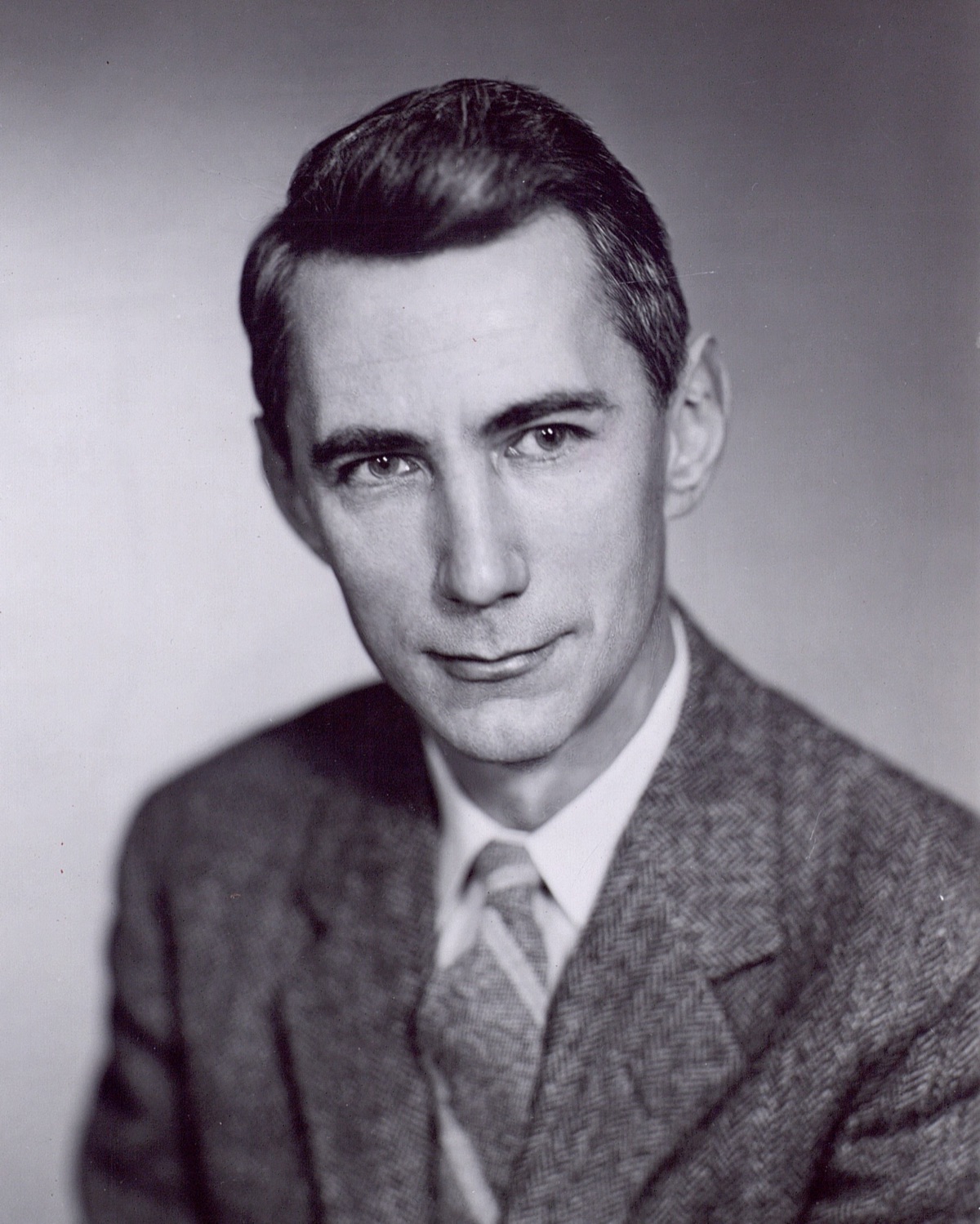
In July 1948, a 32-year-old engineer at Bell Telephone Laboratories published a paper with a deceptively modest title - A Mathematical Theory of Communication - and, almost quietly, founded the information age. Its author was Claude Elwood Shannon. In a few dozen pages of the Bell System Technical Journal, he did something no one had managed before: he made information itself a measurable, mathematical quantity. Nearly every piece of technology you have touched today - your phone, your Wi-Fi, the stream you watched, the cloud that holds your photos - rests on the foundations laid in that one paper.
This is a tribute to what Shannon wrote, why it astonished the engineers of his era, and how it built the digital world we now take for granted.
- Title: A Mathematical Theory of Communication
- Author: Claude E. Shannon, Bell Telephone Laboratories
- Published: Bell System Technical Journal, Vol. 27 - Part 1 in July 1948 (pp. 379-423), Part 2 in October 1948 (pp. 623-656)
- What it founded: the field of information theory
- Three gifts: the bit (the unit of information), entropy (a measure of information content), and the channel-capacity theorem (a speed limit for error-free communication)
- Why it matters: data compression, error-correcting codes, the internet, mobile networks, storage, and even how modern AI is trained
1. The fundamental problem
Shannon opened the paper by stripping communication down to its essence. In one of the most quoted sentences in all of science, he wrote:
“The fundamental problem of communication is that of reproducing at one point, either exactly or approximately, a message selected at another point.”
It sounds obvious now. It was radical then. Shannon insisted that the meaning of a message was irrelevant to the engineering problem - what mattered was that the message was selected from a set of possibilities, and that the receiver could recover which one was sent. By setting meaning aside, he turned a fuzzy human idea into something a mathematician could pin down.
2. The bit: a universal currency for information
Shannon's first move was to choose a unit. If you measure information using base-2 logarithms, he explained, the natural unit is the binary digit - and he gave it the name that has been with us ever since:
“If the base 2 is used the resulting units may be called binary digits, or more briefly bits, a word suggested by J. W. Tukey.”
With that, the bit was born (Shannon generously credited his Bell Labs colleague John Tukey for the word). The consequence was profound: a page of text, a photograph, a song, a film - anything that could be communicated - could be reduced to the same universal currency of 0s and 1s. It is the reason a single device in your pocket can hold your library, your music, and your movies. They are all just bits.
3. Entropy: measuring surprise
How much information does a message actually carry? Shannon's answer was entropy - a formula that measures, in effect, how much surprise a source produces. A message that is highly predictable (say, a stream of the letter ‘a’) carries little information; a genuinely unpredictable one carries a lot. He captured it as:
Borrowing both the idea and the name from thermodynamics, Shannon proved that entropy is the absolute limit on how far a source can be compressed without losing anything. You cannot squeeze a file below its entropy - and you can get arbitrarily close. This is the mathematics that lives inside every ZIP archive, every JPEG photo, every MP3, and every streaming-video codec. Compression was no longer a bag of tricks; it had a theoretical floor, and Shannon had found it.
4. The theorem that stunned everyone
Then came the result that seemed almost too good to be true. Every real communication channel is noisy - static on a phone line, interference in the air, scratches on a disc. The intuition of Shannon's contemporaries was that noise was a tax you could only reduce, never escape: push data faster and errors would inevitably creep in.
Shannon proved otherwise. His noisy-channel coding theorem showed that every channel has a maximum rate - its capacity, C - and that below that rate you can transmit with an error rate as close to zero as you like, provided you encode the message cleverly enough. Above it, reliable communication is impossible. For a channel with bandwidth B and a signal-to-noise ratio S/N, that ceiling is captured by what is now called the Shannon-Hartley theorem:
This was the gift that kept giving. It told engineers that near-perfect communication over an imperfect channel was not a fantasy but a provable possibility - and it handed them a precise target, the “Shannon limit,” to design toward. Chasing that limit gave us error-correcting codes: the reason a scratched CD still plays, a smudged QR code still scans, your Wi-Fi and 5G hold a signal, hard drives and SSDs return your data intact, and a spacecraft billions of miles away can still whisper a photo home.
5. One diagram to organize a field
Shannon also drew a picture that every engineer now carries in their head: a general communication system as five boxes - an information source, a transmitter that encodes the message, a channel (afflicted by a noise source), a receiver that decodes it, and a destination. It looks simple, but that little schematic is the skeleton of essentially every communication system built since - from a telephone call to a deep-space link to the packets carrying this very page to your screen.
What Shannon's 1948 ideas power today
| Shannon idea | Modern technology it underpins |
|---|---|
| The bit | All digital storage & computing - text, audio, images, video as 0s and 1s |
| Entropy / source coding | Data compression: ZIP, JPEG, PNG, MP3, H.264/AV1 video streaming |
| Channel capacity / coding theorem | Error-correcting codes: CDs/DVDs, QR codes, Wi-Fi, 4G/5G, SSDs, deep-space comms |
| Information as bits | The internet, mobile networks, and modern cryptography |
| Entropy, again | The cross-entropy loss used to train neural networks - including today's large language models |
6. The playful genius behind it
Shannon (1916-2001) is widely called the father of information theory, but he wore the title lightly. He was a lifelong tinkerer who juggled while riding a unicycle down the corridors of Bell Labs, built a maze-solving mechanical mouse named Theseus, and constructed whimsical machines for the sheer joy of it. Eleven years before the 1948 paper, as a 21-year-old master's student at MIT, he had already written what is often called the most important master's thesis of all time - A Symbolic Analysis of Relay and Switching Circuits - proving that electrical circuits could carry out logic. That work is a founding document of digital hardware; information theory made him a founder twice over.
Shannon was careful to credit those who came before him - fellow Bell Labs researchers Harry Nyquist and Ralph Hartley, whose 1920s work on signaling he generalized and completed. And he kept giving: his 1949 paper Communication Theory of Secrecy Systems put cryptography on a rigorous mathematical footing, proving what makes a cipher truly unbreakable. He received the National Medal of Science (1966), the IEEE Medal of Honor (1966), and the Kyoto Prize (1985).
Why it still matters
Seventy-eight years on, Shannon's paper has only grown in stature. The reason is its universality: he did not solve one communication problem, he built the language in which all of them are posed. When a later generation of engineers reissued the work as a book in 1949 (with an accessible essay by Warren Weaver), they changed the title's first word from A to The Mathematical Theory of Communication - a small edit that captured how completely the field had become his.
Every phone call, every stream, every backup, every scanned code, every packet of this article - and even the cross-entropy that trains the AI models making headlines today - descends directly from those 1948 pages. Some papers describe the world. A rare few build the one we live in. Shannon's is one of them.
Sources & further reading
- C. E. Shannon, ‘A Mathematical Theory of Communication’, Bell System Technical Journal, Vol. 27, pp. 379-423 (July 1948) & pp. 623-656 (October 1948)
- Wikipedia: A Mathematical Theory of Communication · Claude Shannon
- Wikipedia: Noisy-channel coding theorem · Shannon-Hartley theorem
- Image: portrait of Claude Shannon, courtesy Tekniska museet (Swedish National Museum of Science and Technology), Item 43069 via Flickr, CC BY 2.0
Curated by Jerry Cards - jerrycards.com. Our 致敬 (tribute) series celebrates the landmark papers and discoveries that quietly built the modern world. More at jerrycards.com/news.